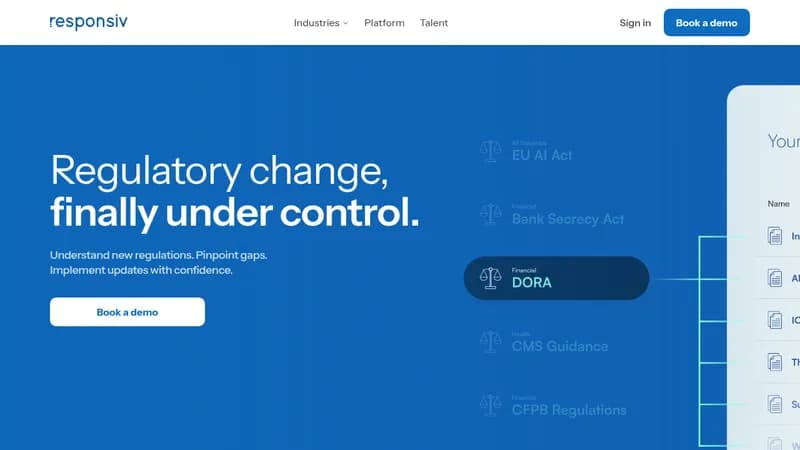
Responsiv is a regulatory compliance platform that translates global laws and rules into required actions, updates policies, and tracks execution to completion. It helps organizations understand new regulations, pinpoint gaps, and implement updates with confidence.
Key Features
- Route Alerts Thoughtfully: Stay ahead of regulatory change with targeted alerts across applicable laws, rules, and guidance. Customized alerts go out to the people who need to know, by business unit, topic, or jurisdiction.
- Assess Impact: Automatically shred regulatory text into clear, actionable requirements for every change. View a checklist of requirements extracted from hundreds of pages of legal text.
- Resolve Gaps with Confidence: Identify policy and control gaps by mapping requirements to existing policies and controls. Responsiv identifies gaps automatically.
- Implement and Track: Assign and prioritize work, track progress, and confirm every obligation is completed. Coordinate implementation end-to-end.
Who It’s For
Responsiv is built for the most regulated industries, including financial services (banks, broker-dealers, asset managers), health insurance and P&C carriers, and consumer tech companies tracking online safety, privacy, AI, and transparency obligations. It is trusted by compliance directors, chief compliance officers, general counsel, and legal departments.
Responsible AI
Responsiv uses tailored AI for compliance, delivering precise, reviewable, audited industry-specific information. Full data privacy is maintained—user data is never used to train AI. De-identification options allow analysis while maintaining privacy.
Regulatory Defensibility
The platform ensures you never miss a new rule by reviewing thousands of laws and regs. Gaps are closed effectively with clear instructions. Efficient workflows assign tasks and track remediation. Instant reporting maintains a complete, timestamped record for audits and exams.
Key Benefits
- Translates global laws into actionable requirements automatically
- Identifies policy and control gaps by mapping requirements
- Provides end-to-end workflow tracking from assignment to completion
- Maintains a complete, timestamped record for audit readiness