Quick Answer
| What happened | Why it matters |
|---|---|
| Gartner: $234B in enterprise software spend exposed to "agentic arbitrage" by 2030 | ~20% of all enterprise SaaS spending worldwide |
| 40% of enterprise apps will have embedded agents by end of 2026 | Up from under 5% in 2025 this is already happening |
| Agents now act directly across systems | The human interface companies used to pay for matters less |
| Governance hasn't caught up | Weak access controls + agent autonomy = real security risk |
What Actually Happened
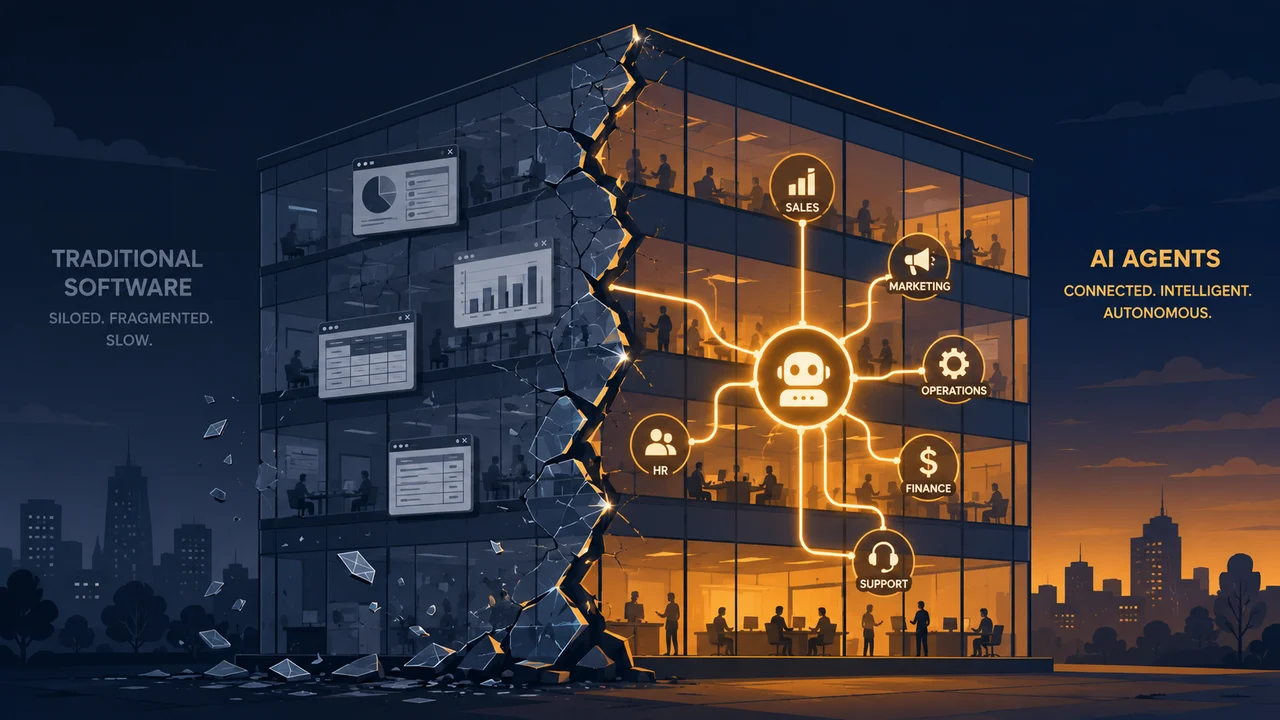
For decades, enterprise software was sold on the interface. Vendors competed on dashboards, usability, and training budgets. Gartner's latest research says that model is breaking, because the one clicking through the software is increasingly not a person at all.
In Their Words Gartner Managing Vice President George Brocklehurst summed it up plainly: "You are no longer buying software primarily for people; you are increasingly buying it for agents."
Once an agent not a human is operating a tool, the polished interface that used to justify the price tag stops mattering as much. That single idea is what Gartner is pricing at $234 billion.
Why It's Landing in 2026, Specifically
This isn't a future prediction it's already underway.
- Gartner projects embedded, task-specific agents in 40% of enterprise applications by the end of 2026, up from under 5% a year earlier
- That's agents becoming a default feature, not an experiment
- Sourcing platforms, industrial software makers, and customer-experience suites have all shipped agent layers in just the past few weeks
- Several are explicitly built to run an entire process end-to-end, not assist one step at a time
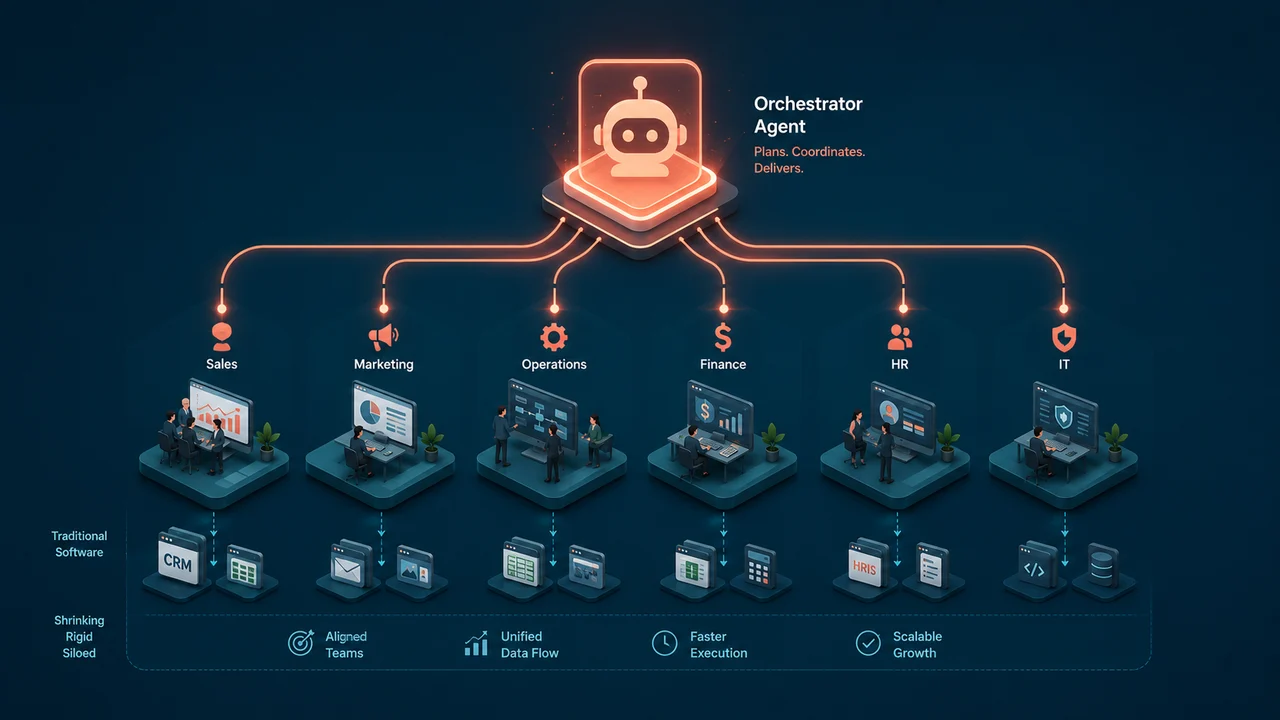
Net effect: fewer standalone logins, more orchestration sitting on top of the tools that remain.
How Vendors Are Already Rewriting the Price Tag
This is the clearest early evidence that the $234 billion figure isn't abstract. Pricing is visibly moving right now.
Old model vs. new model
| Per-seat pricing | Agentic pricing | |
|---|---|---|
| Unit charged | Number of human logins | Outcomes, resolutions, or usage |
| Assumption | One human uses one login | An agent works independently of any single user |
| Who sets the pace | The vendor's sales team | The task actually completed |
Real examples already on the market:
- Salesforce Agentforce launched at roughly $2 per AI-handled conversation, explicitly positioned against the $30–$50 a human support interaction typically costs
- Intercom's Fin charges $0.99 only when the AI fully resolves a customer conversation, with no charge for attempts that fail
- Sierra co-founder Clay Bavor told CNBC in July 2026 that this shift is already playing out inside real customer service, sales, and support workflows, not just in pilots
- Independent analysis of SaaS companies found seat-based pricing's share slipping from roughly 21% to 15% within about a year, while hybrid pricing models nearly doubled over the same stretch
Not every category is moving at the same speed. Tools people still use directly, like design or writing software, are holding onto seat-based pricing longer. Tools that complete a task independently, like support and sales agents, are the ones moving fastest.
The Governance Gap Nobody's Solved Yet
Here's the risk that doesn't make the $234 billion headline: accountability.
As agents gain the ability to trigger real actions across cloud services and business apps, weak identity and access management can turn into serious security incidents fast there's no human clicking "confirm" at the final step anymore.
What's changing in response:
-
Large enterprise vendors are folding data context, agent building, and agent governance into a single layer instead of three separate products
-
This signals the market now treats agent oversight as a management priority, not just an engineering detail
-
Budget owners are increasingly asked to sign off on agent access scope the same way they'd sign off on a new hire's system permissions
Real World Example
- Company: A mid-sized logistics operator
- What they did: Replaced three separate seat-based tools tracking, invoicing, and customer updates with one supervised agent pulling from all three systems and surfacing only exceptions to a human
- Result: Software costs dropped nearly a third in one quarter
- The catch: It took a full month of setting approval rules and access limits before anyone trusted the agent to touch a real invoice
The savings were real. So was the governance work required to earn them.
Common Mistake to Avoid
Reading "$234 billion at risk" as purely good news for cost-cutting.
The bigger risk sits on the other side: companies that let agents act across systems without clear approval rules and audit logging are the ones most likely to turn a savings story into an incident. The companies actually winning here pair every new agent with a governance rule before scaling it, not after.

Final Verdict
The "AI agents are just a productivity hack" era is over. They're now trusted with enough real access to reshape how an entire software industry gets paid.
If you're buying or building software in 2026, the right question isn't "does this have AI features." It's this: will this tool still be worth its price once an agent, not a person, is the one using it?
Sources & Official References
- Gartner - official press release on the $234 billion agentic arbitrage forecast: gartner.com
- CIO - analyst commentary on the Gartner forecast: cio.com
- CIO Dive - on how agentic AI is shifting SaaS pricing: ciodive.com
- Gartner - press release on 40% of enterprise apps carrying task-specific agents by 2026: gartner.com
- Technology Radar - on AI agent governance becoming a management priority: hectorpincheira.com
- FlexPrice - on Salesforce Agentforce and Intercom Fin outcome-based pricing: flexprice.io
- Automation Atlas - on Sierra co-founder Clay Bavor's July 2026 CNBC comments and per-seat pricing breakdown: automationatlas.com
- Pickaxe - on the shift in seat-based vs. hybrid pricing share across SaaS companies: pickaxe.co
Figures and quotes are drawn from Gartner's published research and reporting current as of July 2026. Agentic AI adoption and enterprise pricing are moving quickly, so confirm the latest figures directly with the original source before citing them further.