
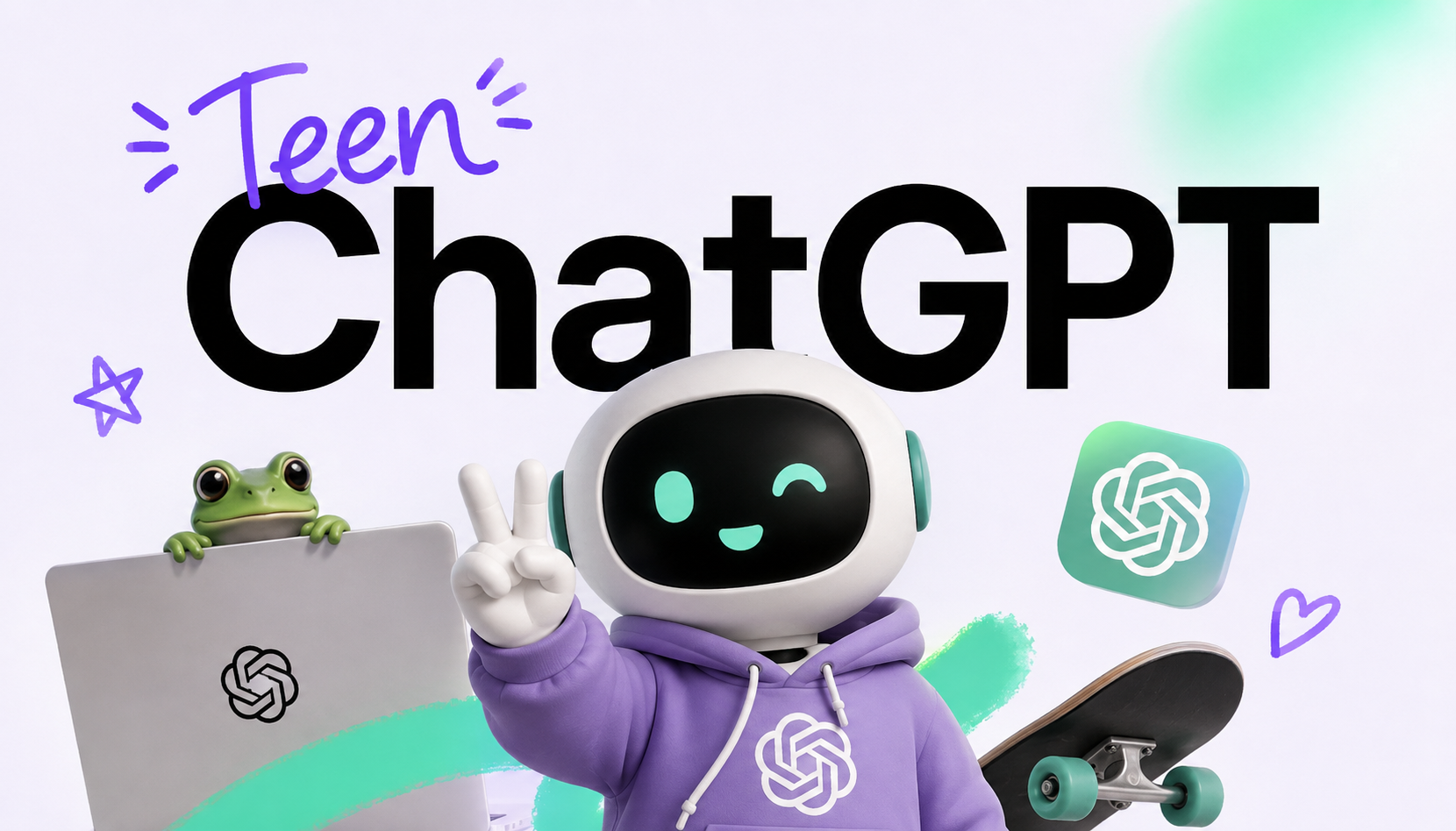
Teenagers have been using ChatGPT for schoolwork, daily questions, and, increasingly, companionship, without a version built for them. That changed on August 18, when OpenAI began a global rollout of ChatGPT for Teens, a separate experience for 13-to-17-year-olds that OpenAI says is guided by four commitments: teen safety first, encouraging real-world support, treating teens like teens, and being transparent about how the system behaves.
Quick Answer
- ChatGPT for Teens started rolling out August 18, 2026, reaching all eligible accounts within about two weeks, Australia's full rollout lands September 8
- You don't sign up for it. If an account is registered as 13 to 17, or OpenAI's age-prediction system estimates the user is under 18, the teen experience switches on automatically
- Content protections cover self-harm, violence, eating disorders, dangerous activities, and explicit sexual or graphic content, plus new rules against romantic language or claiming to have feelings
- Parents can set Quiet Hours, disable voice mode, memory, or image generation, and get limited safety alerts, but they still cannot read a teen's actual conversations
- The launch comes as OpenAI faces multiple wrongful-death lawsuits alleging ChatGPT contributed to teen suicides
How the Age Detection Actually Works
Nobody has to prove their age to land in the teen experience. OpenAI's system looks at three kinds of signals: what topics an account discusses, when and how often it's used, and how old the account itself is. If someone says they're 13 to 17, they're placed in the teen version immediately. If they don't say, but the system suspects they're under 18, they're defaulted into it anyway, OpenAI has been explicit that when in doubt, it errs toward the safer experience.
This cuts both ways. An adult incorrectly flagged as a teen can verify their real age through Persona, an identity verification service, to get the full adult experience back. In some countries, OpenAI also offers ID-based age verification directly. It's worth being precise about what this system is and isn't: it's age assurance, not identity verification. Nobody needs a government ID to receive teen protections, only adults who want the protections removed and were mistakenly flagged need to prove their age.
How OpenAI Got Here: A Quick Timeline
- September 29, 2025: Original parental controls launch, following a lawsuit tied to a California teen's suicide
- Early 2026: OpenAI publishes its age-prediction approach and "Under-18 Principles for Model Behavior" as part of its Model Spec
- August 18, 2026: ChatGPT for Teens goes live globally as a full product, combining age prediction, content rules, and study tools into one default experience
CEO Sam Altman set the philosophy behind all of this back in a September 2025 blog post, writing that OpenAI "prioritize[s] safety ahead of privacy and freedom for teens," and that when there's doubt about someone's age, the system defaults to the safer, under-18 experience rather than the reverse. That stance has held steady since, OpenAI reaffirmed it as recently as December 2025 amid unrelated controversy over adult content policy, and it's the same principle underpinning this week's launch.
What's Actually Different in the Teen Version
Content safeguards, on by default
- Stronger restrictions around self-harm, violence, eating disorders, dangerous activities, and explicit content
- No romantic language or terms of endearment directed at teens
- The model is instructed more strongly not to imply it has feelings, consciousness, or emotions, an attempt to reduce emotional dependence on the chatbot
- More frequent reminders that teens are talking to software, plus break reminders during long sessions
- Warnings before uploading private or sensitive images
Built for learning, not just answers
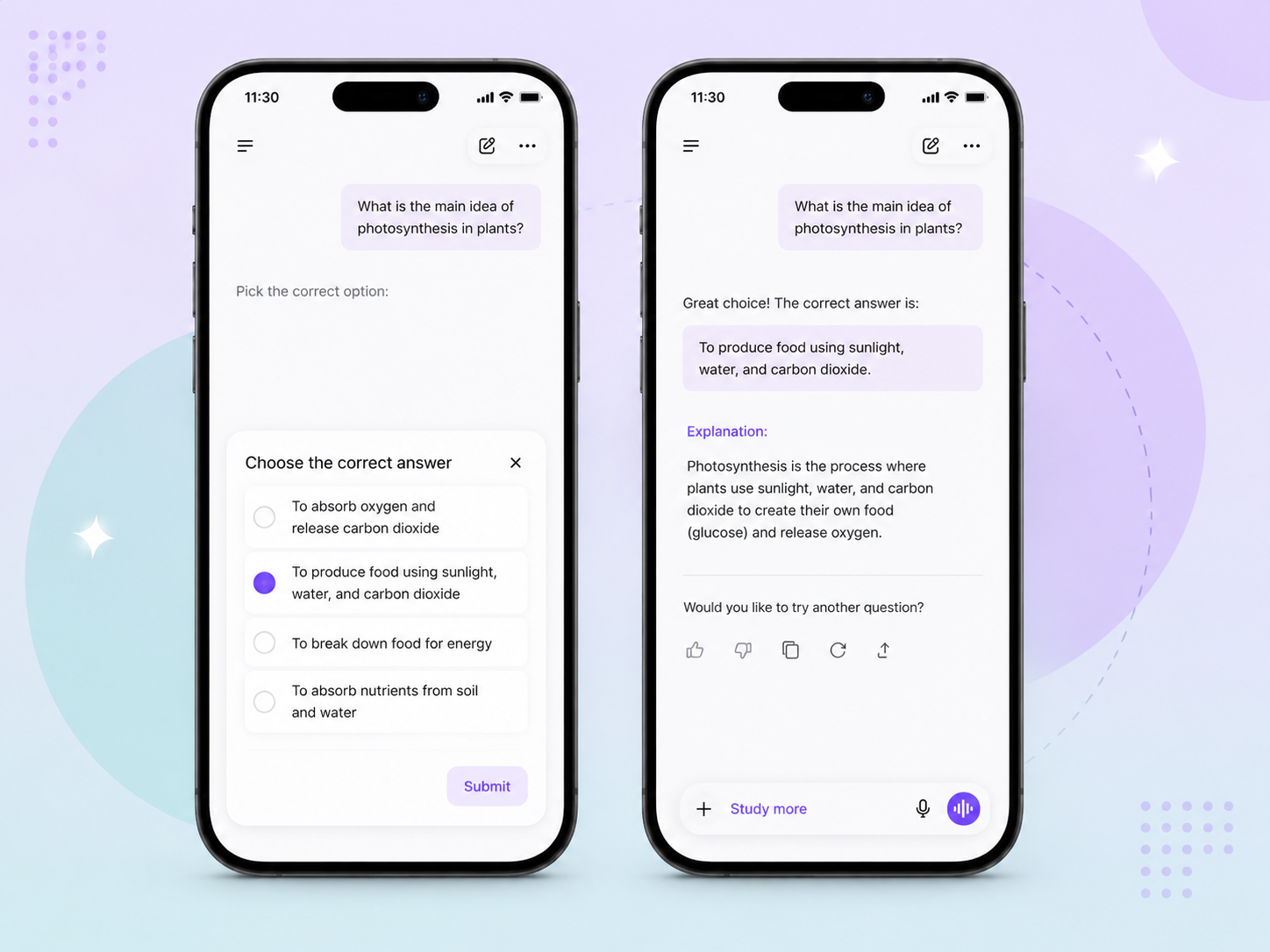
- Study Mode walks through problems with guiding questions instead of handing over a finished answer
- Responsible Homework Reminders try to detect when a teen is looking for a shortcut rather than genuine help, and redirect toward working through it together
- Study Hours let a teen or parent schedule times when Study Mode runs automatically
- Quizzes and Learning Visualizations round out the study tools
Personalization, wallpapers, accent colors, and voice variations, are also part of the teen experience, an attempt to make it feel designed for them rather than a stripped-down adult product.
What Parents Can Actually Control
Parental controls only activate if both the parent and the teen link their accounts, one side can't impose it on the other unilaterally. Once linked, a parent can:
- Set Quiet Hours blocking access entirely during chosen times
- Turn off voice mode, memory, or image generation
- Opt the teen's conversations out of being used for model training
- Receive safety notifications in specific high-risk situations, including signs of self-harm, eating disorder risk, or violating the platform's rules on violent threats
What parents still can't do: read a teen's actual conversations. When a serious risk signal does trigger a notification, OpenAI says flagged content is reviewed by a full-time human employee before any parent is contacted, with a goal of notifying within an hour.
Why This Is Happening Now
OpenAI didn't build this in a vacuum. The company is currently facing multiple wrongful-death lawsuits alleging that ChatGPT contributed to teen suicides, including a case where a father testified to the Senate Judiciary Committee that the chatbot acted as a "confidant" and, in his words, a "suicide coach" for his 16-year-old son. A separate report from the Center for Countering Digital Hate previously found ChatGPT could be prompted into giving adolescents harmful guidance on topics like concealing eating disorders. OpenAI isn't alone in responding, Meta announced comparable teen safety measures for its own AI products in July 2026.
The Honest Verdict
This is a genuinely more thoughtful system than a simple age gate, layered content rules, study-focused defaults, and a parental notification system that tries to balance a teen's privacy against real safety risk. But the core trade-off hasn't disappeared: age prediction is a best guess, not a guarantee, and any teenager motivated enough to misrepresent their age and usage patterns still has a path around it. The honest way to think about this launch is as a meaningfully better default, not a solved problem, still worth pairing with an actual conversation at home about how your teen is using it, not just the settings page.
This article discusses AI safety measures related to self-harm and suicide in a factual, informational context. If you or someone you know is struggling, the 988 Suicide & Crisis Lifeline is available by call or text in the US. Details reflect OpenAI's official announcement and help center documentation as of August 2026; check OpenAI's current ChatGPT for Teens help page for the latest rollout status in your region.