Vibe coding changed how people build software with AI but blindly accepting generated code comes with serious risks. Discover what vibe coding really means, where it works, where it fails, and why developers are moving toward agentic engineering.
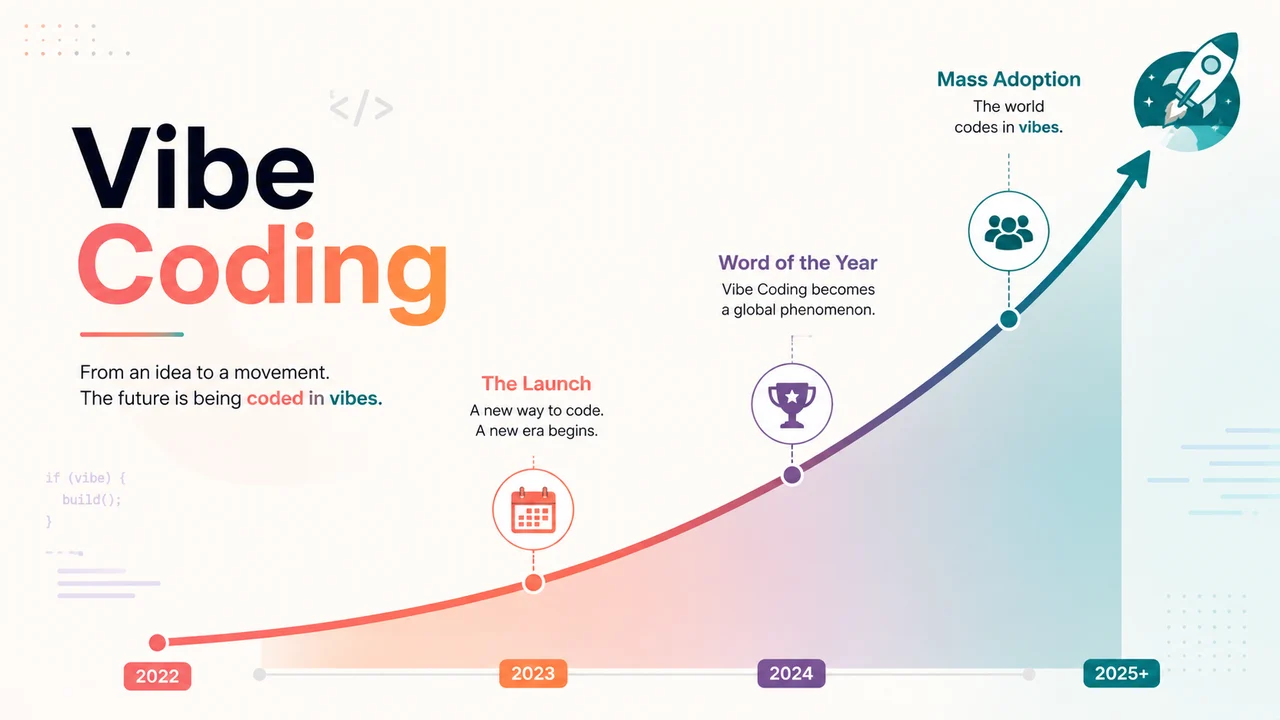
Andrej Karpathy coined "vibe coding" in February 2025 to describe writing software by describing what you want and accepting the AI's output without reading it line by line. It exploded, Collins Dictionary named it Word of the Year, and by some counts nearly half of new code on GitHub is now AI-generated. Almost exactly a year later, Karpathy himself called it passé and rebranded to something more disciplined. Why he walked it back is the real answer to "when does this work."
Karpathy posted the original idea on X on February 2, 2025, describing a style of coding where you stop tracking the code itself and just follow the "vibes" of what the AI produces. He scoped it specifically to throwaway weekend projects, not production software, a detail that got lost almost immediately once the term went viral.
The definition that actually stuck, per developer Simon Willison's widely cited distinction, comes down to one thing: whether you reviewed the code. If an AI wrote it but you read, tested, and understood every part, that's just AI-assisted development. The "vibe coding" label only fits when that review never happened.
This is the part most coverage gets wrong by only citing half of it. In July 2025, METR's own randomized controlled trial, the gold-standard method also used in clinical drug trials, found something surprising: 16 experienced open-source developers using early-2025 AI tools on their own mature codebases were 19% slower with AI than without it, despite believing beforehand they'd be 24% faster.
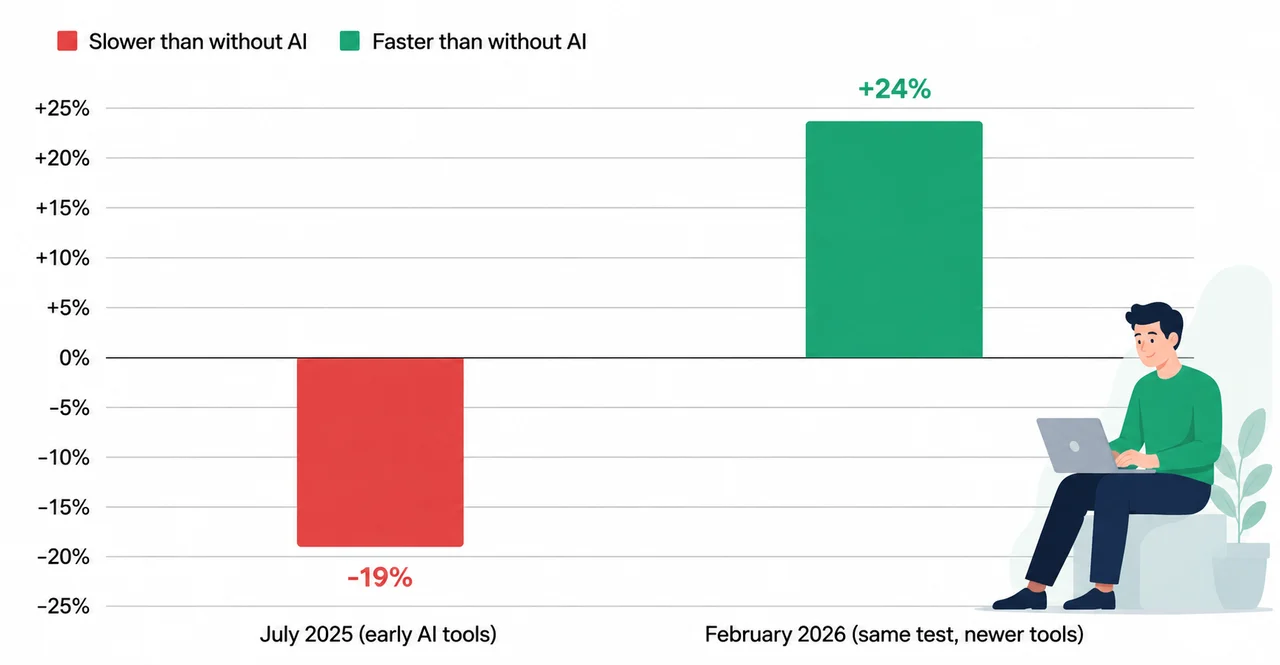
That finding got repeated everywhere as if it settled the question. It didn't. METR reran the same methodology on newer tools in February 2026 and found the opposite: the same research group now estimates roughly an 18% speedup for developers using late-2025 AI tools, a full reversal within a year, as both the tools and developers' ability to use them well improved.
The honest takeaway isn't "AI makes developers slower" or "AI makes developers faster." It's that the answer depends heavily on the tools' maturity, the developer's familiarity with them, and how well-scoped the task is, exactly the variables vibe coding's original definition ignored by design.
Part of why arguments about vibe coding go in circles is that the term itself splintered. Depending on who's using it, "vibe coding" now refers to:
Most disagreements about whether vibe coding "works" are really just people using different definitions of the same two words.
Two distinct categories have emerged. AI-powered code editors, Cursor, Windsurf, and Claude Code, sit inside a traditional coding environment and assist a developer who's still driving. Full-stack app generators, Bolt, Lovable, Replit, and v0, go further, building an entire working application from a prompt with little to no code written by hand. Most experienced teams end up using one of each: a generator for fast prototyping, then an AI-powered editor once the project moves toward something real.
In February 2026, Karpathy posted that vibe coding had become passé, replaced by what he called agentic engineering. He explained that coding through AI agents was fast becoming the standard way professionals build software, just with real oversight and scrutiny built back in, the opposite of the original "forget the code exists" framing. "Agentic" because you're mostly orchestrating AI agents rather than writing code directly, and "engineering" to reintroduce the discipline and review that got lost along the way.
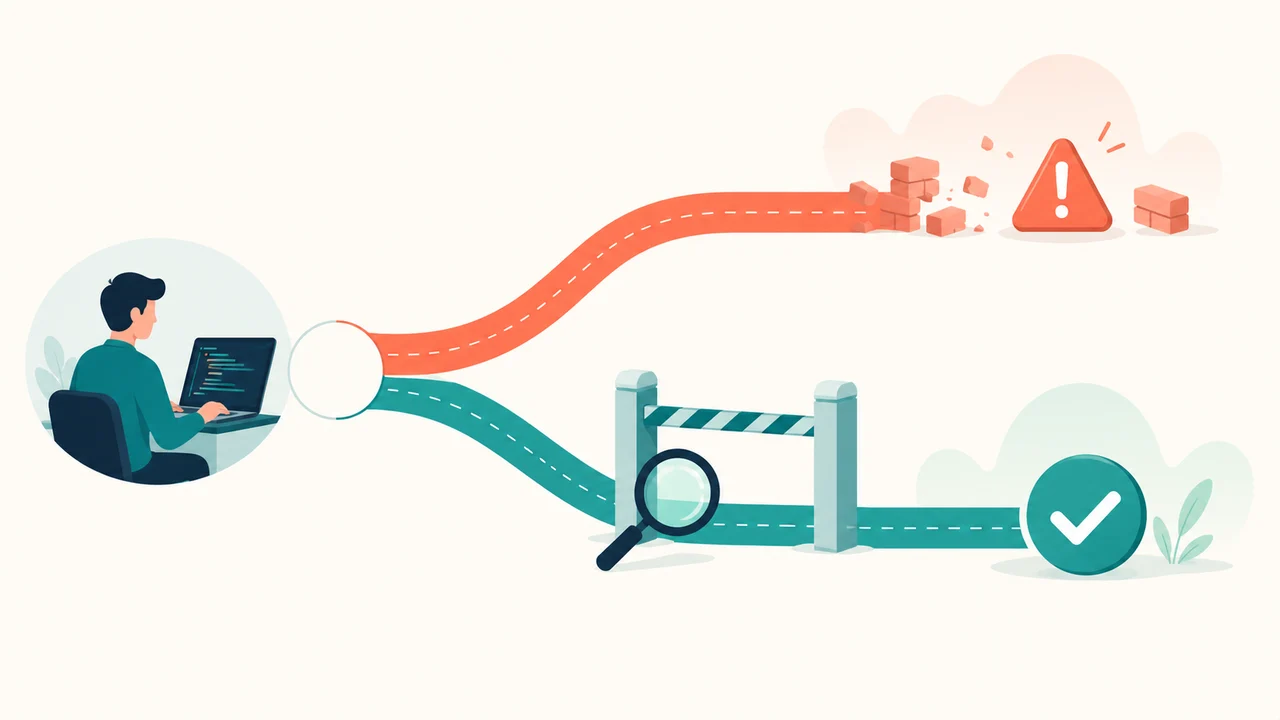
That pivot lines up with the data above almost exactly: skipping review produces real, measurable security problems at scale, while staying genuinely in the loop is the mode holding up as adoption matures.
A few concrete signals it's time to stop and actually read the code, whatever you started out calling it:
The vocabulary around this kept splintering as the practice matured. A quick glossary:
Most of the growth in this space has come from people who never learned to code traditionally, and the calculus is genuinely different for that group.
Adoption figures and statistics above are drawn from METR's own published research, Veracode's security data, and industry surveys as linked throughout. This is a fast-moving term with genuinely different usages across sources, treat specific numbers as directional rather than fixed.
Continue exploring similar guides and insights
Gemini 3.7 Flash launches with better coding, document understanding, long-context performance, and enterprise automation at half the previous Flash pricing during its introductory period.
AI agents can now work across your files, browser, apps, and connected tools not just answer questions. Learn how Claude Cowork, ChatGPT Work, and Gemini Spark actually work, what to ask them, and how to get useful results from your first task.
AI automation can save hours and cut costs but the bill doesn’t stop when the workflow goes live. Discover the hidden costs of model drift, monitoring, retraining, broken integrations, vendor lock-in, and ongoing maintenance.
Grok 4.6 is xAI’s latest frontier model, built for long-running agents, advanced coding, and multimodal tasks. See what changed, how it performs, what it costs, and where it still falls behind.