
The Multi-Tool Reality
One Tool Used to Be Enough
For most of 2024 and 2025, picking an AI programming tool was a single decision. Developers compared GitHub Copilot against Cursor, picked one, and moved on. The question was framed as an either-or choice, because most tools tried to do the same basic job: suggest the next line of code.
What Changed
That framing is gone. Recent reporting puts it plainly: 59% of developers now use three or more AI programming tools in parallel, and separate survey data backs up the same shift from a different angle. JetBrains' January 2026 AI Pulse survey found the average developer now regularly uses 2.3 AI programming tools at once, while 70% of engineering teams pair Cursor with at least one other AI programming tool rather than relying on it alone. A separate developer survey put it even more simply: most engineers now juggle two to four tools at once.
Picking a single "winner" stopped being the right question. The real question in 2026 is which combination of tools covers a developer's full workflow.
By the Numbers
Key Stats at a Glance
| Metric | Figure |
|---|---|
| Developers using 3 or more AI programming tools at once | 59% |
| Average AI programming tools used per developer | 2.3 |
| Engineering teams pairing Cursor with another tool | 70% |
| Developers using or planning to use AI programming tools overall | 84% |
| Developers who trust AI output to be accurate | Only 29% (down from 40% the year before) |
Which Tool Developers Actually Love
Usage and satisfaction aren't the same thing, and the gap between them is a big part of why developers stack multiple tools instead of settling on one.
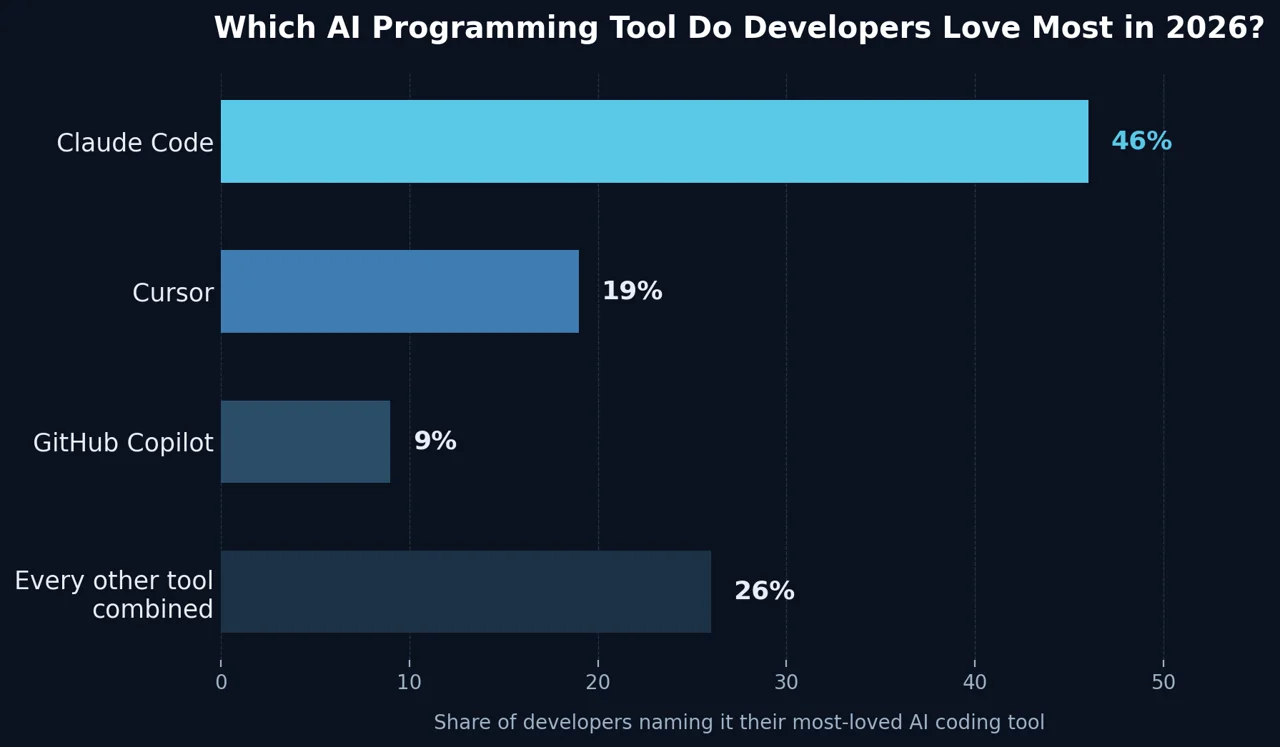
GitHub Copilot still has the broadest reach of any tool on the market, but reach and preference have split apart. Claude Code scored highest for satisfaction among developers surveyed, well ahead of Cursor and Copilot. That gap between "most used" and "most loved" is exactly why so few developers are settling on a single tool: the tool with the widest install base isn't the one developers reach for first anymore.
Why No Single Tool Does Everything
Three Different Jobs, Three Different Tools
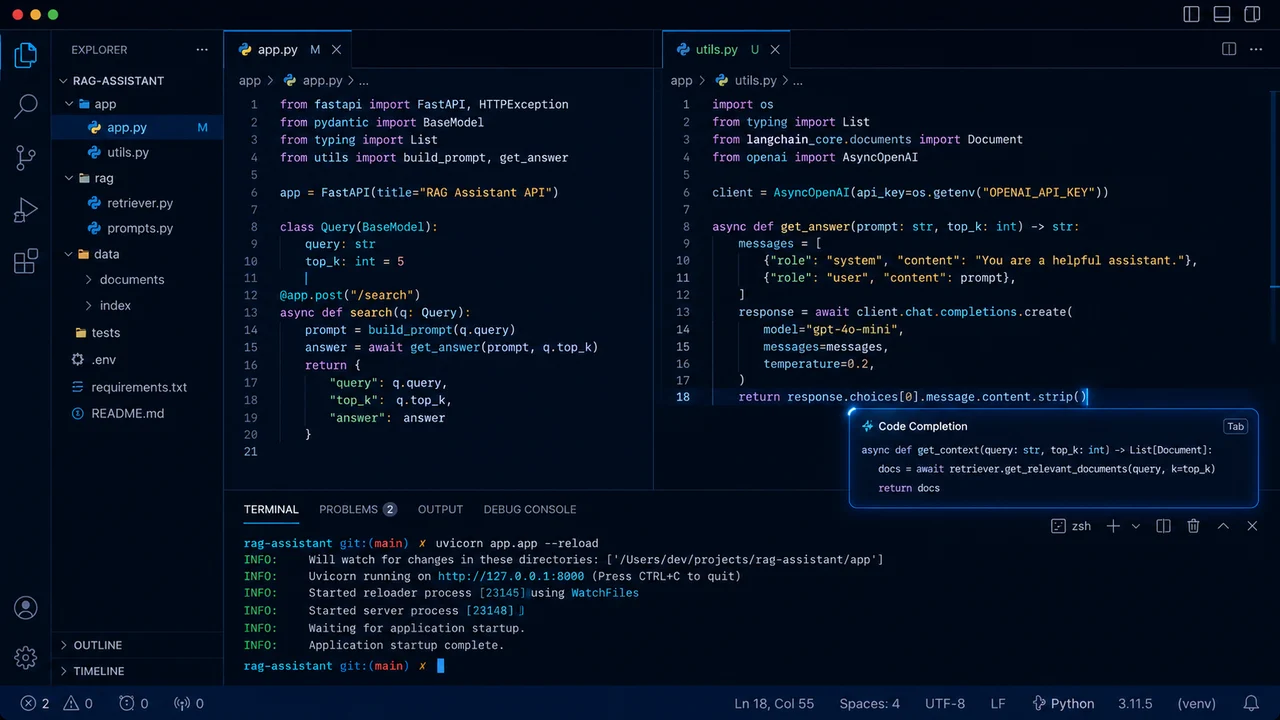
Developer tooling in 2026 has effectively split into layers, and most engineers now use more than one layer at a time:
| Layer | What it's for | Common tools |
|---|---|---|
| Editor-level completions | Fast, in-line suggestions while typing | GitHub Copilot, JetBrains AI Assistant |
| Repository-level agentic work | Multi-file refactors, debugging across a whole codebase | Claude Code, Cursor |
| Review and verification | Catching issues before AI-assisted code merges | CodeRabbit, Qodo |
A Typical 2026 Stack
A common pattern among developers right now looks like this:
-
Daily completions inside the editor, often Copilot, since it's frequently already included with GitHub Enterprise
-
Heavier architectural work handed to a repo-level agent like Claude Code once a bug or feature spans multiple files
-
A review pass before anything merges, treating AI-generated code as a first draft rather than a finished answer
No single tool in that stack replaces the other two. That's the core reason the "just pick one" framing stopped making sense.
The Acquisition That Shook the Market
SpaceX Buys Cursor for $60 Billion
The clearest sign this space is still shifting fast: SpaceX purchased Cursor, the most widely used standalone AI code editor, for $60 billion. Around the same time, Windsurf effectively disappeared from the competitive landscape entirely.
What It Means for Developers
The acquisition raises a real open question for anyone building a workflow around Cursor: whether the editor stays model-agnostic or ends up tied more closely to xAI's own models. Nothing has been decided publicly yet, but it's exactly the kind of platform risk that pushes developers toward spreading their workflow across more than one vendor instead of depending on a single tool.
The Trust Gap Nobody's Solved
Adoption Is Up, Trust Is Down
Here's the part of the 2026 story that doesn't get enough attention: usage and trust are moving in opposite directions. 84% of developers now use or plan to use AI programming tools, up from 76% the year before, yet only 29% of developers trust AI output to be accurate, down from 40%. Developers aren't becoming more confident in these tools. They're becoming more dependent on them while trusting them less, which is exactly the kind of gap that pushes people toward using several tools to cross-check each other rather than trusting any single one fully.
The Study That Complicates the Story
A controlled study from METR adds an uncomfortable wrinkle: it found experienced developers actually completed familiar-codebase tasks 19% slower while using AI tools, even though those same developers believed the tools had sped them up by roughly 20%. Self-reported productivity and measured productivity aren't always the same thing, and that gap is worth remembering before treating every AI programming tool claim at face value.
Where Developers Get This Wrong
Common Failure Points
- Accepting AI-generated suggestions without reading them closely, treating a first draft as a finished answer
- Adding a new tool to the stack without a clear job for it to do, rather than replacing something it makes redundant
- Skipping a review or verification step because the earlier tools in the chain already "seemed right"
- Ignoring that AI-generated code has been shown to carry a meaningfully higher rate of security issues than human-written code
The Pattern Behind the Failures
Teams that treat every suggestion as final, instead of as a draft, tend to see a short-term speed boost followed by a slower, messier codebase months later.
Quick Checklist: Is Your Stack Actually Working?
The Checklist
- Each tool in your stack has one clear job, not overlapping ones
- Someone reviews AI-assisted code before it merges, every time
- You know which tool you'd trust least, and you double-check its output more
- You've measured actual task time, not just how fast the work feels
- You have a plan if one vendor in your stack changes ownership or pricing
If Most of These Are Unchecked
More tools won't fix a workflow that lacks review and measurement. Fewer, better-understood tools with a real verification step tend to outperform a large stack used carelessly.
What's Next
Two Trends Converging
- Tool-stacking is very likely to keep growing, not shrink, as long as no single vendor offers the full editor-to-review pipeline in one place
- Pricing and ownership changes, like Copilot's shift to usage-based credits and the Cursor acquisition, mean the "right" stack for a given team may need re-evaluating every few months rather than once a year
The Real Takeaway
The developers getting the most value in 2026 aren't the ones with the most tools installed. They're the ones who know exactly what job each tool in their stack is doing, and who still read the output before trusting it.
Sources & Official References
- Marissa Harcourt: on the SpaceX-Cursor acquisition and the shift to multi-tool developer stacks: marissaharcourt.substack.com
- AI Business Weekly: AI programming tools statistics, JetBrains AI Pulse and Ideaplan market share data: aibusinessweekly.net
- The Pragmatic Engineer: 2026 developer tooling survey on tools used per engineer: newsletter.pragmaticengineer.com
- Uvik Software: AI programming assistant adoption and trust statistics: uvik.net
- Modall: AI in software development trends, including the METR productivity study: modall.ca
- ToolChase: 2026 AI tools pricing changes, including GitHub Copilot's usage-based credits: toolchase.com
Figures and statistics reflect research and reporting current as of July 2026. Developer surveys on this topic vary by methodology and sample, so treat exact percentages as directional rather than universal. Confirm the latest data directly with the cited sources before republishing.