Introduction
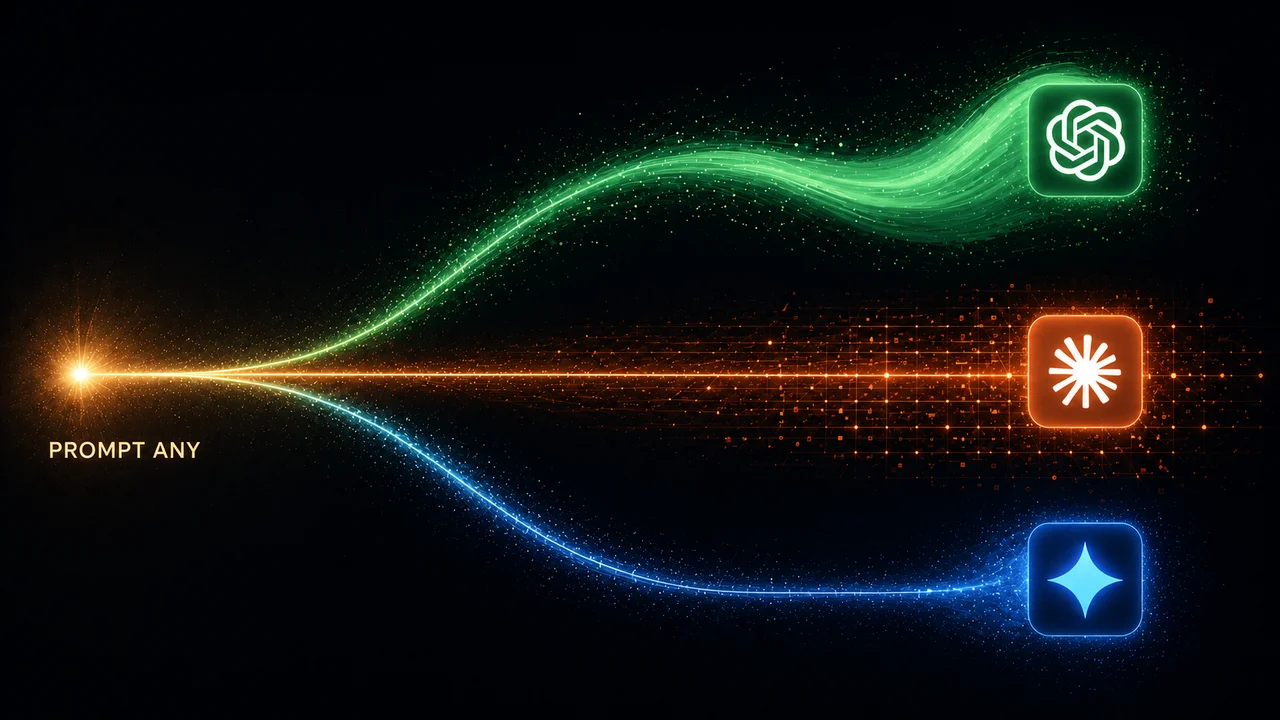
Copy the same prompt into ChatGPT, Claude, and Gemini, and you won't get three versions of the same answer, you'll get three different personalities responding to three different internal patterns. That's not a bug in any of them. Each was trained to reward a different kind of structure, and knowing which one matters for which tool is the actual skill behind "prompt engineering" in 2026.
The Quick Answer (For People in a Hurry)
- ChatGPT rewards: detailed system prompts, role-play framing, and iterative back-and-forth refinement
- Claude rewards: explicit structure, XML-style tags separating context, instructions, and examples
- Gemini rewards: concise, direct instructions over long role-play setups
- The one habit that helps everywhere: telling the model exactly what output format you want, instead of assuming it'll guess correctly
ChatGPT: Talk to It Like You're Briefing a Creative Partner
ChatGPT tends to perform best with a fuller system prompt, give it a persona, a tone, and a goal, then let the conversation refine itself over a few turns. It handles iterative back-and-forth unusually well: ask for a draft, react to it in plain language ("more casual," "cut this section"), and it adjusts smoothly without needing the full instruction restated.
- Give it a role up front ("You're a senior copywriter reviewing this for tone"), it responds noticeably better to persona framing than a flat instruction
- Custom GPTs let you save a persona and instruction set permanently, so you're not rebuilding the same system prompt every session
- It's genuinely strong at creative and conversational writing, so loosely-specified creative prompts tend to work better here than on the other two
- Iterative refinement is its strength, you don't need a perfect prompt on the first try
Claude: Structure Beats Personality
Claude was trained heavily on structured, tagged prompts, and it shows. Where ChatGPT rewards personality and Gemini rewards brevity, Claude rewards clear, labeled sections, plain paragraphs work, but wrapping distinct parts of a prompt in XML-style tags produces noticeably more consistent, better-organized output.
The same prompt, structured the way Claude responds best to:
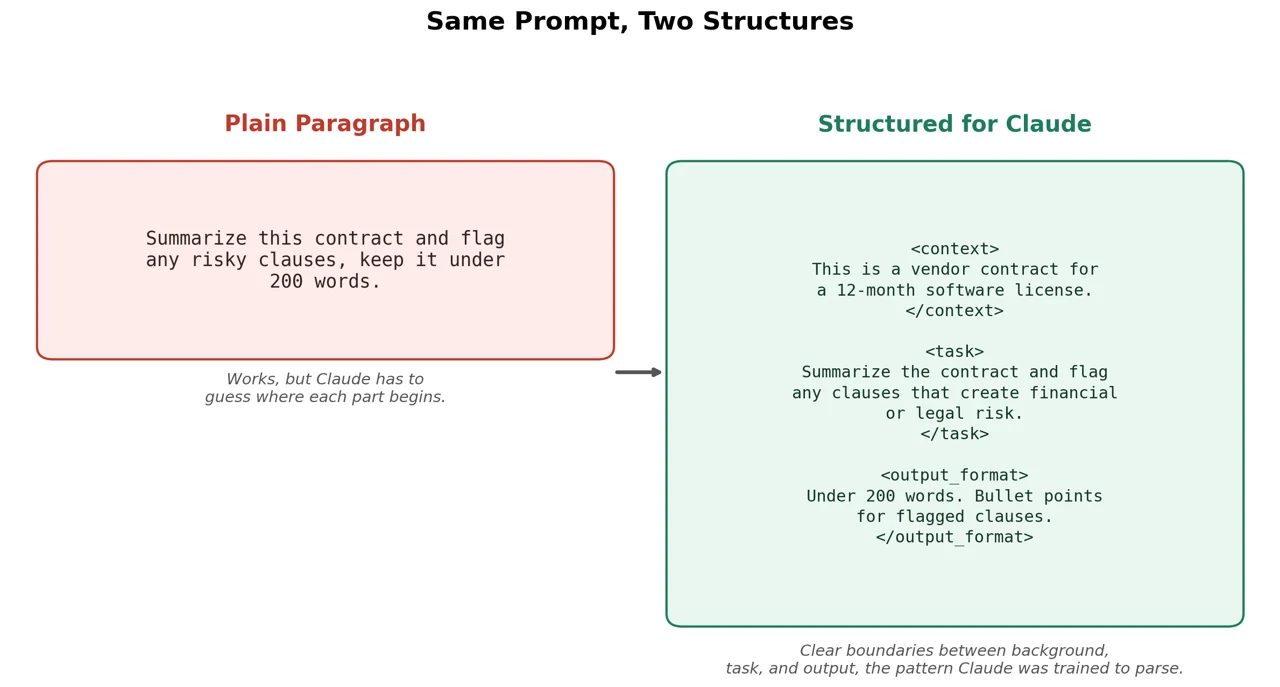
Neither is "wrong," but the second version gives Claude clear boundaries between what's background, what's the actual task, and what the output should look like, and that separation is exactly the pattern it was trained to parse.
A few other things worth knowing:
- Numbered, sequential steps work better than one dense paragraph for multi-part tasks
- Asking Claude to think in tags before answering in tags improves accuracy on math, logic, and multi-step reasoning
- Giving it explicit permission to say "I don't know" measurably reduces confident wrong answers
- Its very long context window means you can paste an entire document or codebase in, but you still need to tell it what to do with all of it, or it'll default to a generic summary
Gemini: Shorter Is Usually Better
Gemini leans the opposite direction from ChatGPT. Long role-play setups and elaborate personas tend to add less value here, it tends to respond best to concise, direct instructions that get straight to the task. Where it pulls ahead is native multimodal input: it can take in a genuinely long document, image set, audio file, or video directly in one prompt without any separate transcription or preprocessing step, and reason across all of it at once.
| What you want | How to prompt Gemini for it |
|---|---|
| A quick, factual answer | Keep the instruction short and direct, skip the persona setup |
| Analysis grounded in current events | Ask it directly to use current information; native search grounding gives it an edge on anything time-sensitive |
| Analysis across a huge file (long PDF, long video, long audio) | Drop the file in directly and state the task plainly, this is where its context window does the heavy lifting |
| Structured output (tables, JSON) | State the exact format up front, it won't infer a preferred structure from a vague ask the way ChatGPT sometimes will |
Quick Comparison
| ChatGPT | Claude | Gemini | |
|---|---|---|---|
| Responds best to | Persona and role framing | Explicit XML-style structure | Short, direct instructions |
| Best for | Creative and conversational drafts | Long, structured, multi-part tasks | Fact-grounded and multimodal tasks |
| Biggest prompting mistake | Assuming it needs a rigid template | Writing one dense paragraph instead of labeled sections | Over-explaining with unnecessary role-play |
Final Verdict
None of these three is "better" at prompting in general, they just reward different habits. If you're moving a prompt from one to another and the results suddenly feel off, that's usually not the model failing, it's the prompt still assuming the previous model's preferences. Adjust the structure to match the tool, not the other way around.
Sources & Official References
- OpenAI (ChatGPT): https://platform.openai.com/docs
- Anthropic (Claude) Prompt Engineering Guide: https://docs.claude.com/en/docs/build-with-claude/prompt-engineering/overview
- Google (Gemini): https://ai.google.dev/gemini-api/docs
Reflects each provider's own documentation as of July 2026. Model behavior shifts with each new release, so prompting habits that work today may need adjusting after a future update.