At XPENG's AI Day this week, a humanoid robot called IRON walked onto the stage by itself, chatted in real time and gave a speech beside XPENG's He Xiaopeng. A year earlier, XPENG had to cut the same kind of robot open on stage to prove nobody was inside.
So what is the XPENG IRON robot, really? It is a real robot coming off a real production line, but almost everything it does in public is still a demo. XPENG plans store-assistant training in early 2027 and a public release in the second quarter of 2027, and has named no price.
What XPENG Showed This Week
This week's AI Day was a stage show, and IRON was the headline act. CnEVPost reports that the robot walked onto the stage on its own, held a live voice chat and gave a speech with He Xiaopeng. CnEVPost also calls it what it was: a public demonstration, with visitors watching.
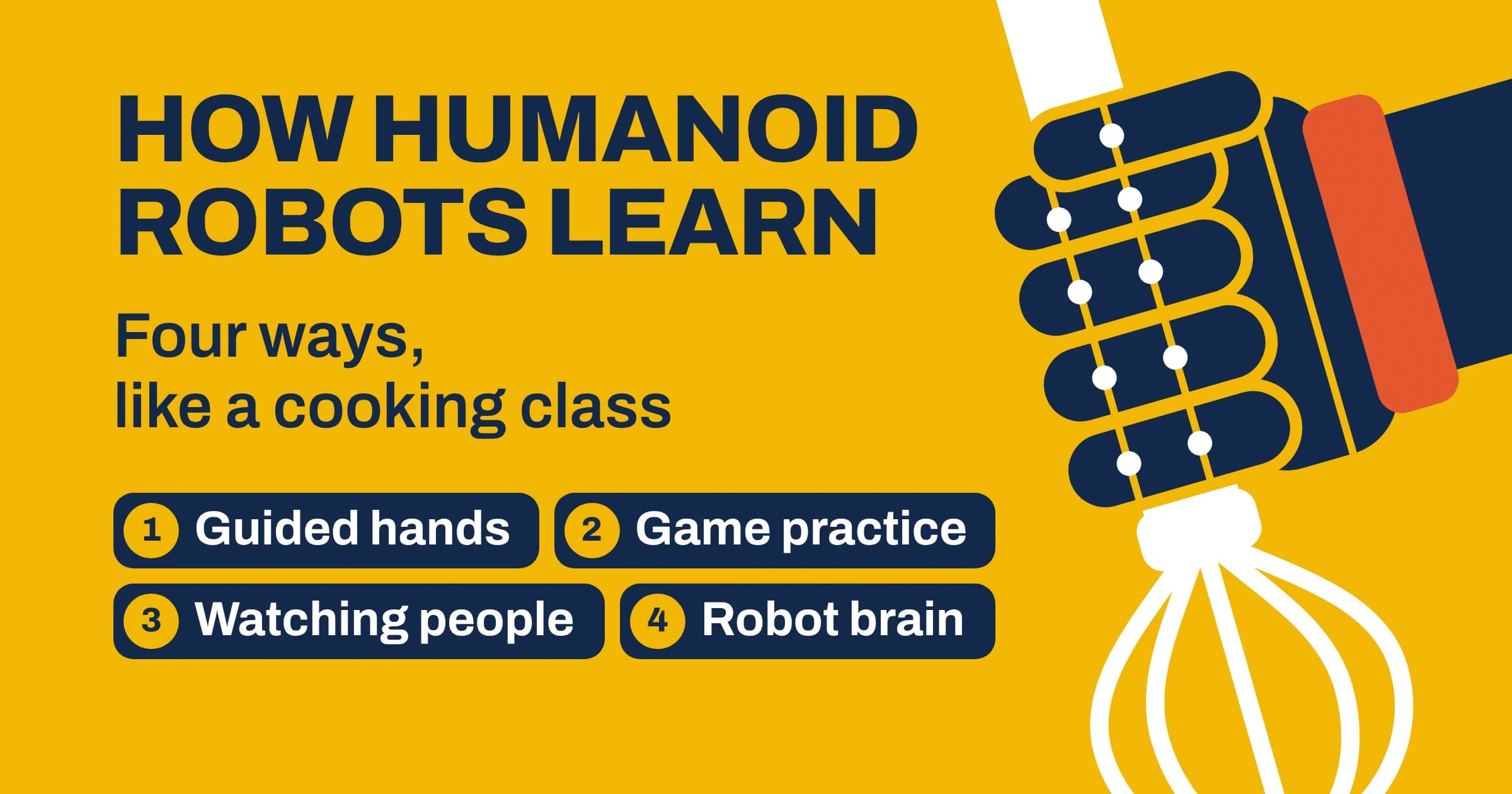
A stage demo is like a cooking show. The chef makes one dish in a spotless kitchen, and every step is planned.
Nobody judges a restaurant that way. You judge it on a packed Friday night.
Robots are the same. The question is not whether IRON can cross a stage. It is whether it can do a job, day after day, in a messy real place.
The next show is already booked. CnEVPost reports IRON will host XPENG's press conference at the Guangzhou Auto Show on November 27.
XPENG also unveiled its Turing Physical AI Architecture. Physical AI means AI that acts in the real world through a body, not just on a screen. It is a shared design for XPENG's cars, robotaxis (self-driving taxis), robots and flying cars, not a brain built only for IRON.
Is the XPENG IRON Robot Real?
Yes, IRON is a real machine, and XPENG once had to prove it the hard way.
When XPENG unveiled IRON at its AI Day in Guangzhou on November 5 last year, the robot walked so smoothly that people wondered who was inside. Live Science reports that XPENG "felt compelled to slice it open onstage to prove a human wasn't hiding inside." Its verdict: "Fortunately for the audience, there wasn't."
Since then, XPENG says it has opened its humanoid robot production lines. In its September release, XPENG says an IRON made its debut by walking off the line on its own. He Xiaopeng put it modestly: "Today's step is small, but XPENG is building the production lines for an entirely new product category."
But real is not the same as finished. In kitchen terms, the cook is real and wears the uniform. It just has not worked a dinner rush yet.
Even XPENG's own product page frames IRON's skills as a show: "Watch the robot demonstrate a variety of real-world skills."
What IRON Can Do Today vs. What Is Still a Plan
Most IRON headlines fit one of five boxes: exists, demo, claim, plan or ruled out. The table sorts the main ones and shows who says so. In the dates, Q1 means January to March and Q2 means April to June.
| What you hear | Status | Who says so |
|---|---|---|
| Humanoid robot production lines are running, with over 80% of core steps automated | Exists | XPENG, September 2026 |
| An IRON walked off the production line by itself | Exists, per XPENG | XPENG |
| IRON walked onstage, chatted live and gave a speech | Demo | CnEVPost |
| IRON performs dance routines | Demo | XPENG product page |
| IRON does complex tasks with no remote operator | Claim | XPENG only |
| Hardware mass production | Plan: January 2027 | CnEVPost, citing XPENG |
| Training as a store assistant in XPENG stores | Plan: Q1 2027 | XPENG |
| Official public release | Plan: Q2 2027 | CnEVPost |
| Household chores | Ruled out for now | Live Science |
Two rows matter most. The production line is real progress, because it is where a prototype turns into a product. XPENG calls it a leap from lab prototypes to factory manufacturing.
The other is the no-remote-operator claim. A robot steered by a hidden person is a puppet, not a worker. For now, that claim rests on XPENG's word alone.
How IRON's AI Brain Works, in Plain Words
IRON's AI splits every task into three jobs: see, decide and move. XPENG's IRON product page names three AI models, called VLM, VLT and VLA, and gives each one a role.
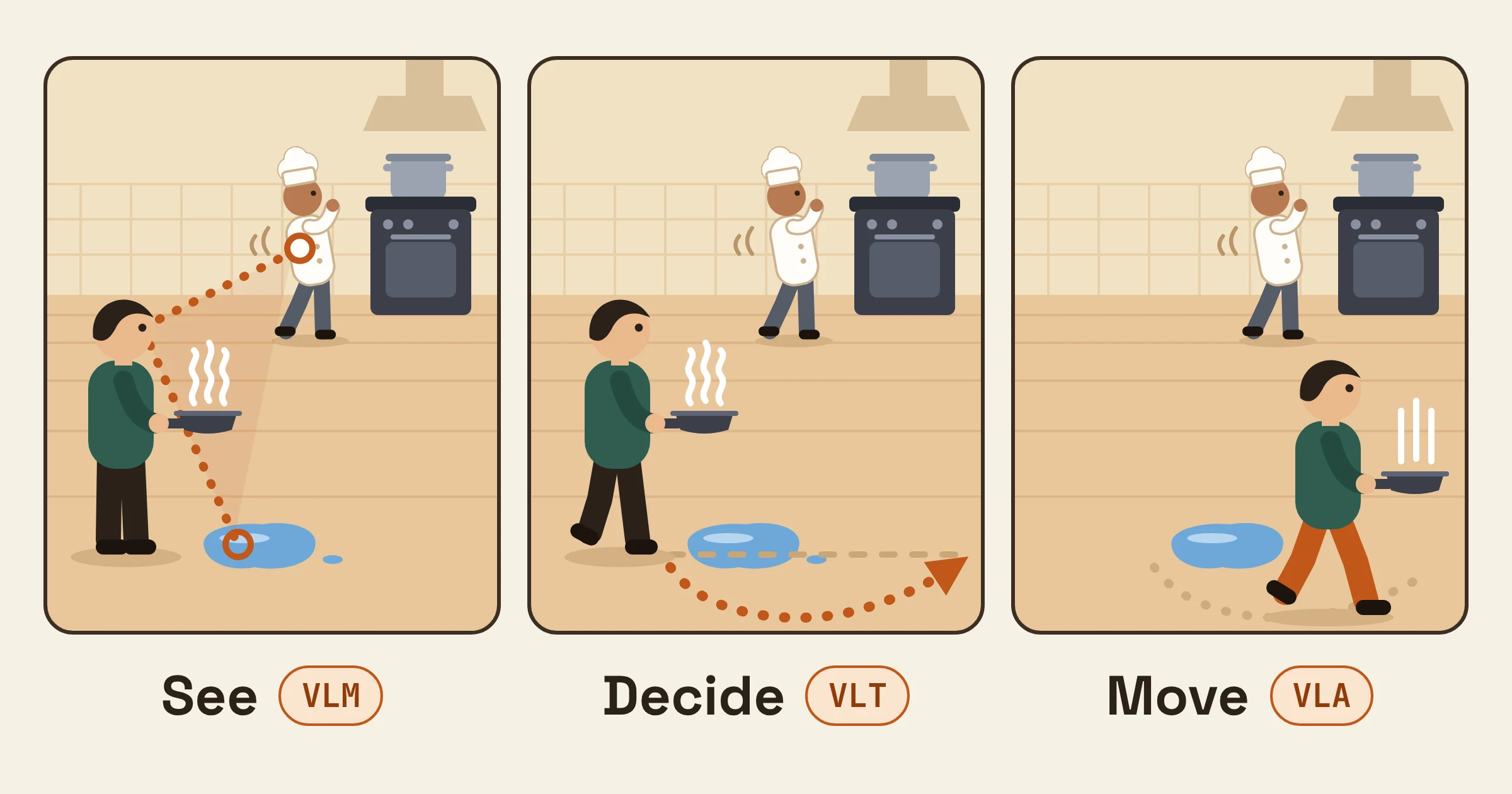
The VLM is the "brain for perception", which means seeing and making sense of things. The VLT is the "core engine for autonomous decision-making". The VLA is the "cerebellum for whole-body control", named after the part of your brain that handles balance and smooth movement.
Picture yourself crossing a busy restaurant kitchen with a hot pan.
- See. You spot a cook stepping back from the stove and a wet patch on the floor. That is the VLM's job.
- Decide. You wait half a second, then go around the wet patch. That is the VLT.
- Move. Your legs, arms and balance carry out the plan, and the pan stays level. You never think about each muscle. That is the VLA.
Here is a neat detail. You do not say wet floor, go left in your head before you step. Live Science reports XPENG's AI works the same way: the robot can respond physically without first turning what it sees into words.
All of this runs on the robot itself. XPENG says three of its own Turing AI chips run the AI models and whole-body control. It says that lets IRON do complex tasks without remote operation, meaning no hidden person steering it like a drone pilot.
Why it matters to you: a robot that needs a pilot still needs a person on every shift. One that thinks for itself, if XPENG's claim holds up, does not.
Here is where the kitchen picture breaks down. You learned to dodge cooks over a lifetime of walking around. IRON learns from practice data.
XPENG says its Robot Data Factory, its name for its training-data operation, covers more than 250 scenarios and 15 job categories. A real store will still serve up moments no list covers.
Inside the Body: Skin, Chips and Battery
IRON's spec sheet is full of big numbers, so here they are with something to measure them against.
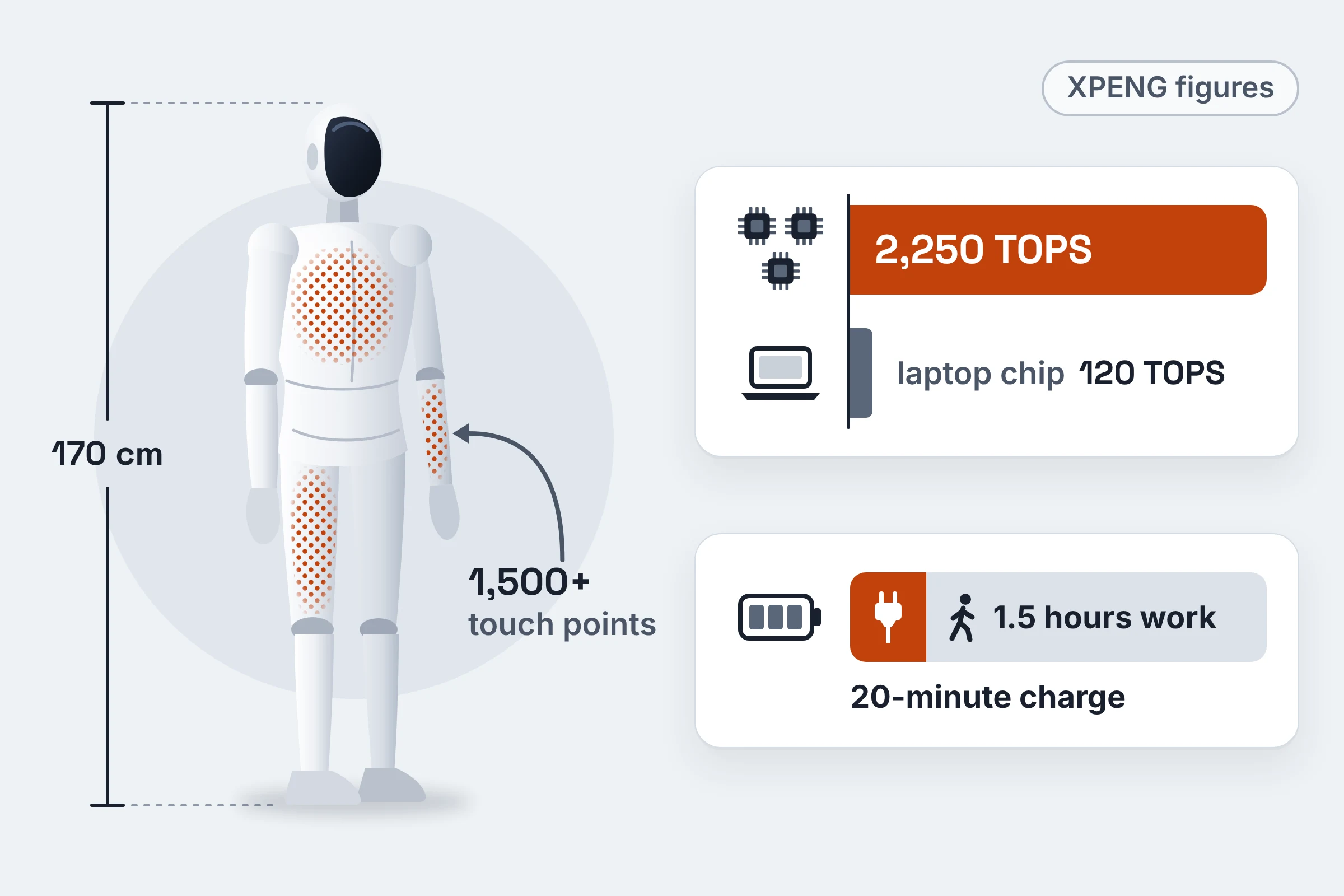
- Size. CnEVPost reports IRON stands 170 cm (about 5 feet 7 inches) tall and weighs 62 kg (about 137 pounds).
- Joints. XPENG says IRON has 76 degrees of freedom. That means 76 separate ways its joints can bend or turn.
- Skin. XPENG says a soft, flexible skin covers the body, with more than 1,500 touch-sensing points built in. CnEVPost reports the touch coverage reaches over 80% of key areas. Think of it as a sense of touch. In principle, the robot can feel where it is bumped and what it is holding.
- Brain power. XPENG says its three Turing chips deliver up to 2,250 TOPS (trillion operations per second, a rough measure of AI speed). For scale, Live Science notes that Intel's Core Ultra 200V chip, found in some of the best laptops, reaches 120 TOPS. IRON carries almost 19 times that.
- Battery. CnEVPost reports a solid-state battery pack with more than 300 Wh/kg. That is watt-hours per kilogram, or how much energy each kilo of battery holds. Solid-state means the battery uses a solid material where most batteries use a liquid.
- Work time. CnEVPost reports 1.5 hours of work on a 20-minute charge. XPENG says IRON can also find its way around and charge itself. Picture an eight-hour store day: at that rate, IRON would spend roughly an hour and a half of it plugged in.
One number has changed since the unveiling. Live Science described the IRON shown at the unveiling with 82 degrees of freedom, including 22 in each hand.
XPENG's September release lists 76 across the body and 21 in each hand, while its product page still says 22-degree-of-freedom hands. Take 76 as today's figure, and the hands as 21 or 22, depending on which XPENG page you read.
Why the Dates Keep Moving
XPENG's dates for IRON have slid from 2026 into 2027, in three steps you can trace.

- November 5 last year, AI Day in Guangzhou. IRON is unveiled. Live Science reports the first units were expected in XPENG locations in 2026.
- September 8, 2026, the production line opens. XPENG says its robots will enter mass production by the end of the year. Launch and delivery in China and overseas are planned for 2027.
- November 25, 2026, this week's AI Day. CnEVPost reports hardware mass production now starts in January 2027. XPENG says store-assistant training begins in Q1 2027. CnEVPost reports the public release in Q2 2027.
So mass production moved from the end of 2026 to January 2027. Robots in XPENG locations in 2026 became robots in training in early 2027. Those are slips of weeks and months, not years.
Read them as caution, not drama. CnEVPost quotes He Xiaopeng as "extremely optimistic in the long term and cautious in the short term."
He also said the global robotics market may number only in the tens of thousands of units today. In kitchen terms, opening night moved back a few months, and He Xiaopeng is openly cautious about the short term.
Can You Buy XPENG IRON, and What Does It Cost?
Not yet. As of November 2026, XPENG has not announced a price. It plans the official launch and delivery for 2027, in China and overseas, and CnEVPost puts the public release in the second quarter.
The first place you are likely to meet IRON is an XPENG store. XPENG's AI Day release says IRON will begin training there as a store assistant in Q1 2027. In September, XPENG said the first commercial rollouts would start in its own stores and campuses. It calls IRON a "work partner for real-world roles."
What about your home? When IRON was unveiled last year, Live Science reported that XPENG ruled out household chores for the immediate future. No robot butler for now.
How XPENG will charge is still open. CnEVPost reports it is exploring a mix of hardware sales, software and token subscriptions, plus a skills store.
Tokens are the small units an AI model's work is usually billed in, so think of something like a phone data plan for the robot's brain. A skills store would work like an app store for abilities.
XPENG says it is building an open robotics system where partners can download capability packages.
He Xiaopeng has even said future buyers could choose a robot's sex, hair length or clothing. That is a vision, not a box on an order form.
If you run a business and are already picturing a robot greeter, plan for upkeep as well as the machine. Our list of common AI automation mistakes is a good gut check before you budget for one.
What to Watch Next
These are the signs that IRON has moved from demo to product, in the order they are due.
- November 27: IRON hosts XPENG's press conference at the Guangzhou Auto Show. Enjoy it, but file it under demos.
- January 2027: hardware mass production is due to start. Watch for robots leaving the factory, not just a line running.
- Q1 2027: store-assistant training begins in XPENG stores. Watch for IRON on an ordinary day, with real customers.
- Q2 2027: the public release. Watch for a price.
- Outside XPENG's walls: the real test is IRON working for a company that is not XPENG.
Until then, judge IRON by what happens in XPENG's stores from early 2027, not by stage shows. The cooking show was great. The dinner rush starts next year.