

What Claude Actually Is
Claude is Anthropic's family of AI models and the assistant built on top of them:
- Available through: a chat app, a desktop and mobile app, a terminal-based coding agent, and a developer API
- Used for: writing, coding, research, analysis, and increasingly, delegating entire multi-step tasks rather than answering single questions
What sets it apart starts with the company. Anthropic was founded specifically around AI safety research, and Claude's training leans on what the company calls Constitutional AI:
- Trained against a written set of principles, not purely human feedback
- Consistently described as careful and thoughtful, less likely to confidently make things up
- Paired with genuinely strong long-form writing, complex reasoning, coding, and increasingly, autonomous work across real tools and files
Who it's actually built for:
- Developers, Claude Code for autonomous multi-file work, plus native API access across major cloud platforms
- Writers and researchers, long context windows and Projects mean less re-explaining, more depth per session
- Knowledge workers, Cowork and MCP connectors turn Claude into something that touches real files and apps, not just chat
- Enterprises, SSO, audit logs, and enterprise-managed connector authentication for organization-wide rollout
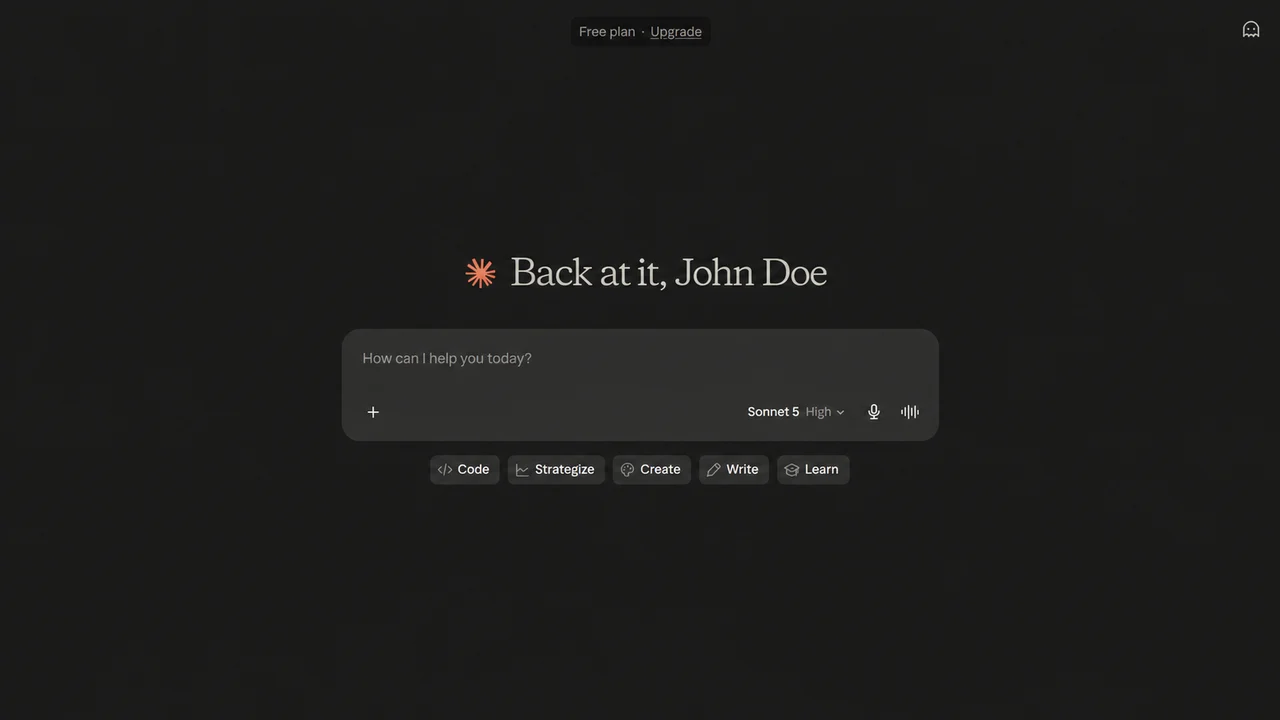
- Casual users, the Free plan is genuinely usable day to day, not just a trial
The Model Family, and When to Use Each
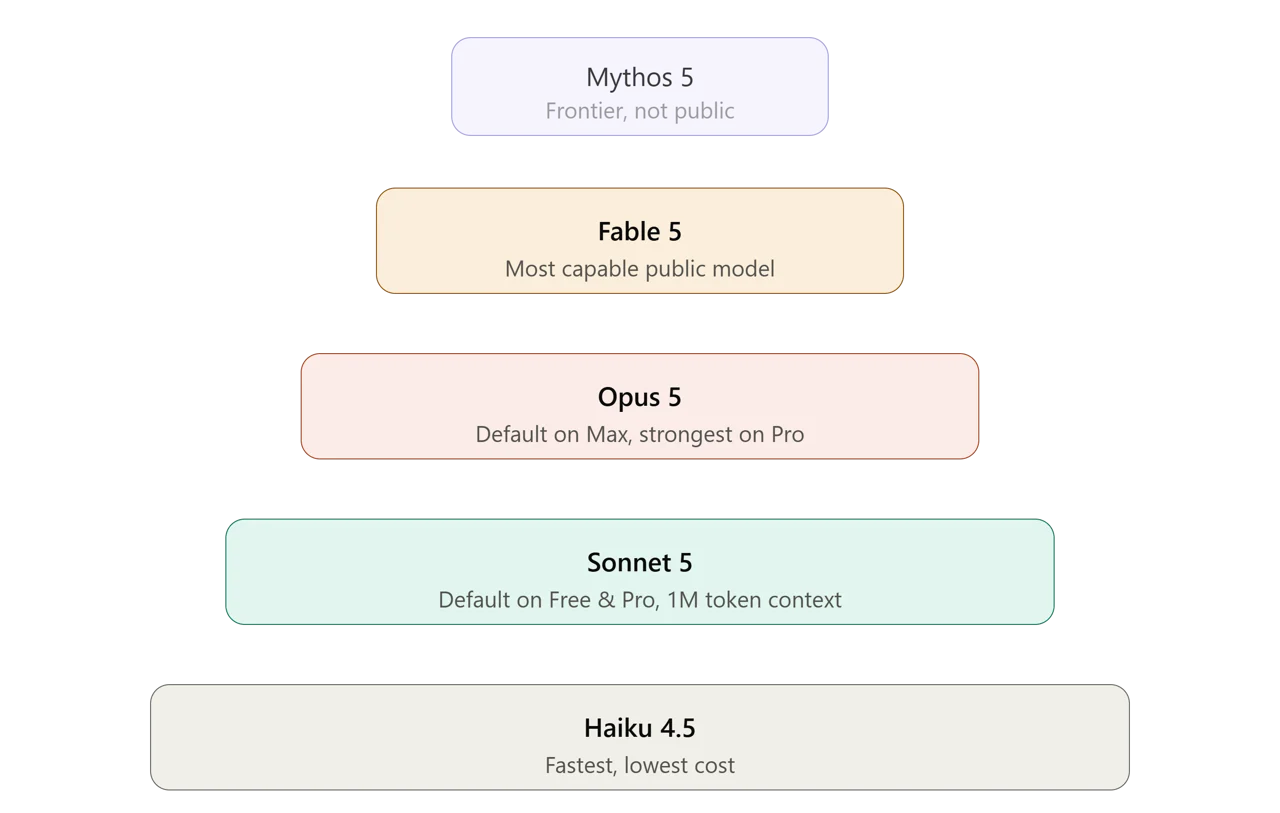
Anthropic ships several models at once, not one single "Claude," and the lineup changed meaningfully in the last few weeks:
| Model | Best for | Notes |
|---|---|---|
| Fable 5 | Maximum capability, complex multi-step agentic work | Anthropic's most capable publicly available model; the safety-hardened release of the more powerful Mythos 5, which isn't publicly available |
| Mythos 5 | N/A for most users | Anthropic's actual frontier model, held back from public release due to cybersecurity risk; a small number of trusted organizations get access under Anthropic's Project Glasswing |
| Opus 5 | Everyday professional and knowledge work | Released July 24, 2026; now the default model on Claude Max and the strongest model available on Claude Pro; approaches Fable 5's intelligence at roughly half the cost, with an adjustable effort toggle (low/medium/high) |
| Opus 4.8 | Still available for teams mid-migration | Opus 5's immediate predecessor; remains accessible via the API for continuity |
| Sonnet 5 | Balanced everyday assistant, high-volume agentic tasks | The current default on the Free and Pro plans as of June 30, 2026; a 1 million token context window as both the default and only option |
| Haiku 4.5 | Speed and cost-efficiency | The fastest, cheapest tier, built for high-volume or latency-sensitive use cases |
The practical decision tree:
- Sonnet 5 handles the large majority of everyday work well
- Opus 5 is worth reaching for when a task needs deeper reasoning or more autonomous follow-through
- Fable 5 is for the hardest, highest-stakes work where cost matters less than getting it right
A Quick 2026 Timeline
- June 9, Fable 5 and Mythos 5 launch, Anthropic's first Claude 5 models
- June 12–July 1, Fable 5 and Mythos 5 access briefly suspended for U.S. export-control review, then restored
- June 30, Sonnet 5 launches, becomes the new Free and Pro default
- July 24, Opus 5 launches, becomes the new Max default and strongest Pro model
Four major model releases in under two months, a pace that's become normal for Anthropic in 2026.
What Actually Makes Claude Different
Projects and Artifacts
- Projects, upload reference material, style guides, or past work once, and every conversation inside that Project pulls from it automatically, instead of re-explaining context every time
- Artifacts, a live side panel next to the chat for anything Claude builds (a document, code, a chart), so you can see and iterate on the actual output instead of reading it as plain chat text
Connected Apps and MCP
This is the part of Claude's ecosystem that's grown fastest, built on an open standard called MCP, the Model Context Protocol.
What MCP actually is: an open standard, created by Anthropic in November 2024 and since donated to the Linux Foundation's Agentic AI Foundation, that lets an AI model connect to external tools and data through one consistent protocol, instead of a custom, one-off integration for every combination.
What that means inside Claude, practically:
- Anthropic's connectors directory now lists over 950 MCP servers, used by millions of people, covering tools like Slack, Asana, Figma, Google Workspace, and Microsoft 365
- Some connectors support MCP Apps, meaning the tool renders an actual interactive interface directly inside the conversation, not just text
- Both remote and local servers are supported, so a connector can run in the cloud or entirely inside your own network
- Enterprise-managed authentication lets admins provision connectors for an entire organization through their identity provider, with zero-touch setup for individual users
- Every connector requires explicit permission before Claude can read or act through it, nothing connects silently in the background
Computer Use and Cowork
These two terms get used almost interchangeably, but they're not quite the same thing:
- Computer use, the underlying capability: Claude taking screenshots, moving a mouse, and typing to operate real software. Available both as an API tool for developers, and as a built-in feature inside Anthropic's own apps
- Cowork, where most people actually encounter it. Anthropic's agentic workspace, live on desktop since January 2026 and expanding to web and mobile, built for delegating real work without touching a terminal
- Claude Code, the terminal-based agent developers reach for instead, when they want the same underlying capability with more direct control

Web Search vs. Extended Thinking vs. Research
Three distinct ways of getting to a better answer, and mixing them up is the most common source of confusion for new users:
| Feature | Best for | How it works | Availability |
|---|---|---|---|
| Web Search | Quick facts, news, current information | One or two live searches woven into a fast answer | Most plans |
| Extended Thinking | Complex reasoning that doesn't need the web | Longer internal reasoning before responding, with the process visible | Most models |
| Research | Deep, multi-source reports | Agentic, multi-step search (5+ calls), pulling from the web and your connected apps, with citations | Paid plans |
Worth knowing: turning on Research usually switches on Extended Thinking automatically, and it performs noticeably better once you've connected relevant apps, since it can pull from your actual files and tools instead of the open web alone.
Real-World Uses
- Coding, from single-function debugging to full autonomous refactors via Claude Code (e.g., tracing a bug across five files instead of an hour of manual searching)
- Writing and editing, long-form content that's consistently described as reading less "obviously AI-generated" than most competitors
- Research and analysis, synthesizing long documents, comparing sources, building structured reports (e.g., turning a 500-page spec into a flagged issue list)
- Data work, cleaning, analyzing, and visualizing data directly inside a conversation
- Productivity with connected tools, drafting in Slack, updating a project in Asana, or pulling real numbers from Google Workspace, all from one chat
- Agentic workflows, handing off a multi-step task entirely, through Cowork or Claude Code, and getting a finished result back (e.g., a scheduled weekly account-research brief run automatically before a sales call)
Pricing and Access
Claude's pricing has stayed fairly stable through 2026 even as the models behind it changed several times:
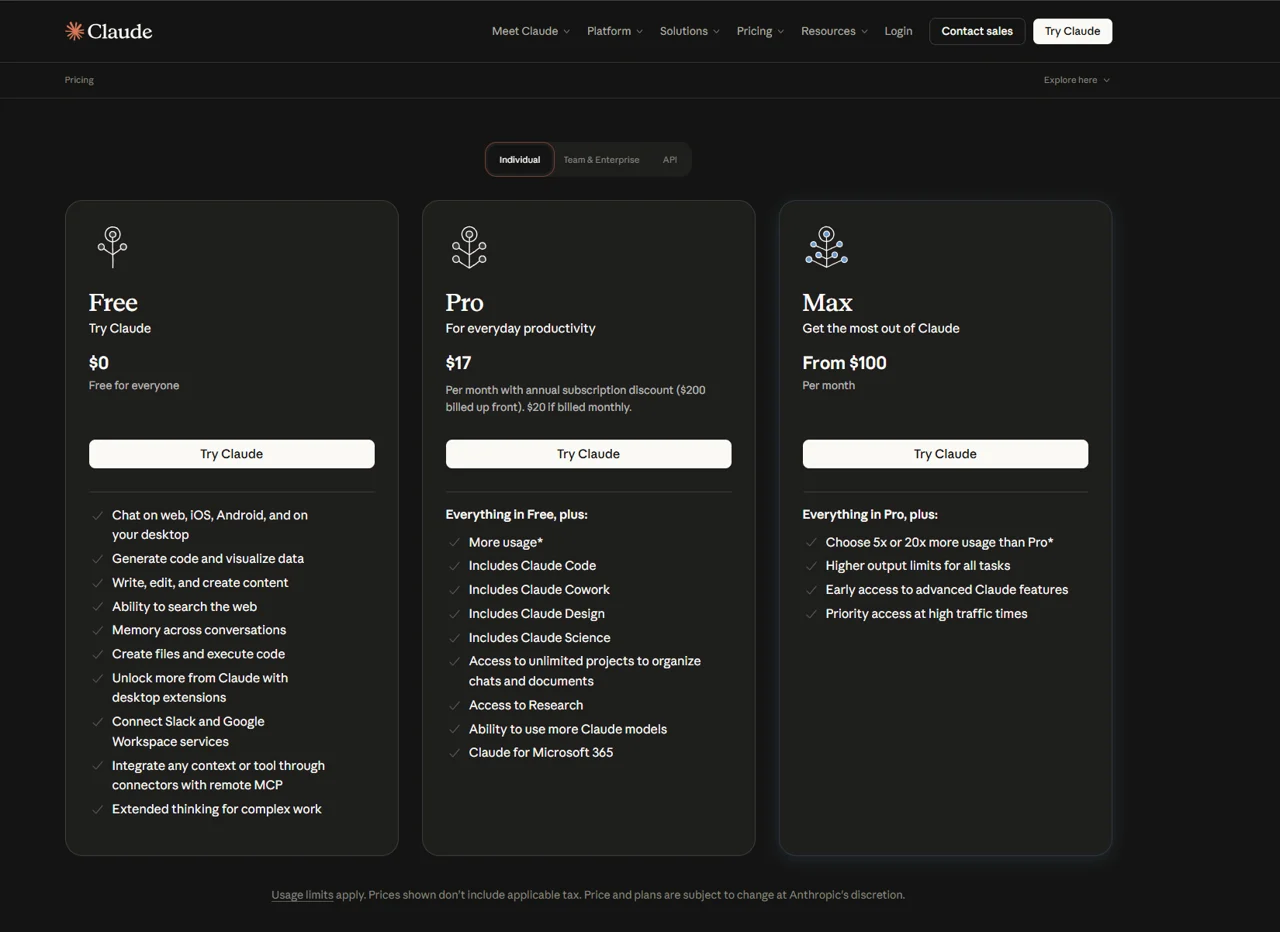
- Free, $0, daily usage limits, defaults to Sonnet 5
- Pro, around $17/month (or slightly less billed annually), roughly 5x Free's usage, includes Claude Code, Cowork, Research, and Opus 5 access
- Max, two tiers, roughly $100/month (5x Pro usage) and $200/month (20x Pro usage)
- Team, per-seat pricing, standard and premium seat options
- Enterprise, custom pricing, adding SSO, audit logs, compliance features, and dedicated support
The API is billed separately, per million tokens, for developers building Claude into their own products. Exact prices and usage limits change fairly often, treat the numbers above as a snapshot and check claude.com/pricing directly before deciding on a plan.
Limitations and How It Compares
Claude isn't immune to the problems every current AI model shares:
- Hallucination hasn't been solved, just reduced
- Its knowledge has a training cutoff, patched by live web search rather than eliminated
- A real, well-documented reputation for occasional over-caution, declining or hedging on requests a more permissive model would simply answer
- Extended Thinking and Research both add latency, not the right tool when you just need a fast answer
- Free tier usage limits reset on a rolling window, easy to hit if Claude becomes part of daily work rather than occasional use
Compared to the alternatives, roughly
- vs. ChatGPT, ChatGPT edges ahead on raw creative flexibility and has the largest, most mature plugin and consumer ecosystem; Claude edges ahead on long-context reasoning, coding depth, and writing that reads less generically "AI"
- vs. Gemini, Gemini's biggest advantage is native integration across Gmail, Docs, and Sheets, plus strong multimodal handling of audio and video; Claude's advantage is more consistent structured output and a more mature agentic tool-use ecosystem via MCP
- vs. Grok, Grok's edge is real-time awareness of what's happening on X right now; Claude's edge is sustained, structured work across a long session rather than fast, timely takes
- vs. open-weight models (DeepSeek and similar), open models win on cost and self-hosting control; Claude wins on out-of-the-box reliability and not having to manage the infrastructure yourself
None of these gaps are settled permanently, all three labs ship updates every few weeks in 2026, and today's comparison is a snapshot, not a verdict.
Security, Privacy, and Enterprise Controls
Worth knowing if you're evaluating Claude for a team rather than yourself:
- Data use, conversations aren't used to train models by default on paid plans; consumer plans let you opt out too
- SSO and SCIM, supported on Team and Enterprise for centralized identity management
- Audit logs, Enterprise plans track connector usage and admin actions
- Connector governance, admins can approve, restrict, or require request-based access to specific MCP connectors org-wide
- Data residency and compliance, Enterprise plans support region-specific requirements for regulated industries
How to Start Using It
-
claude.ai, the web app, no install required, good starting point for anyone
-
Desktop app (Mac and Windows), adds Cowork and deeper local file access
-
Mobile app (iOS and Android), full chat, with Cowork rolling out in beta
-
API, for developers building Claude into their own product, via the Claude Platform
Quick-start tips
- Set up a Project the first time you have recurring context to share, instead of re-explaining it every session
- Turn on Research the next time you'd normally open five browser tabs to answer one question
- Connect your first MCP app (Google Workspace or Slack are the easiest starting points) to feel the difference between Claude talking about your work and actually touching it
The Bottom Line
Claude in 2026 isn't one product anymore, it's a full stack:
- A family of models tuned for different jobs
- A growing ecosystem of nearly a thousand real tool connections
- Product surfaces ranging from a simple chat window to a fully autonomous coding agent
The safety-first reputation that used to be Claude's main differentiator is still there, but it's no longer the only reason to choose it. If you haven't tried Research, connected an MCP app, or handed Claude Code a real task recently, that's the fastest way to see what's actually changed.
Reflects Claude's model lineup, features, and pricing as of early August 2026. Anthropic ships updates frequently, confirm current details on the official pages linked throughout before making a purchasing decision.