

Ever wished you had a super-smart coding friend sitting next to you who could write code, test your app in a real web browser, fix annoying bugs, and explain everything in plain English?
That is exactly what Google Antigravity is built to do.
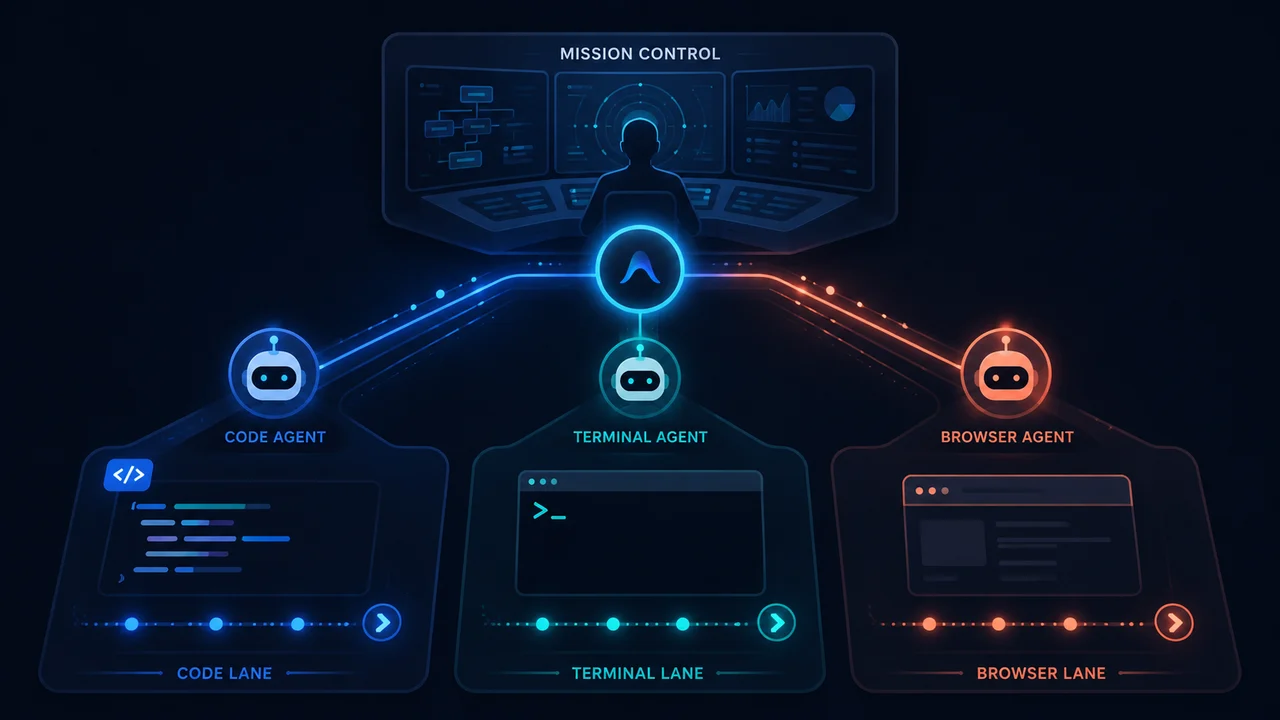
Instead of just giving you a basic autocomplete box that suggests a few lines of code, Antigravity is a complete agent-first coding platform. It lets smart AI helpers (called agents) read your entire project, make a step-by-step plan, write code across multiple files, and run tests in your terminal while you act as the Mission Controller.
Powered by Google's latest Gemini 3.7 Flash brain with Hybrid Reasoning, Antigravity makes building software faster, less stressful, and a lot more fun.
Here is everything you need to know in simple, easy-to-understand language.
Quick Summary: What You Need to Know in 30 Seconds
- What is it?: A full AI development suite by Google where AI agents work as autonomous helpers on your codebase.
- 4 Ways to Use It: An in-editor Antigravity IDE (VS Code base), a Desktop App (Antigravity 2.0) for multi-agent control, a fast Terminal CLI (
agy), and a Python SDK (pip install google-antigravity). - Powered by Gemini 3.7 Flash: Launched on August 13, 2026. It features Hybrid Reasoning, letting you switch between lightning-fast answers and deep problem-solving.
- Access Top Models: Use Gemini 3.7 Flash, Gemini 3.1 Pro, Claude Sonnet & Opus 4.6, and open-weight models all in one place.
- Built-in Browser Helper: The AI can open your website, click buttons, test your forms, and record a video to show you that everything works.
- Fair Pricing: Generous Free plan ($0/mo), Google AI Pro ($19.99/mo), and Ultra plans for heavy users.
The 4 Ways You Can Use Google Antigravity
Google designed Antigravity so you can use it however you like to build. Here is a look at the four main surfaces:
flowchart TD
    Core["Google Antigravity Ecosystem"]
    Core --> IDE["1. Antigravity IDE (In-Editor Coding)"]
    Core --> Desktop["2. Antigravity 2.0 (Desktop Dashboard)"]
    Core --> CLI["3. Antigravity CLI (Terminal TUI via agy)"]
    Core --> SDK["4. Antigravity Python SDK (pip package)"]
1. Antigravity IDE (Your Smart Code Editor)
If you already know and love VS Code, you will feel right at home. The Antigravity IDE looks familiar, but with three AI superpowers built right in:
- Antigravity Tab (Smart Autocomplete): It guesses what you want to do next, suggests whole blocks of code, and automatically adds missing import statements at the top of your file.
- Inline Command (
⌘+I/Ctrl+I): Highlight a piece of code, press the shortcut, and ask the AI to fix a bug or add comments to just those lines. - Sidebar Agent (Your AI Pair Programmer): A chat panel where you can ask big questions, brainstorm ideas, or tell the AI to build an entire new feature from scratch.
2. Antigravity 2.0 Desktop App (Mission Control)
Think of this as your central control room. It is a separate desktop app where you can manage multiple AI agents working on different projects or folders at the same time. You can watch them think, review their changes, and check background tasks in one clean view.
3. Antigravity CLI (agy for Terminal Fans)
If you prefer working inside a black terminal window without opening a heavy app, simply type agy in your command line.
- Fast and lightweight.
- Lets you run AI commands, edit files, and fix code straight from your terminal.
- Type
/helpinside the tool to see all commands.
4. Antigravity Python SDK (Automate with Code)
If you want to write a Python script that uses AI agents automatically (for example, to scan your code for security bugs every night), you can install the official Python package:
pip install google-antigravity
Here is how simple it is to use in Python:
import asyncio
from google.antigravity import Agent, LocalAgentConfig, CapabilitiesConfig

async def main():
    # Set up the agent with write and terminal permissions
    config = LocalAgentConfig(
        system_instructi,
        capabilities=CapabilitiesConfig()
    )

    # Start the agent and ask it to do a task
    async with Agent(config) as agent:
        response = await agent.chat("Check this folder and list all files that need updating.")
        async for text in response:
            print(text, end="", flush=True)

asyncio.run(main())
The Brain: Gemini 3.7 Flash & Hybrid Reasoning
The heart of Antigravity is Gemini 3.7 Flash, released on August 13, 2026. What makes it special is a feature called Hybrid Reasoning.
What is Hybrid Reasoning in Simple Terms?
Imagine your brain has two gears:
- Low Gear (Fast & Simple): For quick things like answering a question, writing a basic HTML button, or fixing a spelling mistake.
- High Gear (Deep Thinking): For hard problems like designing a database schema, finding a tricky logic bug, or restructuring 15 code files at once.
With Gemini 3.7 Flash, you can set the thinking_level to Low, Medium, or High so you never waste time or money on simple tasks, but still have heavy brainpower when you need it.
Gemini 3.7 Flash vs Older Models
| Feature | Older Models (Gemini 3.6 Flash) | Gemini 3.7 Flash (New Default) | What it Means for You |
|---|---|---|---|
| Thinking Control | Fixed thinking time | Adjustable Hybrid Reasoning | Fast when you want speed, deep when you want accuracy |
How Antigravity Actually Works: The 4-Step Magic Loop
Instead of guessing and making random changes to your files, Antigravity follows a disciplined 4-step process:
flowchart LR
    Step1["1. Research & Plan\nCreates implementation_plan.md"] --> Step2["2. Your Approval\nYou review & click Proceed"]
    Step2 --> Step3["3. Code & Test\nEdits files & runs terminal tests"]
    Step3 --> Step4["4. Browser Check\nTests UI & records video replay"]
- Step 1: Research and Planning: Before touching any code, the agent looks through your files, reads your database structure, and writes an
implementation_plan.mddocument explaining what it plans to do. - Step 2: You Give the Green Light: You look over the plan. If you like it, you click "Proceed". If you want changes, you just tell the agent.
- Step 3: Multi-File Coding & Terminal Testing: The agent edits all needed files at once, runs your test commands in the terminal, and makes sure nothing is broken.
- Step 4: Live Browser Testing with Video Recording: The agent opens a real browser, visits your local website, clicks buttons, types in test data, and saves a video recording so you can see with your own eyes that the feature works!

Fun Tips & Secret Slash Commands You Should Know
Here are some of the handiest tricks built right into Antigravity:
1. Secret Slash Commands (Type / in chat)
/goal: Give the agent a big goal (like "Build a dark mode toggle and test it"). The agent will keep working, testing, and fixing until the goal is 100% complete./grill-me: Before you build a big feature, type this command. The AI will interview you with smart questions about edge cases and design choices to make sure you have thought of everything./schedule: Set up a timer or recurring reminder (like "Check if my deploy passes every 5 minutes")./learn: Fixed a weird bug or set up a tricky config? Type/learnso the AI remembers the trick forever in your project.
2. Quick Mentions with @
Type @ in your chat box to quickly feed context to the AI:
@Files: Pick specific files you want the AI to read.@Terminal: Give the AI the latest error output from your terminal.@Previous Conversations: Remind the AI of a previous discussion.
3. Connect Your Tools with MCP (Model Context Protocol)
You can easily connect Antigravity to your favorite developer tools:
- Supabase & PostgreSQL: Let the AI write and run database migrations directly.
- GitHub: Let the AI review pull requests or read issues.
- Chrome DevTools: Let the AI inspect live network traffic and web console errors.
Pricing Plans: How Much Does It Cost?
Antigravity uses simple subscription plans through Google AI:
| Plan | Price | What You Get | Who It Is For |
|---|---|---|---|
| Individual (Free) | $0 / month | Access to Gemini 3.7 Flash, Gemini 3.1 Pro, Claude Sonnet 4.6, GPT-OSS-120B, and unlimited autocomplete. | Students, hobbyists, and curious builders |
Privacy & Safety: Is Your Code Safe?
Here is the straightforward truth about privacy:
- Processing vs. Training: Your code is sent securely to Google Cloud servers so the AI can read and solve your problem. However, under Google Cloud terms and paid plans, Google does not use your private code or prompts to train future models.
- Safe Sandboxing: You can turn on "Sandbox Mode" in Settings so the AI cannot run dangerous terminal commands or touch files outside your project without asking you first.
Antigravity vs. Cursor vs. Windsurf: At a Glance
| Feature | Google Antigravity | Cursor | Windsurf |
|---|---|---|---|
| Ecosystem | 4 Surfaces (IDE, Desktop 2.0, CLI, Python SDK) | Editor Fork (VS Code + Chat) | AI Flow Editor |
Frequently Asked Questions (FAQ)
Can a beginner use Google Antigravity?
Yes! Because Antigravity explains its plans in simple steps before writing code, it is one of the easiest and most transparent tools for learners and beginners.
Can I bring my VS Code settings and extensions?
Yes. The Antigravity IDE is built on a standard VS Code core, so all your themes, keybindings, and extensions work right away.
What is the best way to get started?
Download the free app from antigravity.google, open any small project or tutorial folder, and ask the agent: "Explain how this project works and suggest three small improvements."
The Bottom Line
Google Antigravity is a fresh, exciting way to build software. By combining the super-smart Gemini 3.7 Flash brain, four versatile surfaces, safe step-by-step planning, and live browser testing, it removes the boring repetitive parts of coding so you can focus on creating awesome things.
[!NOTE] Editorial Notice & Timeliness Note: This guide was researched and published in August 2026 based on Google's official announcements, documentation, and live Gemini 3.7 Flash launch data. Because AI developer tools, model capabilities, and pricing tiers evolve rapidly, features and availability may change over time. For the latest official releases, updates, and downloads, always check antigravity.google.