Why These Three Matter Right Now
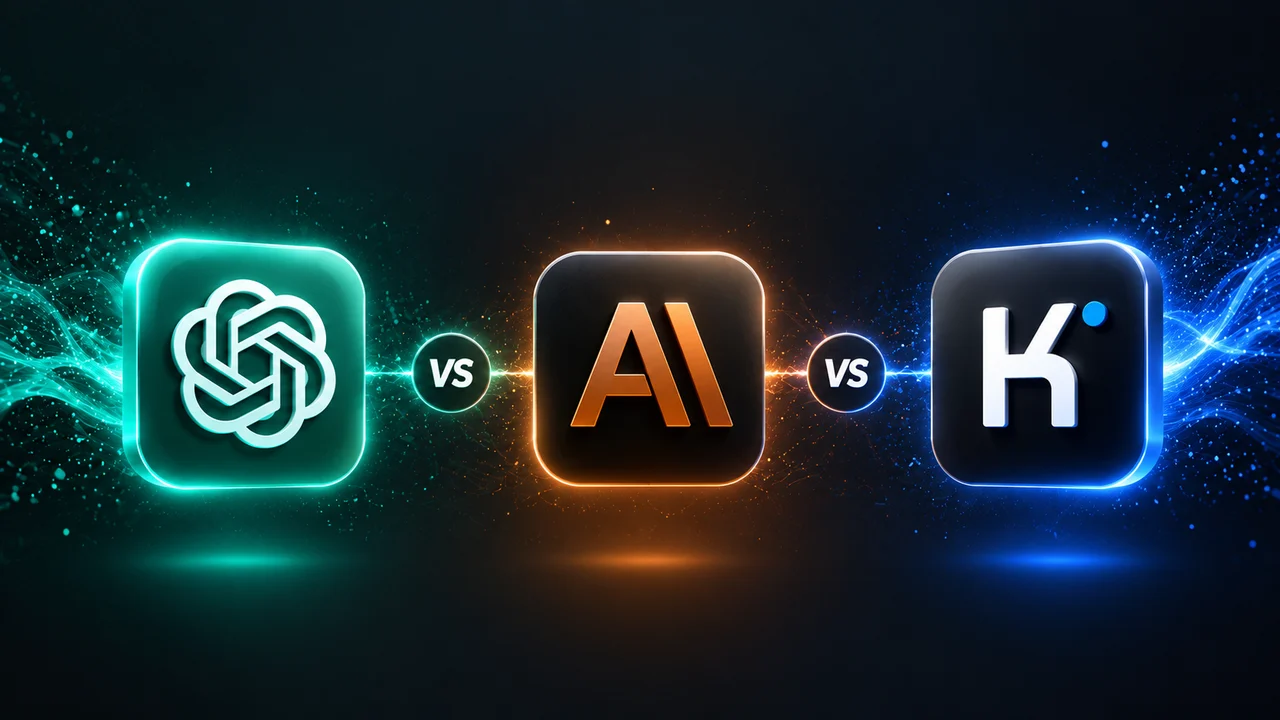
That's not a coincidence of timing so much as a sign of how fast the frontier is moving right now. Each model also represents a genuinely different bet:
- Sol bets on efficiency and coordinated multi-agent work
- Fable 5 bets on sustained depth across long, complex tasks
- K3 bets on open scale, being the model you can eventually download and run yourself
Here's the full breakdown of each, followed by a direct side-by-side comparison.
The 3 Frontier AI Models Compared
1. GPT-5.6 Sol
OpenAI calls Sol its strongest coding and cybersecurity model to date, built around getting more done per token rather than just scoring higher on a benchmark.
The Backstory Sol was technically finished in June, but its public launch got delayed. The U.S. government asked OpenAI to limit the rollout to a small group of trusted partners while a cybersecurity assessment framework was being worked out. The full public release followed on July 9, 2026, once that preview window closed.
What's New in This Release
- Named tiers, not just version numbers. Sol is the flagship, sitting above Terra (balanced) and Luna (cost-efficient). OpenAI says these names will stick around as capability tiers even as the models inside them keep improving.
- Ultra mode. Coordinates multiple agents working on the same task in parallel, aimed at the most demanding multi-step jobs.
- Stronger computer use. Sol can inspect and refine its own generated interfaces, not just output static code.
- Token efficiency. OpenAI reports Sol needing meaningfully fewer tokens than earlier models to complete the same coding tasks, which lowers real running cost, not just latency.
Where It Scores Well
- Sets a new state-of-the-art result on Terminal-Bench 2.1, a benchmark for command-line tasks requiring planning and tool use
- Strong results on a long-running biology benchmark
- OpenAI's best cybersecurity performance yet, aimed at defensive tasks like threat modeling and code review
Quick Facts
| Developer | OpenAI |
|---|---|
| Released | July 9, 2026 |
| Tier family | Sol (flagship), Terra, Luna |
| Access | via API and ChatGPT |
| Reasoning modes | Standard, max, and ultra multi-agent |
Official model page: openai.com/index/previewing-gpt-5-6-sol
2. Claude Fable 5
Anthropic calls Fable 5 the first model from its "Mythos" tier made safe for public use, and says its lead over other models grows the longer and harder a task gets.
What "Mythos-Class" Actually Means
Fable 5 sits above Anthropic's Opus line. It's built from the same underlying model as the restricted "Mythos 5," which is only available to a small group of vetted cyber-defense and biosecurity partners. Fable 5 is the public-safe version of that same model, with guardrails layered on top.
The Safety Mechanism That Makes It Unusual
- Certain sensitive queries, mostly around cybersecurity and biology, get automatically rerouted to the smaller Claude Opus 4.8 model instead
- The user is told when this fallback happens
- Anthropic reports this affects a small minority of sessions, meaning most users experience the full Fable 5 model without interruption
The Export Control Pause This is worth knowing if you're evaluating Fable 5 for anything time-sensitive:
- June 12, 2026 — Anthropic suspends access to Fable 5 and Mythos 5 to comply with U.S. Department of Commerce export controls
- June 30, 2026 — The Department lifts those controls
- July 1, 2026 — Anthropic restores full access

Where It Scores Well
- First Anthropic model to break 90% on its core benchmark for complex, long-running analytical tasks
- Completed a full migration across a 50 million line codebase in about a day, a job Anthropic says would take a team more than two months by hand
- Reports itself as the strongest finance-first model the company has tested, with strong gains in document and chart reasoning
Quick Facts
| Developer | Anthropic |
|---|---|
| Released | June 9, 2026 |
| Model class | Mythos-class, safety-tuned for general release |
| Context window | 1 million tokens, up to 128K output tokens |
| Reasoning | Adaptive thinking, always on |
Official model page: anthropic.com/news/claude-fable-5
3. Kimi K3
Moonshot AI calls K3 the world's first open "3T-class" model. By parameter count, it's the largest open-weight model released to date, anywhere.
The Scale, in Context
- 2.8 trillion total parameters, roughly 75% larger than DeepSeek's V4 Pro, the previous largest widely used open model
- Uses a mixture-of-experts design, activating only 16 of 896 experts per query, which is what keeps a model this size affordable to run
- Built on two new internal techniques, Kimi Delta Attention and Attention Residuals, delivering roughly 2.5x scaling efficiency over Moonshot's previous model, K2

Moonshot's Own Honesty About Where It Ranks Rather than overclaiming, Moonshot states plainly that K3 still trails Claude Fable 5 and GPT-5.6 Sol on overall performance. What it does claim:
- Consistently outperforms Claude Opus 4.8 and GPT-5.5 on coding and agent tasks
- Ranks around #3 overall on independent evaluation leaderboards like Artificial Analysis's Intelligence Index
- Placed first in the Frontend Code Arena benchmark, ahead of Fable 5, in blind developer testing
The Catch
- Full model weights were not available at launch. They're scheduled for July 27, 2026, under a Modified MIT license
- Until then, K3 is only usable through Moonshot's own hosted API and apps, not self-hosted
- Demand outpaced Moonshot's compute almost immediately: the company briefly paused new Kimi K3 subscriptions days after launch while it worked through capacity limits
Quick Facts
| Developer | Moonshot AI |
|---|---|
| Released | July 16, 2026 |
| Parameters | 2.8 trillion total (MoE, 16 of 896 experts active) |
| Access | Hosted now; open weights due July 27, 2026 |
| Context window | 1 million tokens, native vision input |
Official model page: kimi.com/blog/kimi-k3
Side-by-Side Comparison
Access and Availability
| GPT-5.6 Sol | Claude Fable 5 | Kimi K3 | |
|---|---|---|---|
| Where to use it | API, ChatGPT | API, Claude apps | Hosted API, Kimi app |
| Self-hostable | No | No | Yes, from July 27, 2026 |
| Recent availability issue | Two-week government-mandated preview delay | Suspended June 12 to July 1 over export controls | Subscriptions briefly paused over compute demand |
Capabilities
| GPT-5.6 Sol | Claude Fable 5 | Kimi K3 | |
|---|---|---|---|
| Defining trait | Token-efficient, multi-agent coordination | Long-horizon depth with built-in safety fallbacks | Largest open-weight model to date |
| Context window | Standard, expandable for agentic work | 1 million tokens | 1 million tokens |
| Reasoning style | Adjustable, plus ultra multi-agent mode | Always-on adaptive thinking | Always-on, adjustable low to max |
| Multimodal input | Text and vision | Text and vision | Text, vision, and video |
| Self-reported overall rank | Frontier flagship | Frontier flagship | Trails Sol and Fable 5 overall |
Which Model Fits Your Workflow?
- Running heavy CI/CD or agentic pipelines → GPT-5.6 Sol. Ultra mode and its lower token cost per task are built exactly for this.
- Large-scale codebase migrations or refactors → Claude Fable 5. Sustained focus across a very long job is its strongest trait.
- Dense document, finance, or research analysis → Claude Fable 5. It posts the highest document and chart reasoning scores of the three.
- Defensive cybersecurity work like threat modeling, patching, or code review → GPT-5.6 Sol, OpenAI's stated focus for this release.
- Wanting to self-host, fine-tune, or fully own your model weights → Kimi K3, once full weights ship on July 27, 2026.
- Already building on the OpenAI SDK and want a cheaper, open alternative → Kimi K3. It's SDK-compatible, so switching over is low friction.
- Budget-conscious teams who don't want to lock into one vendor → Kimi K3, especially once it's self-hostable.
- High-stakes, long-running agent tasks that can't afford to lose coherence → Claude Fable 5, built around staying accurate over long horizons.
The Final Verdict
Choose Sol if your work is agent-heavy and tool-based, and running cost per task is a real constraint.
Choose Fable 5 if the task is long, high-stakes, and needs the model to stay coherent and self-correcting from start to finish.
Choose K3 if you want a frontier-class model you can eventually run and modify on your own infrastructure, and you're comfortable being close to, rather than at, the very top of the leaderboard.
All three are moving fast. Sol and Fable 5 have already faced government-related access interruptions this year, and K3's full open release is still pending. Check each official page above before making a final call.
Details sourced from each company's official announcements as of July 27, 2026. Self-reported benchmark claims are noted as such throughout. Capabilities and availability change quickly, so check each provider's official site for the latest details.