
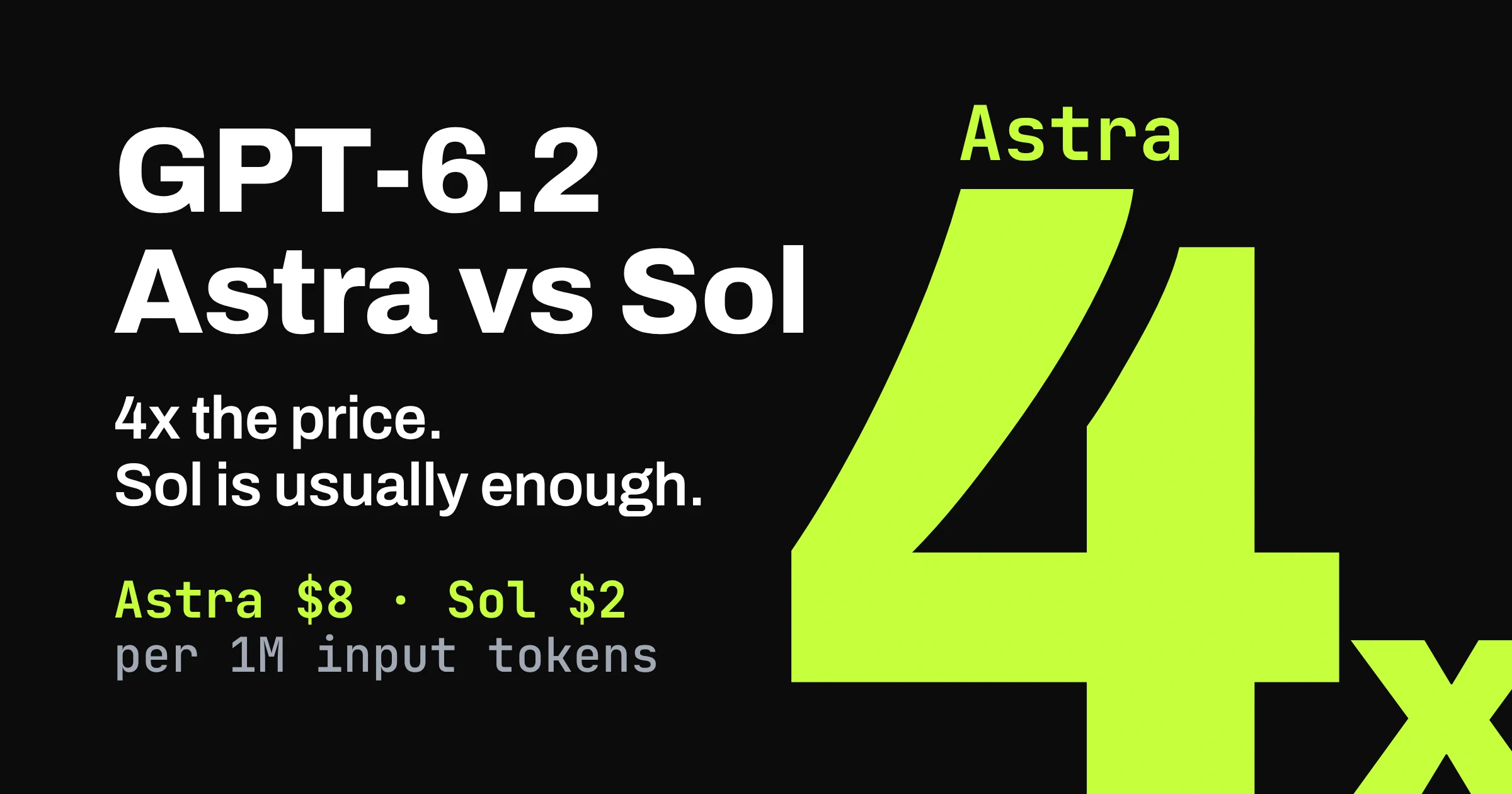
The short Astra vs Sol answer: use GPT-6.2 Sol for most work, and save GPT-6.2 Astra for long, high-stakes projects. As of November 2026, Astra costs exactly 4 times as much as Sol in OpenAI's API: $8 vs $2 per million input tokens, and $40 vs $10 per million output tokens. On one coding test OpenAI cites, Sol landed within 0.5 points of Astra at about one-fifth the cost.
A token is a small chunk of text, about the size of a short word. The API, OpenAI's pay-as-you-go service for developers, bills every token you send and get back.
On a heavy request of 50,000 tokens in and 5,000 out, the gap is 45 cents: $0.60 on Astra versus $0.15 on Sol. Pay for Astra only when a better first answer saves you more than that.
In ChatGPT, both models are available to Plus, Pro, Enterprise and Edu users. There you spend your plan's usage limits, not money per token. OpenAI's launch post and model pages don't list separate limits for the two.
Is Astra or Sol better?
GPT-6.2 Astra is the stronger model on OpenAI's own numbers, but as of November 2026 GPT-6.2 Sol is the better default for most people. Sol sits close behind on OpenAI's coding test and costs a quarter as much per token.
OpenAI's developer guide says it plainly: "Use GPT-6.2 Astra for the most demanding tasks or GPT-6.2 Sol for complex work at lower cost." Think of Astra as the senior specialist you book for the tricky case, and Sol as the sharp colleague who handles most of your week.
Every benchmark figure below comes from OpenAI's launch post; we have not checked any of them against the benchmark makers' own results.
| What you're comparing | GPT-6.2 Astra | GPT-6.2 Sol | Best for |
|---|---|---|---|
| How OpenAI describes it | "most capable model for your hardest projects, from start to finish" | "go-to model for everyday work, from coding to powering agents at scale" | Astra for big projects, Sol for daily work |
| API price per million tokens (input / output) | $8.00 / $40.00 | $2.00 / $10.00 | Sol for anything high-volume |
| Blind human preference (Artificial Analysis AA-3D) | 1,318 Elo, ranked first | 1,259 Elo, behind Claude Fable 5.2 at 1,271 | Astra when people judge the result |
| Coding (Cognition's FrontierCode 2.0, both at max effort) | Slightly ahead | Within 0.5 points of Astra at about one-fifth the cost | Sol for most coding |
| Context window (input plus output) | 1,050,000 tokens | 1,050,000 tokens | Tie |
| Longest input | 922,000 tokens | 922,000 tokens | Tie |
| Longest single answer | 128,000 tokens | 128,000 tokens | Tie |
| Knowledge cutoff (where its training data stops) | May 18, 2026 | June 1, 2026 | Sol, two weeks newer |
Elo is a chess-style score: higher means blind judges picked that model's output more often. With no independent check yet, read these gaps as directional.
The decision rule: start on Sol, move up only when it pays
Start every new kind of task on GPT-6.2 Sol, then use this card to decide whether it deserves Astra.
| If your task is... | Pick | Why |
|---|---|---|
| Everyday drafting: emails, summaries, meeting notes | GPT-6.2 Sol | OpenAI positions Sol for everyday work, at a quarter of Astra's token price |
| Routine coding and bug fixes | GPT-6.2 Sol | Within 0.5 points of Astra on FrontierCode 2.0, per OpenAI |
| The same request hundreds or thousands of times a day | GPT-6.2 Sol | At 1,000 heavy requests a day, the gap is $450 a day |
| A long project that runs start to finish, like building and revising software | GPT-6.2 Astra | That is exactly OpenAI's pitch for Astra |
| A task Sol still fails after you raise its effort setting | GPT-6.2 Astra | More Sol attempts cost your time; Astra is the next step up |
| Work where one redo costs you more than 45 cents of time | GPT-6.2 Astra | That is the price gap on one heavy request (Example A below: 50,000 tokens in, 5,000 out) |
The last row is the one to remember. If a better first answer saves you more than 45 cents of fixing time, Astra is cheap insurance.
Astra vs Sol cost: what does one task actually cost?
As of November 2026, GPT-6.2 Astra costs $8.00 per million input tokens and $40.00 per million output tokens at Standard API rates. That is exactly 4 times GPT-6.2 Sol's $2.00 and $10.00, according to OpenAI's pricing page.
Standard is the everyday rate. Ultrafast, OpenAI's premium tier, costs more, background requests cost less, and very long inputs trigger higher rates; all three are covered below.
| Model | Input (per million tokens) | Cached input (per million tokens) | Output (per million tokens) | Best for |
|---|---|---|---|---|
| GPT-6.2 Astra | $8.00 | $0.40 | $40.00 | Hard, long, high-stakes projects |
| GPT-6.2 Sol | $2.00 | $0.10 | $10.00 | Everyday work and high volume |
| GPT-6 Astra (previous) | $10.00 | $1.00 | $50.00 | Old setups only: GPT-6.2 Astra costs less |
Cached input is the repeated part of your prompt, like the same long instructions at the top of every request. OpenAI bills it at a much lower rate.
Now for real tasks. Example A is a typical heavy request: you paste in a 50,000-token report and get a 5,000-token write-up back.
| Scenario | GPT-6.2 Astra | GPT-6.2 Sol | You save with Sol |
|---|---|---|---|
| A. One request: 50,000 tokens in, 5,000 out | $0.60 | $0.15 | $0.45 |
| B. Example A, 1,000 times a day | $600 a day | $150 a day | $450 a day |
| C. Long document: 300,000 tokens in, 10,000 out | $5.40 | $1.35 | $4.05 |
| D. Example A on Ultrafast, through February 28, 2027 | $1.80 | $0.45 | $1.35 |
| E. Example A on Ultrafast, from March 1, 2027 | $3.60 | $0.90 | $2.70 |
| F. Example A as an 8-hour background request | $0.36 | $0.09 | $0.27 |
Here is the arithmetic for Example A, so you can swap in your own token counts:
GPT-6.2 Astra
  input:   50,000 tokens x $8 per million  = $0.40
  output:   5,000 tokens x $40 per million = $0.20
  total                                    = $0.60

GPT-6.2 Sol
  input:   50,000 tokens x $2 per million  = $0.10
  output:   5,000 tokens x $10 per million = $0.05
  total                                    = $0.15
These examples assume both models spend the same number of tokens. OpenAI hasn't published an Astra-versus-Sol token comparison, so run a few of your own tasks through both and read the usage numbers.
The long-document trap above 272K tokens
For both models, a request with more than 272K input tokens (K means thousand) doubles the input and cache rates, per OpenAI's model pages. Output then costs 1.5 times the normal rate, and the higher rates apply to the full request. That is why Example C's 300,000-token input costs $4.80 on Astra instead of $2.40.
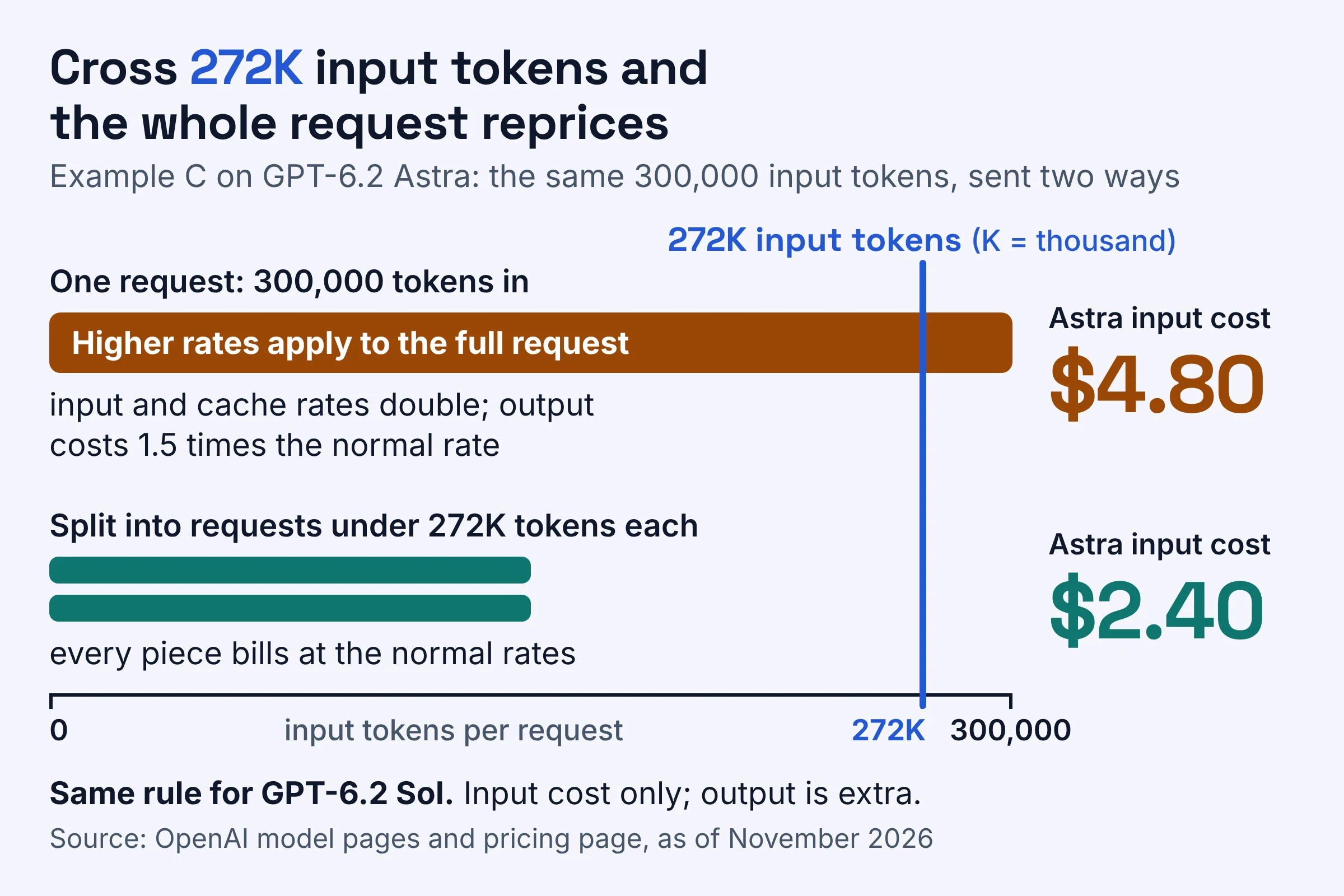
Split a huge file, like a full year of board minutes, into requests under 272K tokens each, and every piece bills at the normal rates.
Ultrafast and background requests
Ultrafast costs 3 times the Standard rate through February 28, 2027. From March 1, 2027 (Pacific time), it costs 6 times the Standard rate, which is why row E is double row D.
At the other end are background requests: jobs you let finish within a set window instead of waiting on the spot. Eligible ones run 30% below Standard with a 2-hour completion window, or 40% below with an 8-hour window. Think overnight shipping versus economy post: same parcel, lower price for patience.
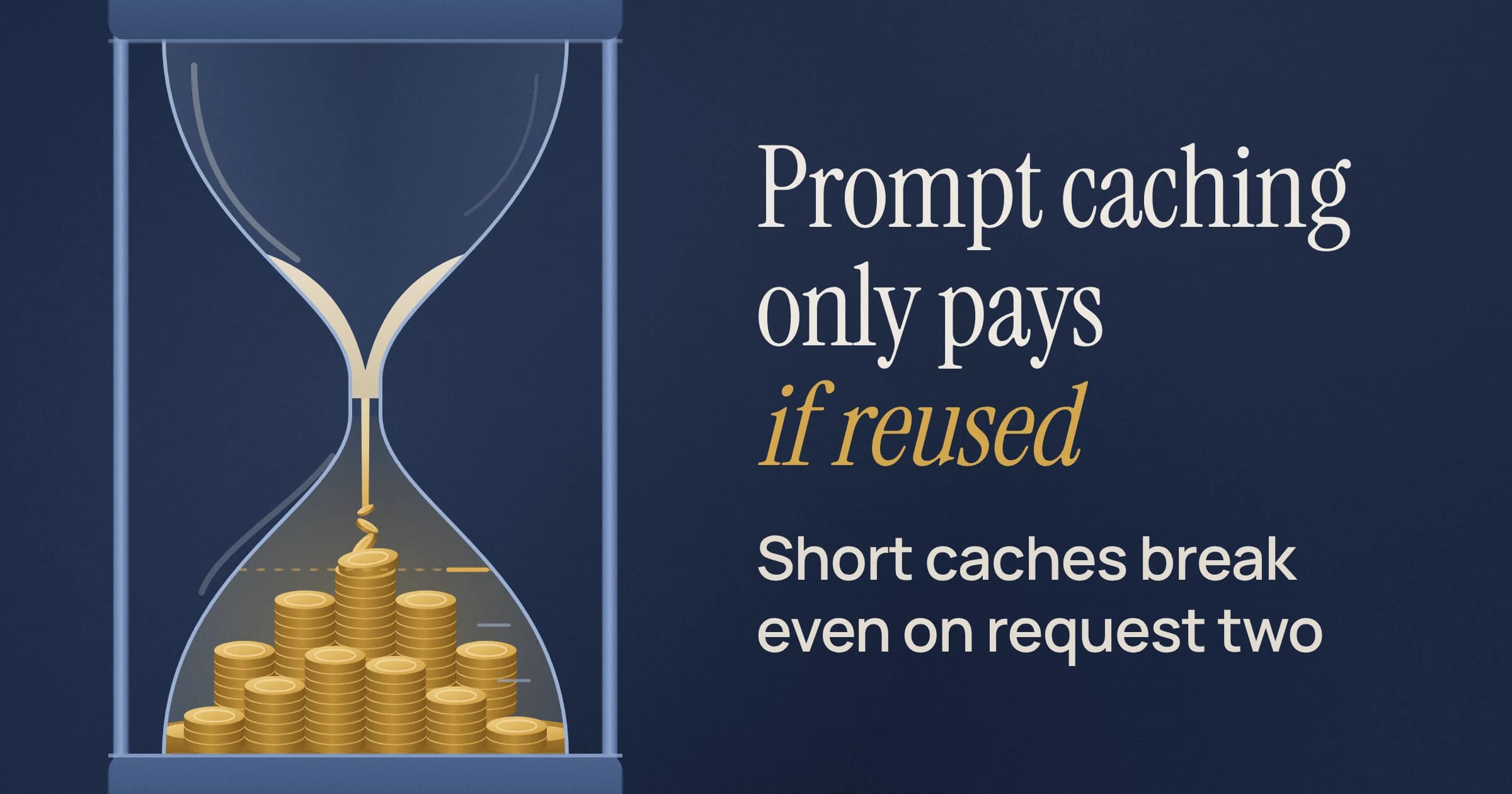
Cut the bill with caching
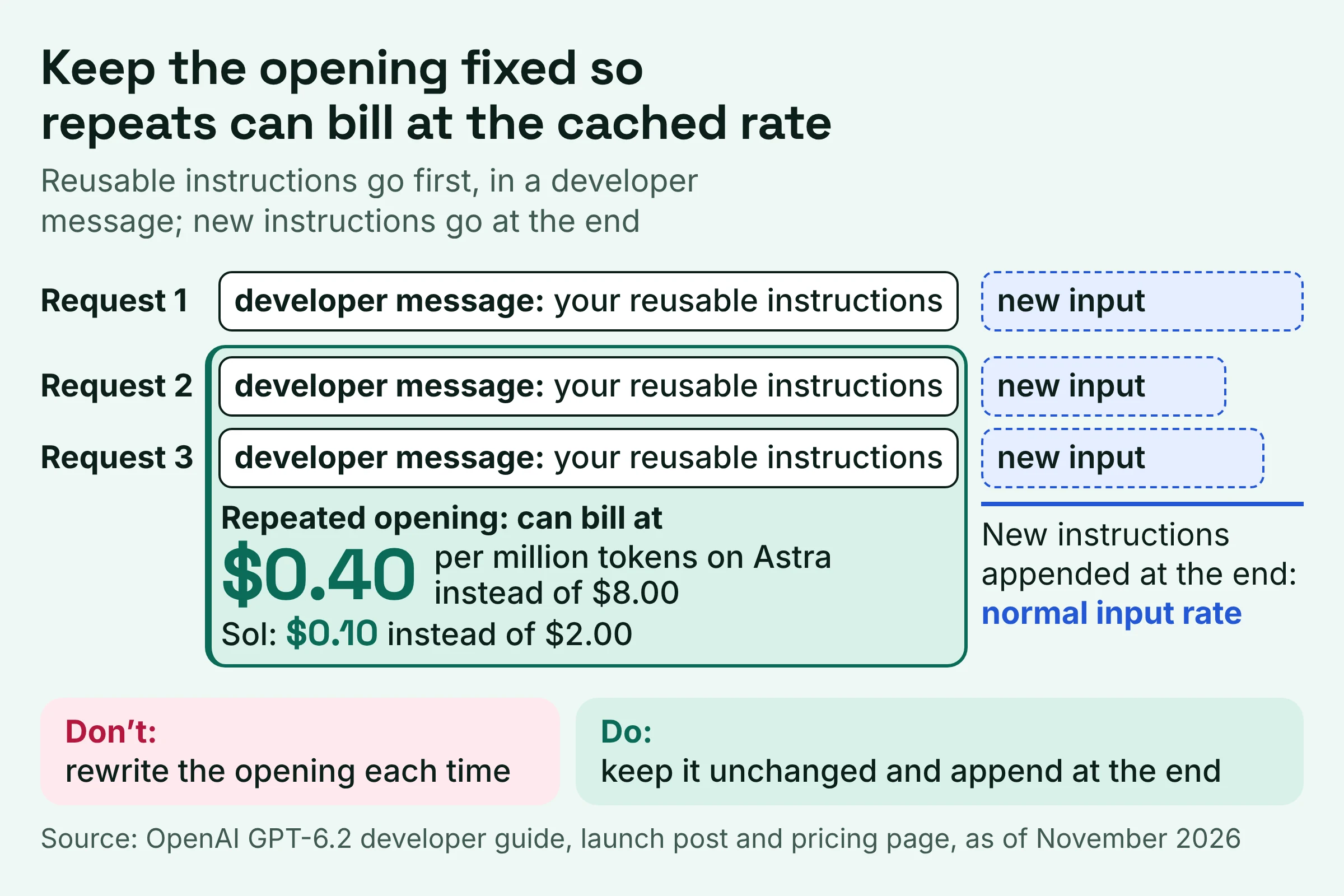
OpenAI's guide says reusable instructions become eligible for prompt caching when you put them in a developer message as the first item in your input. The launch post adds a second tip: keep the opening of your prompt unchanged and append new instructions at the end. Do both, and on Astra those repeated tokens can bill at $0.40 per million instead of $8.00.
Astra vs Sol for coding: is Astra worth paying 4x?
For most coding, GPT-6.2 Sol is enough on the evidence so far. In Cognition's FrontierCode 2.0, as reported by OpenAI in November 2026, Sol came within 0.5 points of GPT-6.2 Astra at about one-fifth the cost, with both at maximum effort.
That is a wider saving than the 4x price list suggests. Real bills also depend on how many tokens each model uses.
Both models are in Codex for Plus, Pro, Enterprise and Edu users, so you can test them side by side on the same project. OpenAI says Astra can build and revise software, use a computer and work with documents. That makes Astra the one to try on a whole job, such as finish the invoice export feature, run the tests, fix what breaks and update the docs.
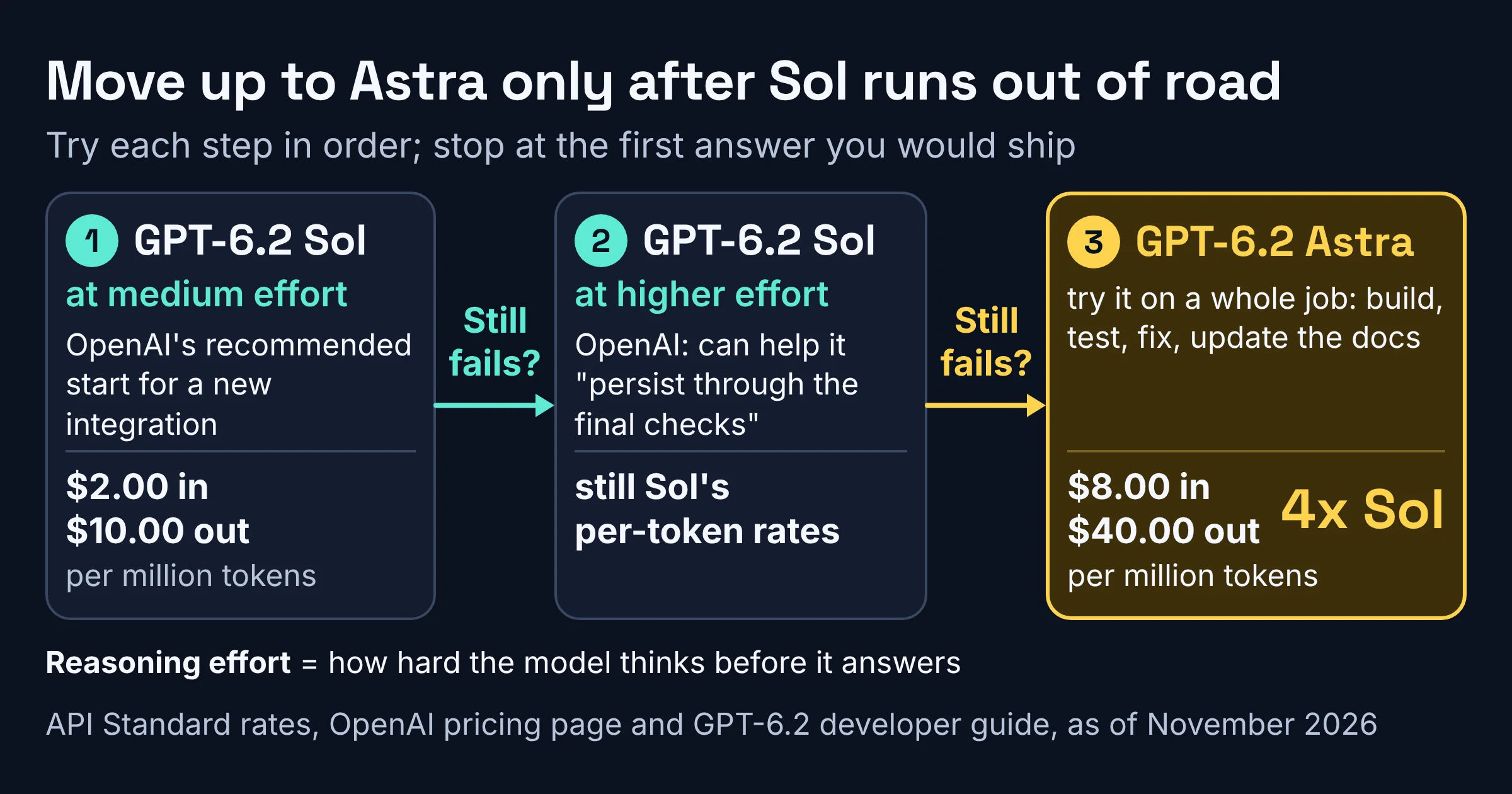
Reasoning effort is the setting that controls how hard the model thinks before it answers. For a new integration, OpenAI recommends starting at medium. It says higher effort can help the model "persist through the final checks on complex or long-running tasks."
A sensible ladder: Sol at medium, then Sol at a higher effort, then Astra. That way you only pay Astra rates once Sol has run out of road.
If you call the API yourself
Check these before you point older code at GPT-6.2. They come from OpenAI's GPT-6.2 developer guide, except the none rejection, which is on the model pages.
- The API rejects reasoning effort
none. If you usednoneorminimal, switch tolow. - Tool calling (letting the model run functions you define) requires the Responses API. Chat Completions still works, just not for tool calls.
- When you move Chat Completions requests over, drop
temperature,top_p,logprobsandtop_logprobs. - The Responses API now drops reasoning items after mid-conversation edits to the history, so don't count on them surviving an edited thread.
What are ChatGPT Astra and Sol, and when did GPT-6.2 launch?
GPT-6.2 Astra and GPT-6.2 Sol are the two models OpenAI released on November 17, 2026. OpenAI calls them the most capable models it has deployed externally to date: Astra for the hardest projects, Sol for everyday work at a lower price.
According to OpenAI's launch post, both are available to all Plus, Pro, Enterprise and Edu users in ChatGPT Work and Codex. Eligible Enterprise and Edu users get access once their workspace admin enables it, so ask your admin if you can't see them. The launch post doesn't mention Free or Go users, so don't count on access there.
Developers can call both through the OpenAI API as gpt-6.2-astra and gpt-6.2-sol. Both accept text and images and reply with text. You can hand either one a screenshot of a sales chart and ask what changed.
Like GPT-6 Astra, both models meet the Critical threshold for cybersecurity under OpenAI's Preparedness Framework, the company's own risk-rating system. OpenAI says it adjusted both models' refusal boundaries for high-risk requests after seeing jailbreak resistance slip. Our explainer on GPT-6 Astra's Critical cybersecurity rating covers what that rating means.
One more sign of the gap at the top end: Astra meets OpenAI's High threshold for AI Self-Improvement, while Sol falls below it.
Astra vs Sol usage: how fast will you hit ChatGPT limits?
As of November 2026, OpenAI's launch post and model pages don't list separate ChatGPT message limits for GPT-6.2 Astra and Sol. Check your plan's help page before you plan a big project around either model.
OpenAI does say GPT-6.2 Sol is smarter and more efficient than GPT-6.1 Sol, and lets you complete more tasks on the same paid plan. If Astra seems to burn through your allowance, split the work. Write the first three drafts of a sales email sequence in Sol, then ask Astra to tighten only the final one.
Ultrafast access in ChatGPT depends on your plan. Pro 500 subscribers can use Ultrafast with either model, and Pro 200 subscribers get Ultrafast for the first time, starting with GPT-6.2 Sol. If the Pro 500 plan is new to you, our OpenAI DevDay 2026 recap explains where it came from.
One catch for API customers: OpenAI's developer guide says Ultrafast in the API supports US data residency only. Data residency means where your data is stored and processed. If your contracts require another region, Ultrafast is off the table for that work.
Is GPT-6.2 better than GPT-6 Astra or GPT-6.1 Sol?
GPT-6.2 beats both older models on OpenAI's numbers, and Astra users also pay less. As of November 2026, GPT-6.2 Astra's API input and output prices are 20% below GPT-6 Astra's, while GPT-6.2 Sol keeps GPT-6.1 Sol's rates.
Unless something in your setup breaks, there is little reason to stay on the older versions.
| Upgrade | Price change (per million tokens) | Reported gain, per OpenAI | Best for |
|---|---|---|---|
| GPT-6 Astra to GPT-6.2 Astra | Input $10.00 to $8.00, output $50.00 to $40.00, cached input $1.00 to $0.40 | GDPval v2: up 6.2 points with 22% fewer output tokens. Agents' Last Exam: up 5.2 points | Anyone on GPT-6 Astra: switch now |
| GPT-6.1 Sol to GPT-6.2 Sol | Same rates: $2.00 input, $10.00 output | GDPval v2: up 5.3 points | Anyone on GPT-6.1 Sol: switch now |
GDPval v2 is OpenAI's internal benchmark of multistep assignments drawn from real projects, so treat it as a vendor claim. OpenAI also reports GPT-6.2 Astra 5.5 points ahead of Claude Fable 5.2 on Agents' Last Exam. For how the previous generation stacked up across vendors, see our earlier comparison of GPT-6 Astra against Claude and Gemini models.
In money terms, Example A costs $0.75 on GPT-6 Astra and $0.60 on GPT-6.2 Astra, a 20% saving at equal token counts. If the 22% drop in output tokens that OpenAI saw on GDPval v2 holds for your work too, you save a little more.
Two things to know before you switch:
- Astra writes shorter by default. OpenAI says GPT-6.2 Astra is "more concise and direct by default than earlier models," so ask for length when you need it, for example write at least two pages and include a summary table.
- No retirement date found. We found no retirement date for GPT-6 Astra or GPT-6.1 Sol in OpenAI's launch post or the GPT-6.2 docs we checked.
Do this next: a 3-step plan
You can settle Astra vs Sol for your own work in an afternoon, with no spreadsheet model required.
- Default to Sol. Move your everyday chats, drafts and routine code to GPT-6.2 Sol. Move any GPT-6 Astra or GPT-6.1 Sol API traffic to the GPT-6.2 versions too.
- Run a ten-task bake-off. Take ten real tasks from last week, run each through both models, and mark which answers you would actually ship. API users should log token counts too, since that is where the true price gap shows.
- Write your own rule. List the task types where Astra clearly won and keep everything else on Sol. If you use Ultrafast in the API, revisit the list before March 1, 2027, when its price doubles.
Pick Astra if your work is long, multi-step and expensive to get wrong. Pick Sol if it is everyday, repeated or cost-sensitive, which for most people is most of the week. For the same thinking applied across vendors, see how to pick the right AI model for every task.
Prices, limits and plan access here come from OpenAI's own pages, checked in November 2026; they can change, so confirm before you budget.