Quick Answer
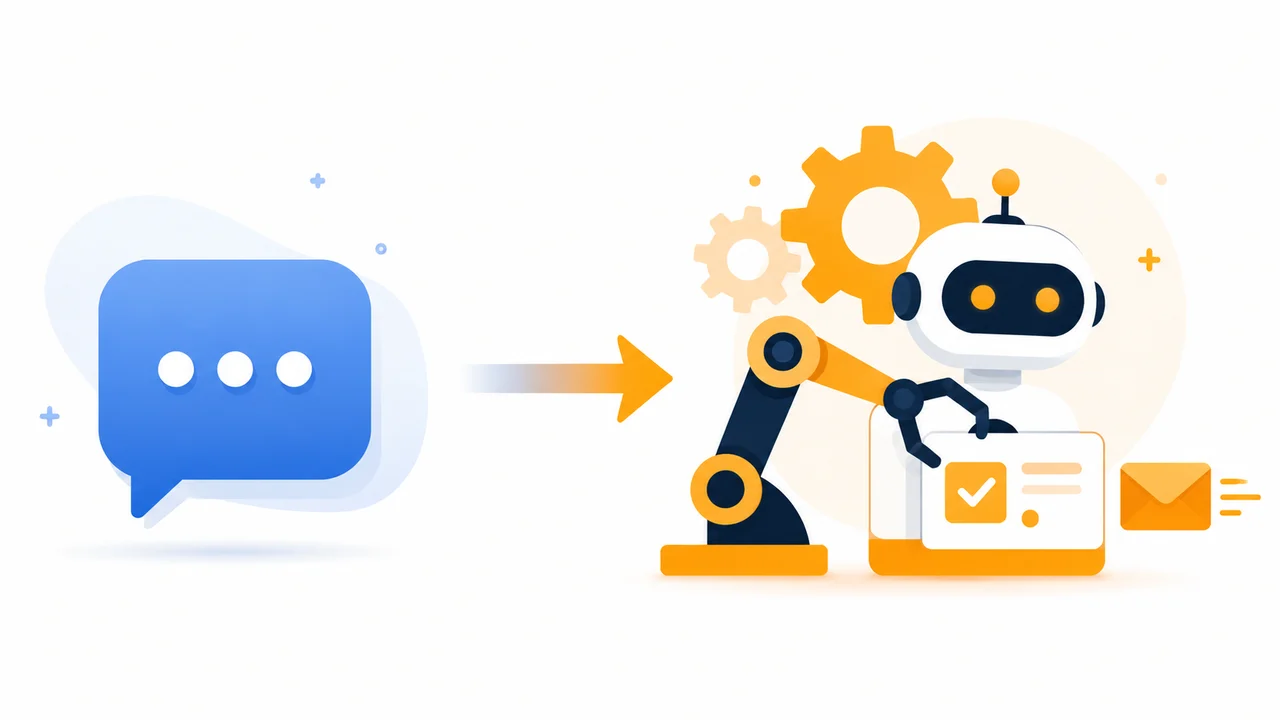
- Chatbots answer questions. Agents carry a task through to completion, across multiple steps and tools, without a human picking it back up in between
- Gartner expects 40% of enterprise applications to include task-specific AI agents by the end of 2026, up from under 5% in 2025
- Real platform revenue backs this up: Salesforce's Agentforce and Microsoft's Copilot are both scaling fast
- Agents aren't flawless. Klarna's high-profile rollout is proof that automation without the right guardrails can backfire
The Real Difference
A chatbot's job ends at the answer. An agent's job ends at the outcome.
Ask a chatbot to check an order status, and it tells you what it knows. Ask an agent to fix a late order, and it checks the system, contacts the courier, issues a refund if needed, and confirms back to you, without a human picking up the thread in between.
How an Agent Actually Works
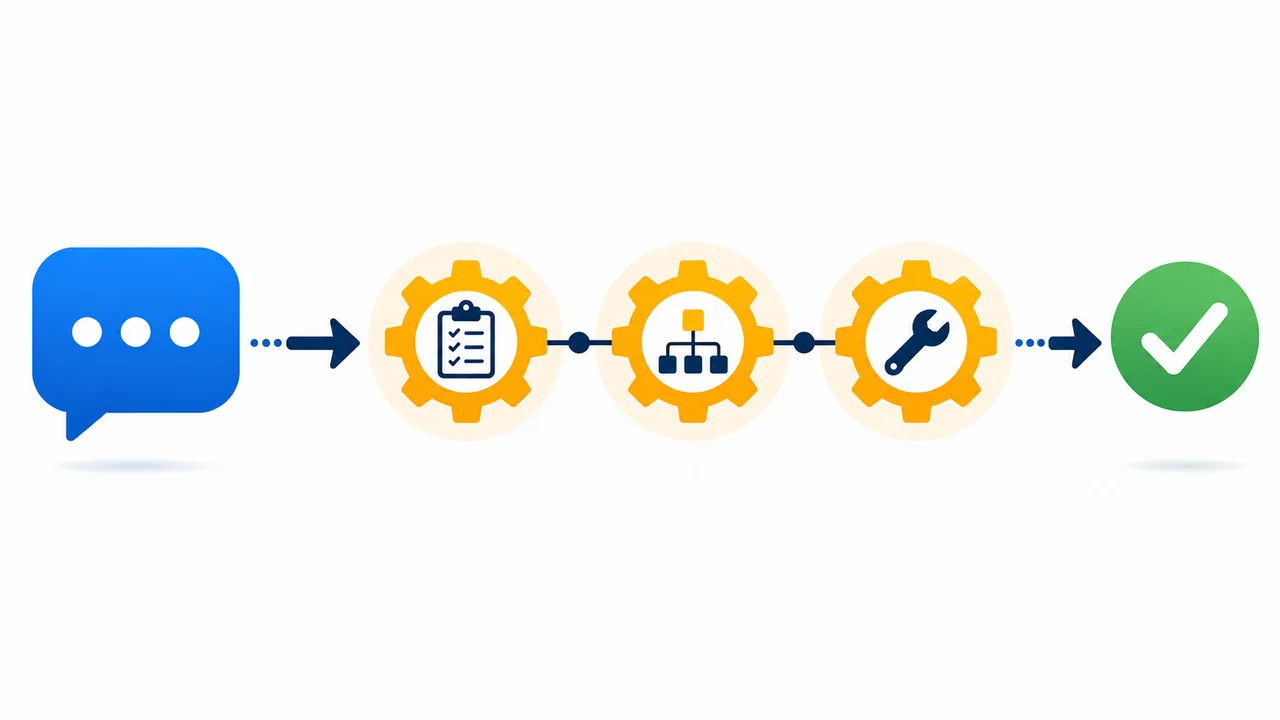
Underneath the marketing language, most working agents are built from three parts:
- Planning: breaking a goal into the smaller steps needed to reach it, rather than responding to one prompt at a time
- Tool use: calling real systems, a CRM, an inventory database, an email API, instead of just generating text about what should happen
- Memory: carrying context across steps and sessions, so the agent doesn't lose track of what it already did or learned
A chatbot typically has none of these. It's a single request and a single response, with no persistent state and no ability to act outside the conversation.
The Numbers Behind the Shift
- 54% of enterprises were running AI agents in production by mid-2026, according to Ampcome's enterprise AI report
- 40% of enterprise applications are expected to include task-specific agents by the end of 2026, per Gartner, up from under 5% in 2025
- 72% of enterprise leaders reportedly favor agents over traditional chatbots for customer service, according to Forrester
- 65 to 80% of customer inquiries can reportedly be resolved autonomously by modern agentic systems, per McKinsey
These figures come from third-party research firms as cited by secondary sources, not pulled directly from the original reports, so treat them as directional industry estimates rather than exact facts.
Who's Actually Building This
Platform-level revenue and adoption data backs up the broader trend:
- Salesforce Agentforce reached roughly $800 million in annual recurring revenue by early 2026, growing 169% year over year, and has crossed 29,000 paid deals
- Microsoft 365 Copilot grew from 15 million to 20 million paid seats in a single quarter in early 2026, per Microsoft's own investor update, its fastest seat growth since launch
- Both companies now ship named, purpose-built agents (research, analysis, workflow automation) instead of one general-purpose chatbot, mirroring the shift happening industry-wide
A Real Example, With the Full Story
Klarna's AI assistant is the most cited case study in this space, and it's worth telling accurately.
When Klarna launched its OpenAI-powered assistant in February 2024, it handled 2.3 million customer conversations in its first month alone, about two-thirds of all customer service chats, doing the equivalent work of 700 full-time agents. Resolution time dropped from 11 minutes to under 2.
But the story doesn't stop there. By 2025, Klarna publicly walked back some of its AI-only framing and reintroduced human agents after CEO Sebastian Siemiatkowski said the company's focus on cost had come at the expense of service quality. By Q3 2025, the company reported the assistant doing the work of 853 agents and roughly $60 million in annual savings, alongside a renewed emphasis on giving customers access to a human when they want one.
The lesson isn't "agents fail." It's that agents still need the right guardrails, escalation paths, and human oversight to work well long term, not just an impressive launch month.
Not All Agents Work the Same Way
A useful distinction if you're evaluating tools:
- Single-task agents handle one job well, drafting a report, triaging a ticket, and stop there. Lowest setup effort, most predictable behavior
- Multi-step agents chain several actions toward a goal, check inventory, place an order, notify the customer, without a human approving each step. This is where most of Klarna's original system lived
- Multi-agent systems split a bigger job across several specialized agents that hand work off to each other, closer to a small team than a single assistant. This is the direction Salesforce and Microsoft are both building toward with named, role-specific agents
Each step up adds capability, but also adds more places where something can go wrong without proper oversight, which is exactly what Klarna's second chapter demonstrated.
Where Chatbots Still Win
This isn't a case for retiring chatbots.
- Simple, one-off questions don't need an agent's overhead, a chatbot answers them just as well, faster and cheaper to run
- Agents need real integrations to act: connected systems, permissions, guardrails, which takes meaningfully more setup than a chatbot ever did
- Oversight matters more once software is taking real actions instead of just talking, which is why governance is now a top priority alongside adoption, not an afterthought
Most businesses will end up running both: a chatbot for quick answers, and an agent underneath it for anything that needs to actually get done.
Bottom Line
The shift isn't about AI getting better at conversation, it's about AI being trusted to finish the job, and increasingly, about companies learning where that trust needs limits. That's a higher bar than a chatbot ever had to clear, and it's exactly why 2026 is the year agents stopped being a demo and started being the default enterprises are building toward, carefully.
Sources & Official References
- Salesforce Agentforce revenue figures, via Yahoo Finance: finance.yahoo.com
- Microsoft 365 Copilot seat growth, via Mindcron: mindcron.com
- Klarna and OpenAI, original launch results: openai.com/index/klarna
- Klarna's 2025 walk-back and updated figures, via Twig: twig.so
- Forrester and McKinsey figures, cited in AetherLink: aetherlink.ai
- Databricks, 2026 State of AI Agents report: databricks.com
- Ampcome mid-year enterprise AI report, cited in IBL: ibl.ai
Figures above are current as of mid-2026. Industry research stats (Gartner, Forrester, McKinsey) are cited from secondary reporting rather than the original reports, treat them as estimates. Platform and case study numbers are sourced from company statements and financial reporting directly.