Introduction
Automation used to mean "when this happens, do that." In 2026, all three major platforms moved past that. Zapier, Make, and n8n have each shipped some version of an AI agent that can reason through a task instead of just following a fixed trigger, but they built that capability in three genuinely different ways, for three genuinely different kinds of teams.
The Quick Answer (For People in a Hurry)
- Best for non-technical teams who want the simplest on-ramp: Zapier
- Best for visual power users who want agent transparency without code: Make
- Best for engineering teams who want full control over data and cost: n8n
- Best all-rounder if you only pick one: There isn't one this is the rare category where your team's technical skill level matters more than any feature list
The 3 Top AI Automation Platforms Compared
1. Zapier: The No-Code On-Ramp
Zapier built its name on simplicity, and its 2026 AI push doesn't abandon that, it layers agents on top of it. The platform now connects to somewhere between 7,000 and 9,000 apps, and most of its AI features are designed so a non-technical person can describe what they want in plain English and get a working automation back.
The features that matter right now:
- Zapier Agents (formerly Zapier Central) - persistent AI assistants that monitor data, reason through a goal, and choose their own steps instead of following a fixed Zap sequence
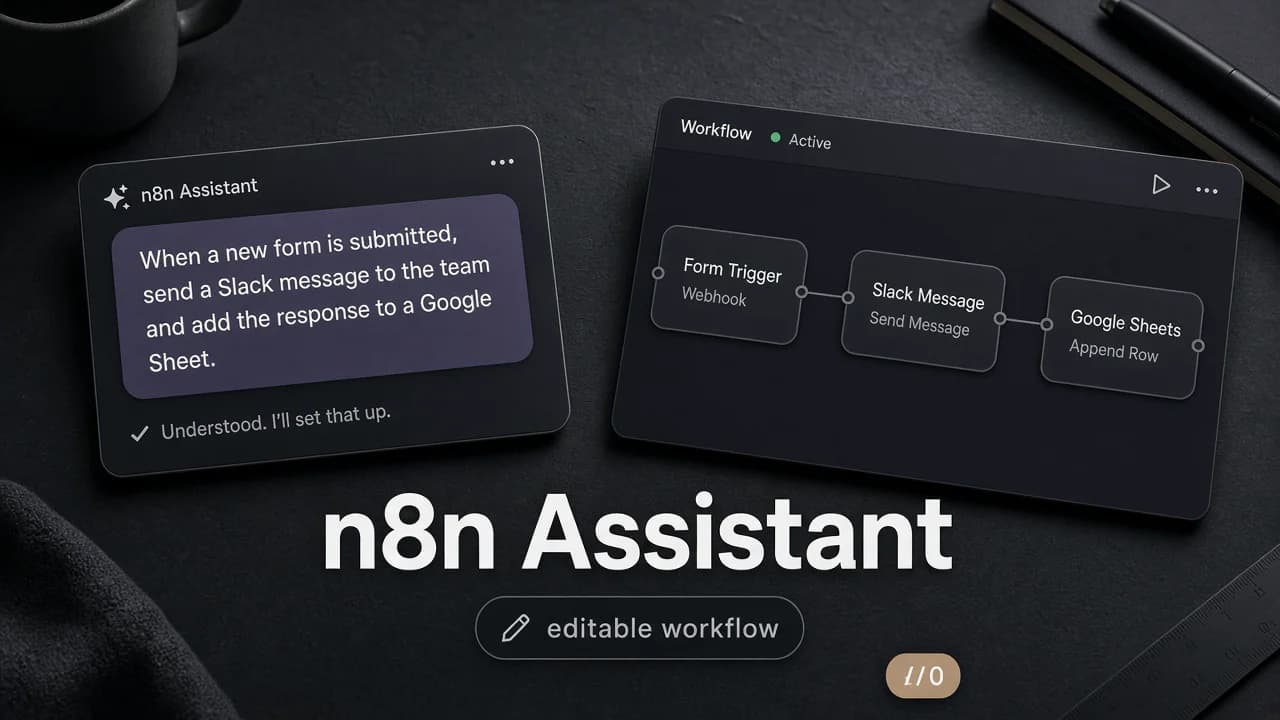
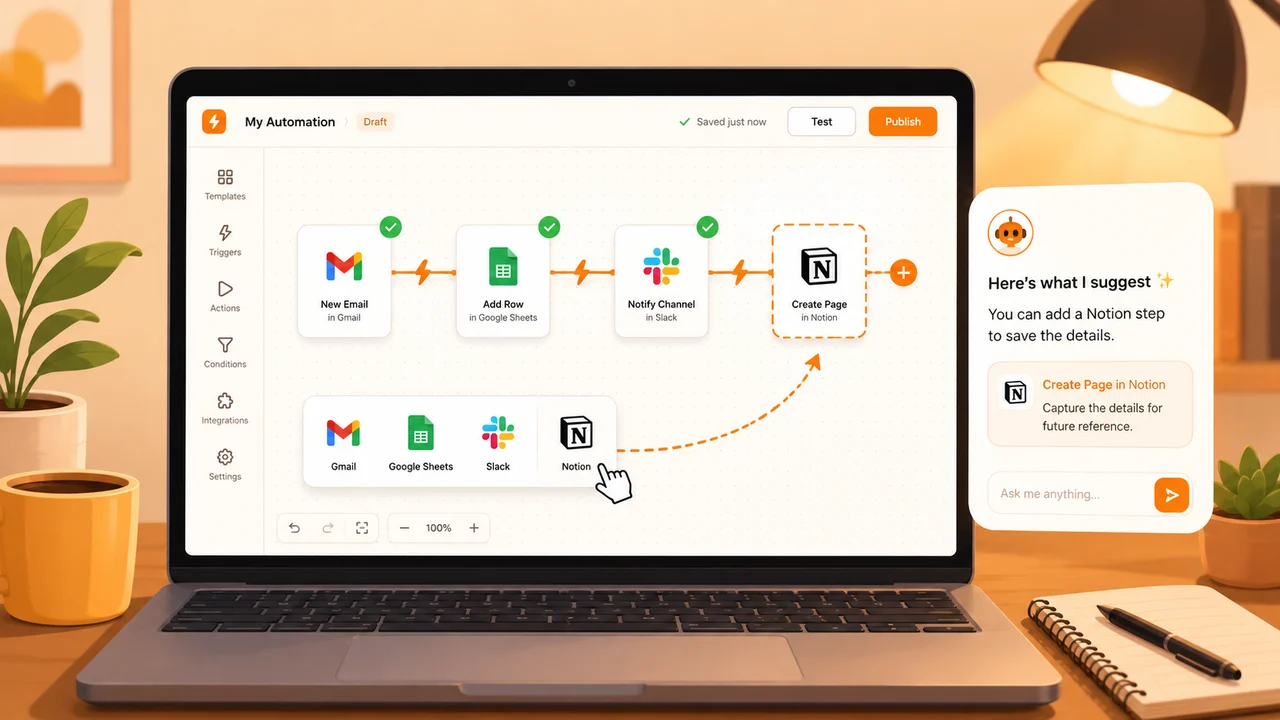
- Zapier Copilot - describe an automation in plain language and Copilot builds the Zap for you
- Canvas - draw a flowchart of a business process and the AI configures the underlying Zaps automatically
- AI Guardrails - a built-in safety layer that screens for personal data, prompt injection attempts, and harmful language before an agent acts
- Tables and Interfaces - a built-in database and front-end builder, so simple internal tools don't need a separate app
When Teams Reach for Zapier:
- Nobody on your team writes code, and nobody wants to
- You need something working today, not after a setup project
- Your workflows are mostly simple: one trigger, a few actions, no heavy branching logic
Best for: teams without engineering resources who want to go from idea to working automation the same afternoon.
Skip it if: you need an agent making business-critical decisions today. Zapier itself has been upfront that Agents are still early-access and not yet meant for production workflows where a failure has real consequences.
2. Make: The Visual Power Tool
Why it exists: Make has always sold itself on being the platform for people who think visually instead of a linear list of steps, you build and watch data move through an actual flowchart. Its 2026 AI push keeps that philosophy intact rather than bolting on a separate chat-based agent product.
Who it's for: operations teams that want the intelligence of an agent but need to actually see and trust what it's doing Make's visual logs are built specifically to solve the "black box" complaint that held back earlier agent tools
| Founded philosophy | Visual-first workflow building, not linear steps |
|---|---|
| Agent transparency | Reasoning panel plus visible tool-call logs in the builder |
| Tool ecosystem | 30,000+ native actions, plus MCP servers as external tool providers |
| Where it sits | Between Zapier's simplicity and n8n's full technical control |
What Makes It Worth the Switch:
- Your team already thinks in flowcharts and diagrams, not linear lists
- You need to explain or audit exactly why an agent made a decision
- Your workflows have real branching logic multiple conditions, multiple paths
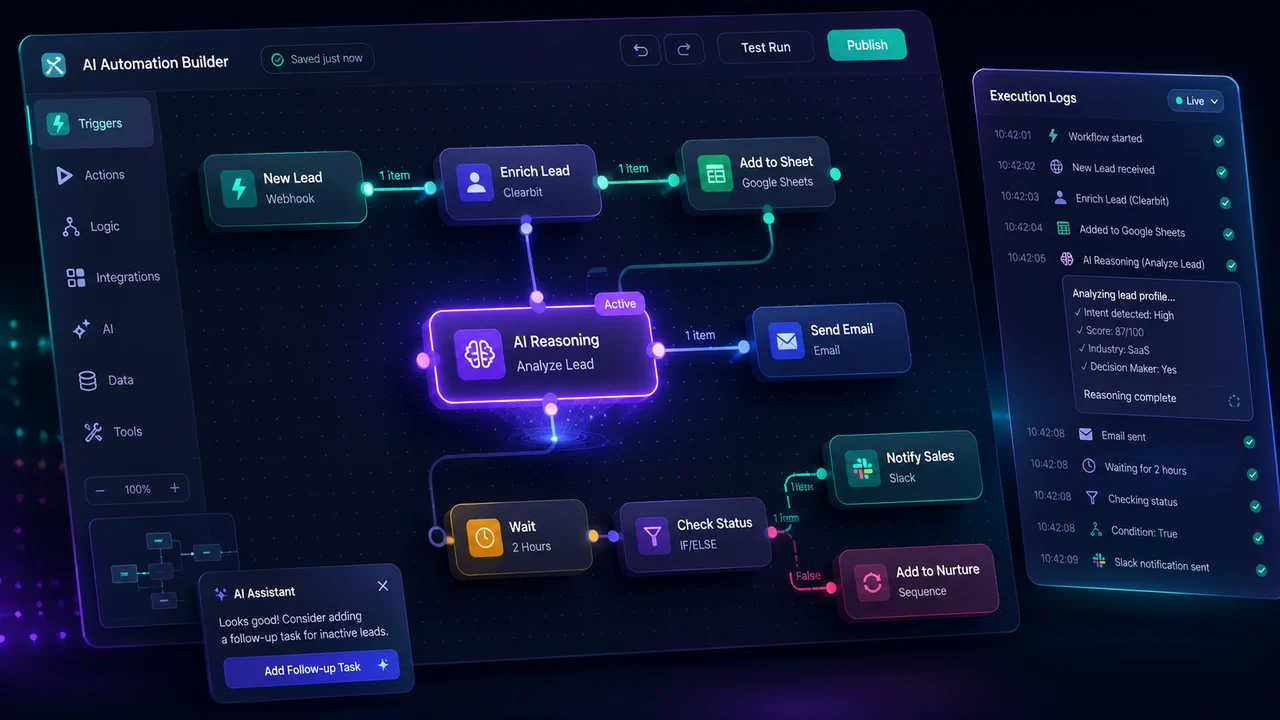
A quick story: An ops team building a lead-routing scenario used Make's reasoning panel to catch an agent repeatedly misclassifying a specific type of inbound lead. Because every tool call was visible in the builder, they fixed the underlying prompt in minutes instead of debugging a black box.
Where it comes up short: it's newer to the agent space than n8n, whose agent implementation has had more time in production; and while it's more visual than n8n, it's still a paid platform with fewer self-hosting options for teams that need to keep data fully in-house.
3. n8n: The Developer's Automation Platform
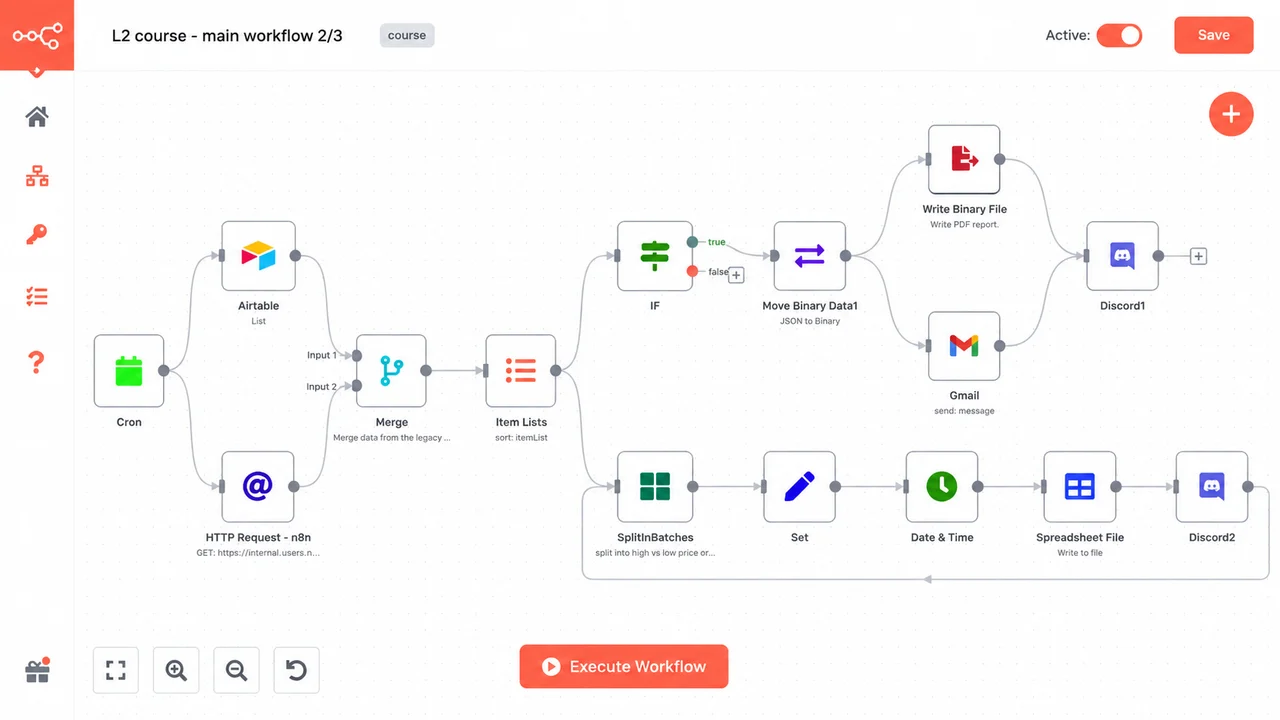
n8n started in 2019 as a fair-code, self-hostable answer to Zapier, and by 2026 it's grown into something closer to a full automation and AI orchestration platform while keeping the thing that made engineering teams choose it in the first place: you can run the whole thing on your own infrastructure.
Here's what that actually gets you:
- A free, self-hostable Community Edition under n8n's Sustainable Use License, with no execution limits if you're running it yourself
- A mature AI Agent node that added structured tool calling in early 2026, fixing an older problem where a malformed AI response could send an agent into an infinite retry loop
- Four memory backends in-memory, Redis, Postgres, or Motorhead, so an agent can hold context in whatever storage your team already runs
- A ReAct execution mode that shows an agent's intermediate reasoning steps in the execution log, not just the final output
- Native support for a wide range of model providers Anthropic, OpenAI, Google, Mistral, Groq, and any OpenAI-compatible endpoint, including fully local models through Ollama
That combination self-hosted, model-agnostic, and execution-based rather than per-task billed is why n8n has become the default pick for engineering teams that want full control over their data and their costs, and why one industry review called it the clear breakout winner for enterprise engineering teams specifically, even if it isn't the easiest platform to pick up on day one.
Who This Is Actually Built For:
- You have engineers who can own a self-hosted deployment
- Data residency or compliance rules mean automation can't run through a third-party cloud
- You want to swap in your own model provider or run a fully local model through Ollama
Proof it works: A five-person support team built an n8n agent against a repetitive support workload order status, returns, shipping delays and resolved the large majority of tickets without a human, routing only the unclear cases forward with full conversation context already attached.
The trade-off is real: n8n asks more of you technically than Zapier or Make ever will, and self-hosting means you own the maintenance, too.
Head-to-Head Summary
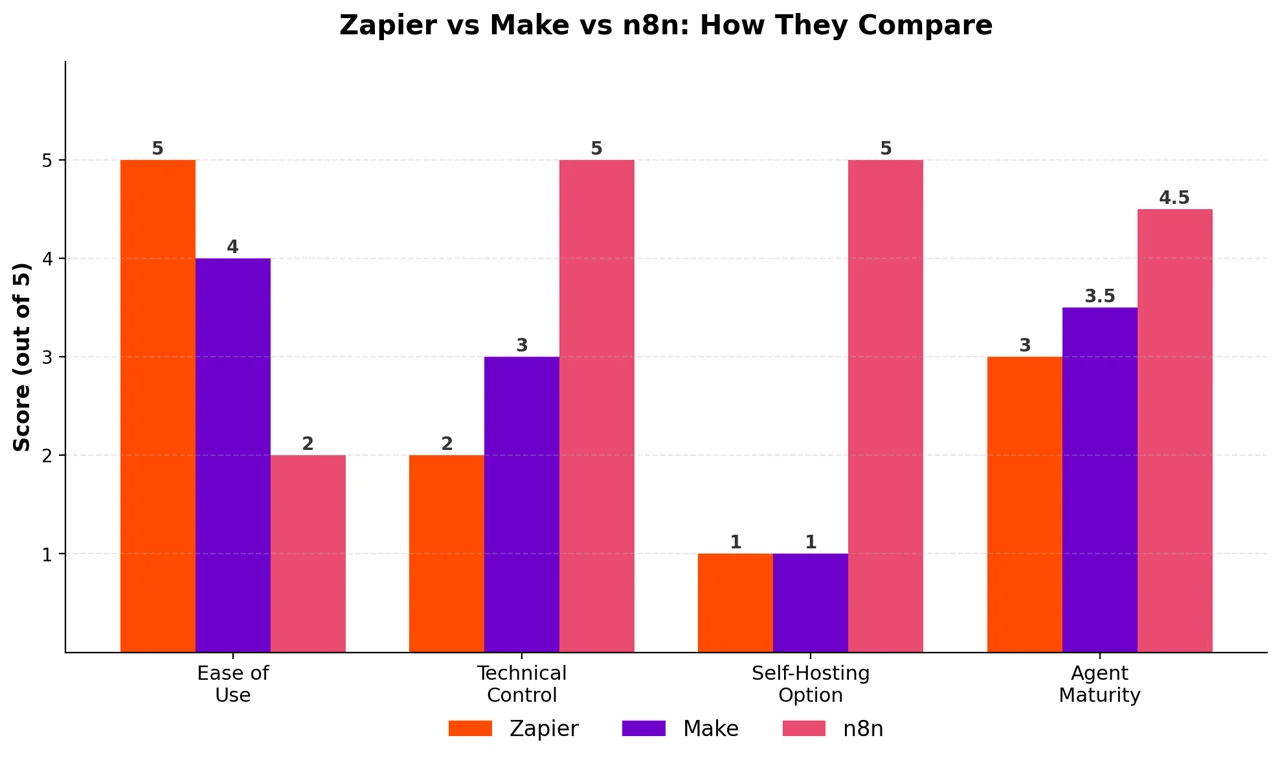
| Category | Zapier | Make | n8n |
|---|---|---|---|
| Standout strength | Fastest, simplest setup | Visual transparency for agents | Full technical control and self-hosting |
| Best for | Non-technical teams | Visual-first operations teams | Engineering and DevOps teams |
| Agent maturity | Early access, not production-ready by Zapier's own guidance | Newly integrated into the core builder | Most production-tested of the three |
| Hosting | Cloud only | Cloud only | Cloud or fully self-hosted |
| Overall summary | The on-ramp - best when speed and simplicity matter most | The middle ground - best when you need to see and trust what the agent is doing | The power tool - best when data control and cost predictability matter most |
Final Verdict
🏆 Overall Winner: n8n production-tested agents, full data and cost control via self-hosting, no vendor lock-in.
But no code, no engineers? Zapier is faster to start. Need to audit an agent's decisions visually? Make wins there. Many teams end up using more than one.
Sources & Official References
- Zapier: https://zapier.com/
- Make: https://www.make.com/
- n8n: https://n8n.io/
Information reflects each company's own product pages and release notes as of July 2026. Automation platforms update fast - check official sites for the latest feature availability.