Why Start With These Five
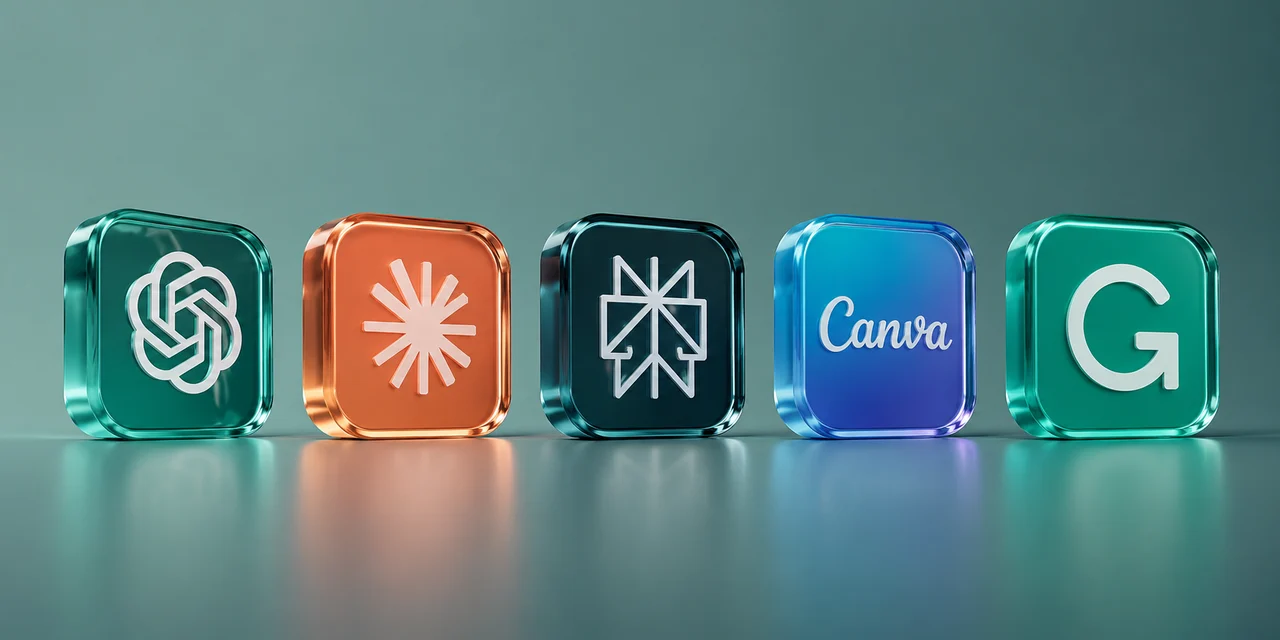
New to AI and not sure where to begin? These five tools cover the tasks most beginners actually need: everyday questions, long form writing, research, visuals, and a final polish pass. Every one of them has a real free plan, not a disguised trial.
- ChatGPT for everyday questions and brainstorming
- Claude for long form writing and reasoning
- Perplexity for research with sources attached
- Canva for visuals without design skills
- Grammarly for a final writing polish
The 5 Free AI Tools Every Beginner Should Try
1. ChatGPT
The most widely used AI tool, and the easiest place for a beginner to start. It handles a broader range of task types than any other tool on this list, all in one interface.
Where It Shines
- Brainstorming, quick explanations, and everyday problem solving
- Drafting emails, outlines, and rough copy in seconds
- Can search the web for current information directly in the free tier
A Quick Beginner Tip
Start a new chat for each unrelated topic instead of piling everything into one long conversation. ChatGPT stays sharper and more accurate when the context is focused.
Good to Know
- Custom GPTs from the GPT Store are available on the free plan, not just paid tiers
- Standard voice mode is included free for quick hands free questions
- It can generate simple images directly in a conversation, though quality lags behind dedicated tools
- Memory features let it recall details from past chats automatically
- Free users get a capped number of messages before switching to a lighter model until the limit resets
2. Claude
What sets Claude apart from most free AI tools is that the free plan runs a genuinely capable model, not a stripped down version built to push you toward upgrading.
What Makes the Free Plan Different
- A real, capable default model rather than a lite version
- File uploads and project style organization included at no cost
- Long form writing that reads more naturally than most AI output
Best First Use
Paste in a long document, essay, or set of notes and ask Claude to help organize, summarize, or rewrite it. This is where the free plan's quality shows up most.
Working With Longer Documents
- Supports a large context window, so pasting in lengthy reports or transcripts rarely breaks it
- Projects let you group related chats and files together, though the free plan caps how many you can create
- Artifacts open generated content, like a draft or a piece of code, in its own panel for easier editing
- Holds a consistent tone across a long piece rather than drifting halfway through
- Works well for turning messy notes into a structured first draft
3. Perplexity
Perplexity works differently from a typical chatbot. Instead of a conversation, it answers questions with cited sources attached, and it does not even require an account to start.
How It's Different From a Chatbot
- Every answer comes with linked sources you can verify
- No sign up needed to run your first search
- A free account adds search history and syncing across devices
Try This First
Search for a topic you would normally Google, then click through a couple of the cited sources. It is the fastest way to see why citations matter more than a confident sounding answer.
What Makes Search Results Different
- Focus modes let you narrow a search to academic papers, videos, or specific platforms like Reddit
- Follow up questions stay within the same research thread, keeping context without repeating yourself
- Results pull from current pages rather than relying only on older training data
- You can ask it to compare sources directly if two answers seem to disagree
- Works well as a first stop before diving into a topic in more depth elsewhere
4. Canva
Canva remains the fastest way for someone with zero design background to produce something that actually looks designed, not just assembled.
What You Can Build in Minutes
- Social media posts, presentations, and resumes from a template
- A rough first design just from typing what you want
The Feature Beginners Miss
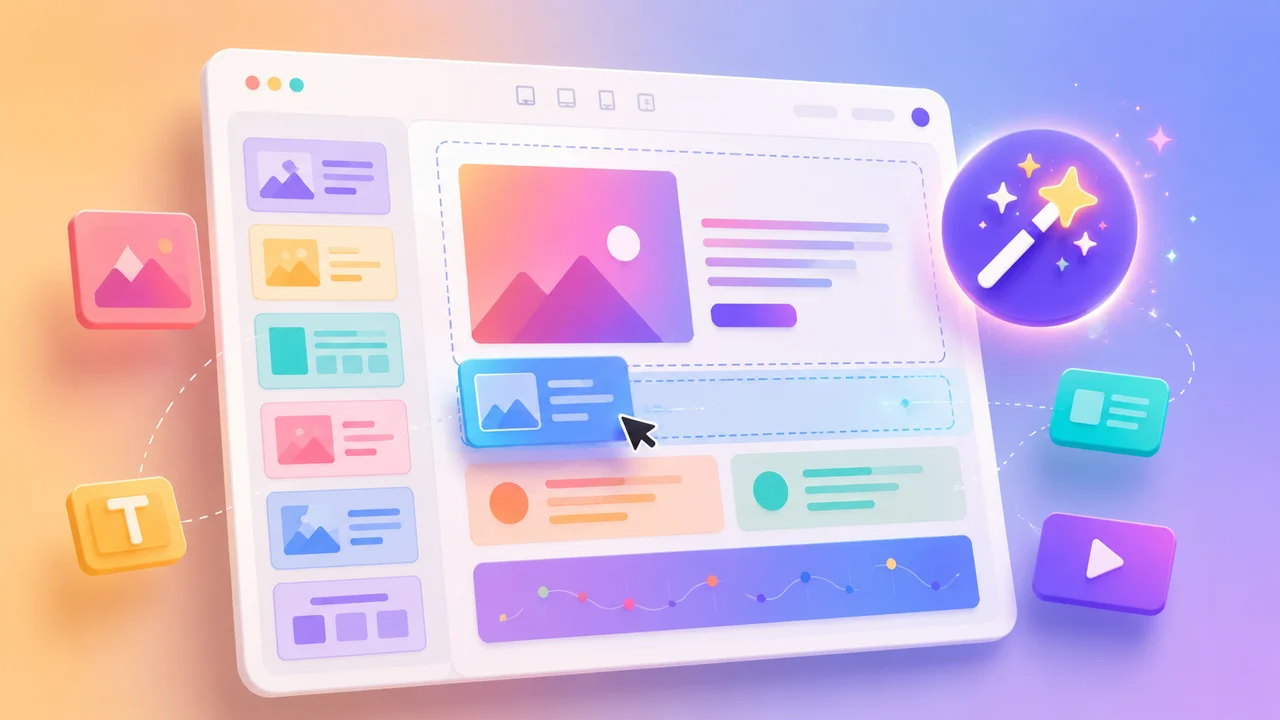
The AI layout suggestions are easy to skip past, but they turn a blank canvas into a starting design in seconds. Use them first, then edit, instead of starting from scratch.
Beyond the Basic Templates
- Magic Write generates on brand draft text directly inside a design, with monthly limits on the free plan
- A monthly allowance of AI image generation through Dream Lab is included free
- Magic Design turns a short text prompt into an editable starting layout
- A large built in library of free templates, photos, and icons covers most everyday designs
- Background Remover, Brand Kit, and one click resizing are Pro only, worth knowing before you plan a workflow around them
5. Grammarly
Grammarly is not somewhere you go, it is something that runs quietly in the background of tools you already use, catching what a first draft usually misses.
Where It Lives
- Works inside your browser, Google Docs, and email automatically
- No copying text into a separate tool required
What It Won't Catch
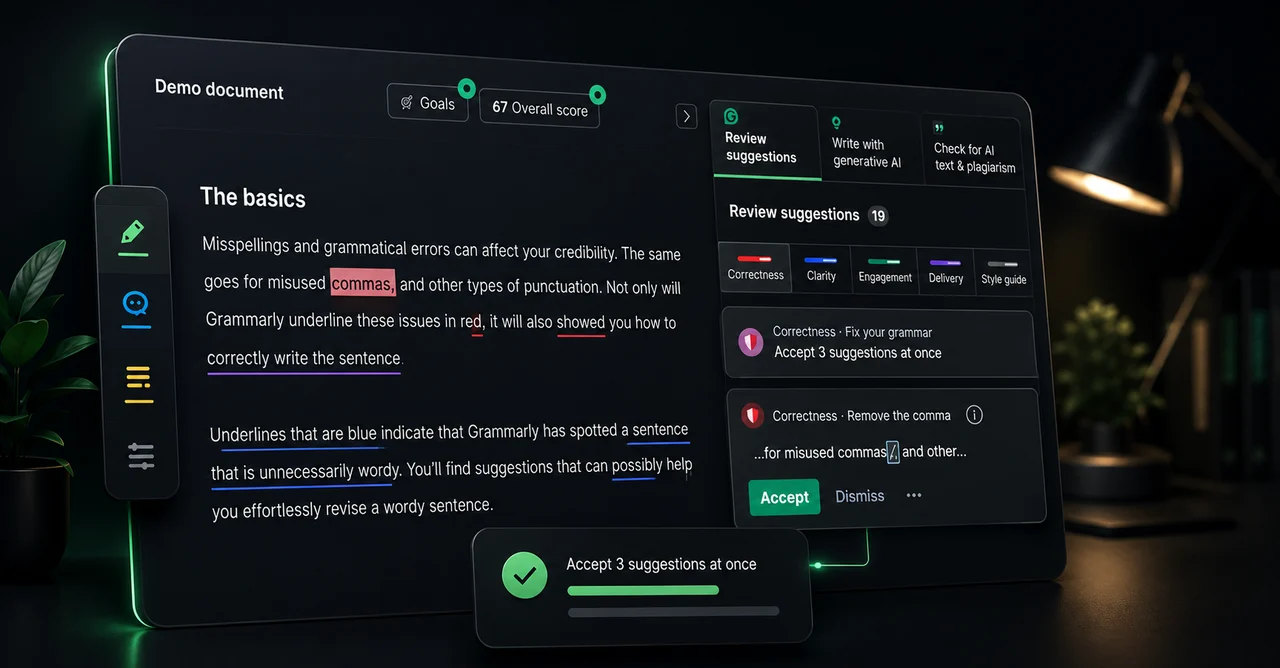
Free Grammarly handles grammar, spelling, punctuation, tone, and basic clarity. It will not replace deeper editing for structure, argument flow, or plagiarism checking, which are part of higher-tier plans or separate review workflows.
Getting the Most From It
- Clarity, tone, and conciseness suggestions are included on the free plan.
- Works across many apps and websites once the browser extension is installed, not just Google Docs.
- Suggestions can be accepted with one click, so it rarely slows down actual writing.
- Runs in the background, so there is no separate app to open for most everyday writing.
- Automated APA, MLA, and Chicago-style citations are not part of the free plan, so remove that claim from the article.
Which Tool Should You Start With
- Mostly asking questions or brainstorming → ChatGPT
- Writing something long that needs to sound natural → Claude
- Researching a topic and need real sources → Perplexity
- Need a graphic or presentation today → Canva
- Polishing something you already wrote → Grammarly
Final Thoughts
You do not need a budget to get real value from AI in 2026. These five tools cover chat, writing, research, design, and editing, and every one of them is genuinely usable for free, not just a preview of what you would get if you paid.
Start with one that matches your most common task, then add the others as new needs come up.
Details sourced from each company's official announcements and current help documentation as of July 22, 2026. Free plan features are noted based on official sources where available. Capabilities and free plan limits change quickly, so check each provider's official site for the latest details.