Introduction
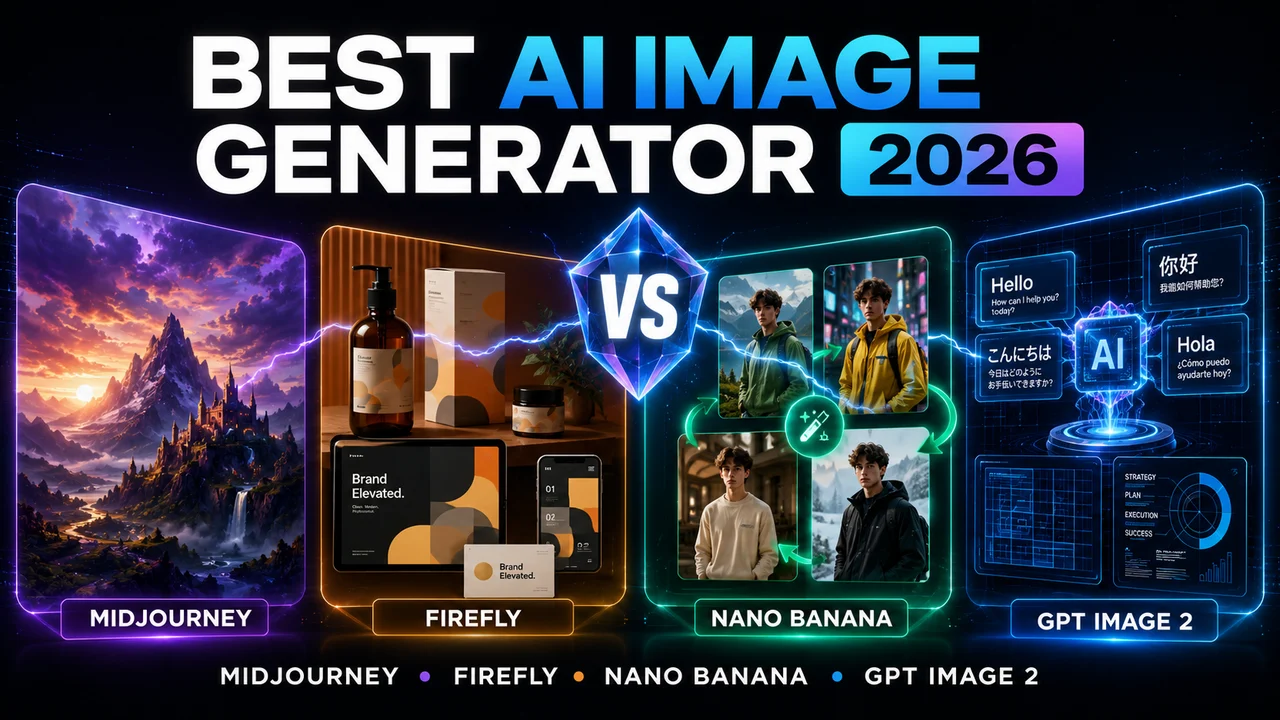
Four different AI image tools, four different jobs. None of them is trying to be the same product.
- Midjourney chases raw artistic quality
- Adobe Firefly bet everything on being safe to use commercially
- Google Nano Banana focused on speed, editing, and consistent characters
- GPT Image 2 built reasoning directly into the generation process
Picking the "best" one only makes sense once you know which of those jobs you actually have.
Quick Answer
- Raw creative and artistic quality → Midjourney
- Commercial and brand-safe work → Adobe Firefly
- Fast edits and consistent characters → Google Nano Banana
- Multilingual text and reasoning-driven generation → GPT Image 2
- Only picking one? There isn't a universal winner. It depends on whether your work is art-first or brand and text-first.
The 4 Top AI Image Generators Compared
1. Midjourney: The Artistic Standard**
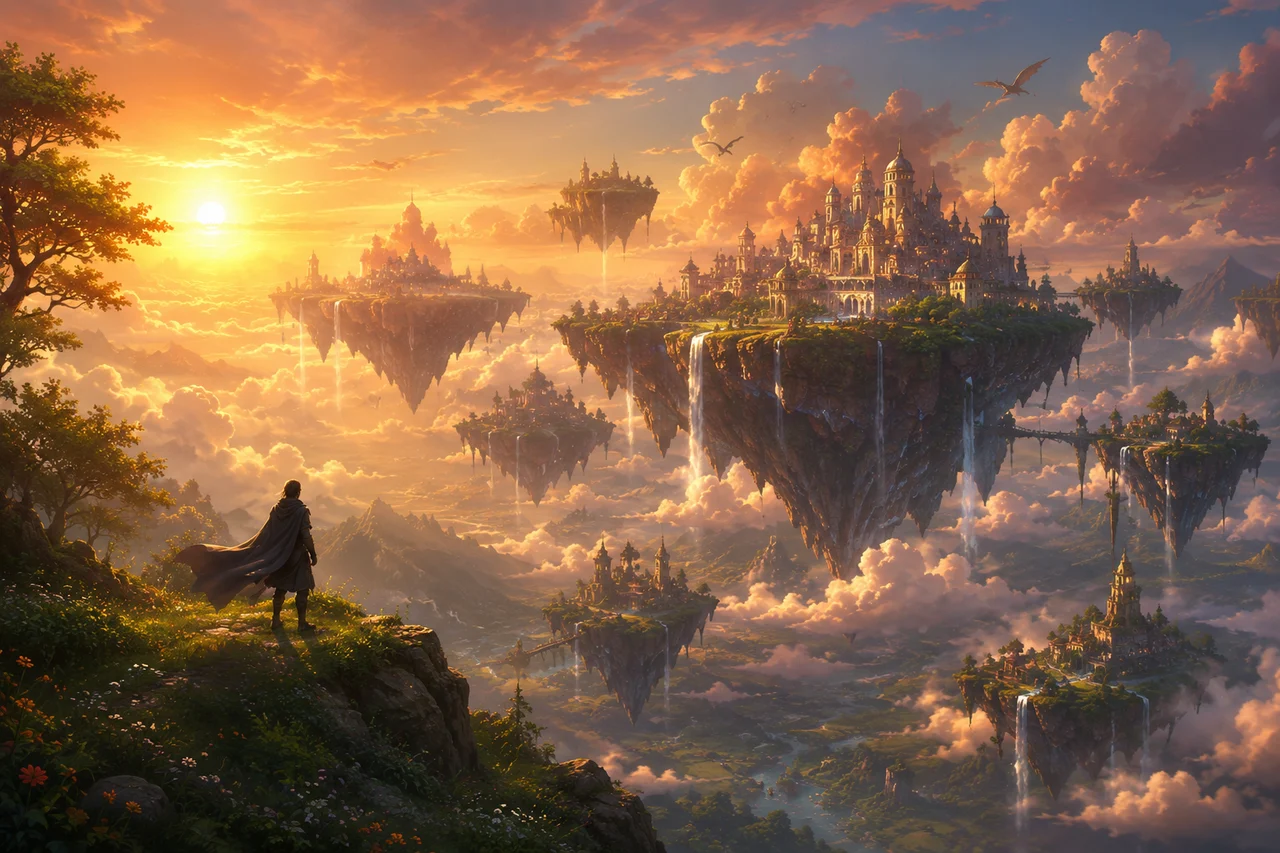
Midjourney has never chased photorealistic accuracy for its own sake, it chases mood, lighting, and composition. Built independently by Midjourney, Inc. (founded by David Holz, no Google or OpenAI backing), it remains the benchmark for concept art, fantasy environments, and fashion visuals.
Version History
- V7 → V8 → V8.1, a fast release cycle where each jump fixed one specific complaint rather than chasing a bigger number
- V8.1 sharpened photorealism, legible text handling, and character consistency
Standout Features
- Omni Reference locks in a character, object, or logo across generations. It currently runs on V7 only, an improved V8 version is still in training
- Draft Mode renders a full grid of 24 cheap, low resolution drafts on the web app, so you only spend real budget upscaling the winners
- Conversational Mode turns a plain-language idea, typed or spoken, into a detailed prompt for you
- HD mode is now the default for V8.1, generating natively at 2K resolution without a separate upscale step
Known Limits
- Text inside images is still shakier than dedicated typography tools
- No meaningful free tier
- Discord-first workflow, not a simple web app
Bottom line: when the brief is "make this look beautiful," Midjourney is still the tool most people mean.
2. Adobe Firefly: The Commercially Safe Choice**
The Bet It Made Instead of competing purely on output quality, Firefly competes on legal safety. Every image is trained only on Adobe Stock, openly licensed, or public domain content, which is exactly why enterprise and brand teams default to it.

Quick Facts
| Developer | Adobe |
|---|---|
| Current version | Firefly Image Model 5 |
| Ecosystem | Built into Photoshop, Illustrator, Express, and Premiere Pro |
| Extra access | Also surfaces third-party models like Google's Nano Banana and Black Forest Labs' FLUX |
What's New in Image Model 5
- Native 4-megapixel output, no upscaling step needed
- Better human rendering and lighting
- Prompt to Edit: describe a change in plain language, applied directly to the existing image
- Custom Models: train Firefly on your own portfolio for consistent, on-brand output
- Unlimited generations for paid subscribers, no more monthly credit caps
Who It's For Agencies, brand teams, marketing departments, and enterprise clients who cannot risk a copyright dispute. Paid plans include IP indemnification, which is arguably the real product here.
Where It Falls Short Less exciting for purely artistic or experimental work, Midjourney wins there. Best value if you already pay for Creative Cloud.
3. Google Nano Banana: The Fast, Consistent Editor**
Origin Story Started as a throwaway internal codename, used when a Google DeepMind engineer submitted an unreleased model to blind testing on LMArena. It went viral before Google confirmed it was theirs, not from marketing, but because people could describe an edit in plain language and the result actually looked like the same subject afterward.
Now Google's mainline image family inside Gemini, led by Nano Banana 2 (built on Gemini 3.1 Flash Image), with Nano Banana Pro for more demanding work.
What It Does Well
- Keeps up to 5 people and 14 objects visually consistent across a full set of images
- Accepts natural-language edits, change lighting, angle, or outfit by describing it
- Generates and translates legible text across many languages
- Reaches up to 4K resolution on Pro, with SynthID watermarking built in
- Already embedded in the Gemini app, Search's AI Mode, Ads, Workspace, and Vertex AI
The Trade-Off
No signature artistic look the way Midjourney has, it optimizes for speed, accuracy, and consistency instead. Small faces, fine details, and complex infographics can still come out slightly wrong, and the most advanced features sit behind Google's higher tier.
Bottom line: the most practical option here for a storyboard, ad set, or recurring character across many images, fast.
4. GPT Image 2: The Reasoning-First Newcomer**
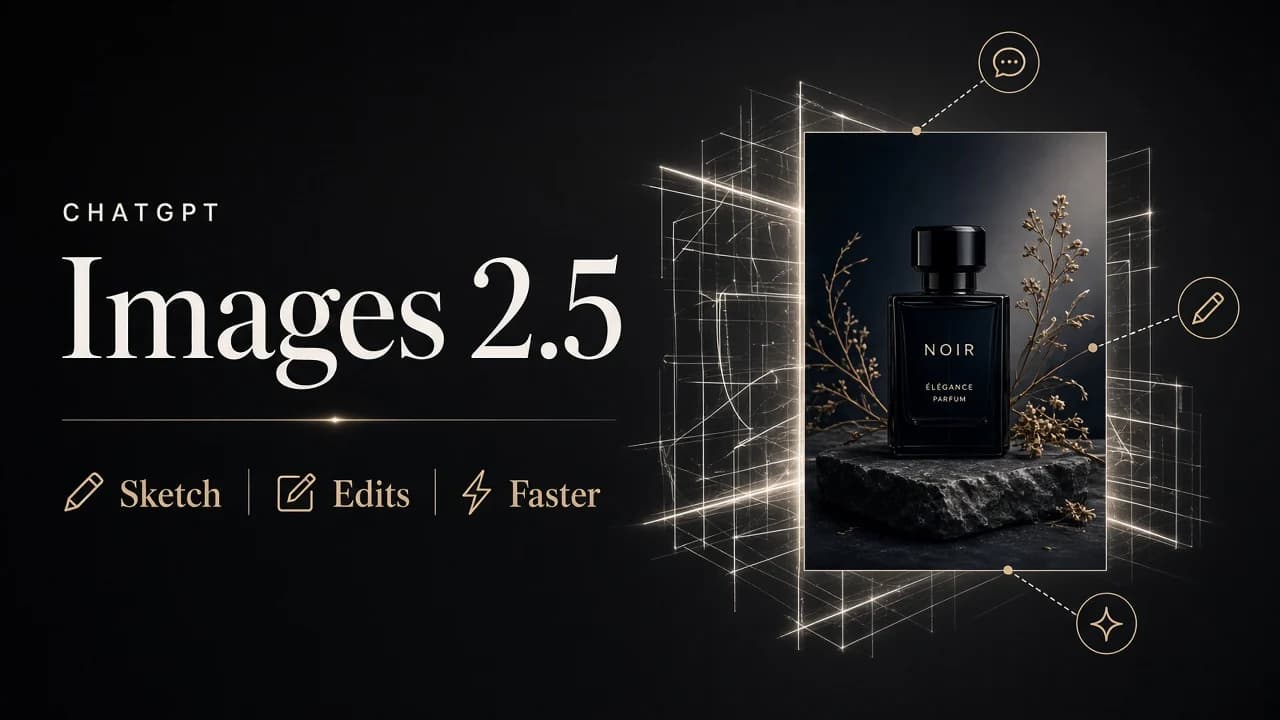
The Big Swing OpenAI launched GPT Image 2 on April 21, 2026, under the product name ChatGPT Images 2.0. It is the first OpenAI image model with reasoning built in. Before generating, it can plan the layout, search the web for reference, and self-check the result, a genuinely different approach from every other tool on this list.
What Changed From the Last Version
- Replaces GPT Image 1.5 and DALL-E 3, both retiring May 12, 2026
- Near-perfect multilingual text rendering, including Latin, CJK, Hindi, Bengali, Japanese, Korean, and Cyrillic scripts
- 2K resolution output across 9 aspect ratios
- Claimed the top spot on the Image Arena leaderboard within 12 hours of launch, by the largest margin ever recorded there
Where It Fits Into Your Workflow
- Built natively into ChatGPT, no separate app or account if you already use it
- Also available inside Codex, OpenAI's coding tool, so developers can generate assets without leaving their workspace
- Multi-turn editing keeps context across a conversation, so you refine an image the way you'd refine a chat answer
Where It's Still New
- API access rolled out gradually after launch, so third-party tool support is still catching up
- Reasoning before generation makes it slower per image than a pure speed tool like Nano Banana 2
Capability Comparison at a Glance
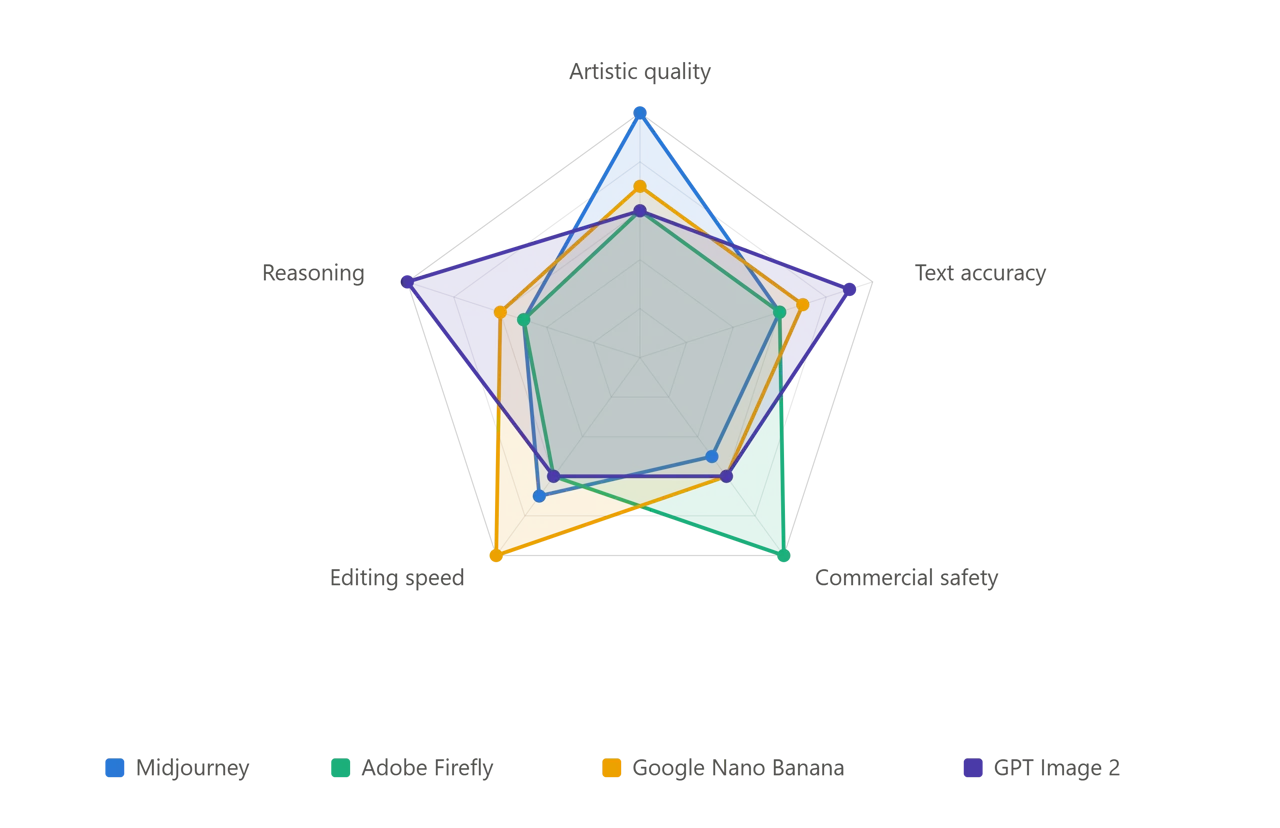
An illustrative comparison across five dimensions, based on each tool's own claimed strengths rather than a formal benchmark score.
| Midjourney | Adobe Firefly | Google Nano Banana | GPT Image 2 | |
|---|---|---|---|---|
| Artistic quality | 10 | 6 | 7 | 6 |
| Text accuracy | 6 | 6 | 7 | 9 |
| Commercial safety | 5 | 10 | 6 | 6 |
| Editing speed | 7 | 6 | 10 | 6 |
| Reasoning | 5 | 5 | 6 | 10 |
Head-to-Head Summary
| Midjourney | Adobe Firefly | Google Nano Banana | GPT Image 2 | |
|---|---|---|---|---|
| Standout strength | Artistic quality and mood | Commercial and legal safety | Editing speed and character consistency | Reasoning before generation |
| Editing tools | Omni Reference, Draft Mode | Prompt to Edit, Creative Cloud tools | Natural-language editing, image blending | Multi-turn conversational editing |
| Ecosystem fit | Standalone, Discord-first | Photoshop, Illustrator, Express | Gemini app, Search, Workspace, Ads | ChatGPT, Codex |
Final Verdict
There's no single overall winner, these four tools were never competing for the same job. But each one is the clear winner in its own category, based on what's verified above:
- 🏆 Best for artistic quality and mood → Midjourney
- 🏆 Best for commercial and brand-safe work → Adobe Firefly
- 🏆 Best for editing speed and character consistency → Google Nano Banana
- 🏆 Best for reasoning and multilingual text accuracy → GPT Image 2
Best setup: most working creatives end up using at least two, one for raw creative generation, and one for text-heavy or brand-safe production work.
Sources & Official References
- Midjourney: midjourney.com
- Adobe Firefly: firefly.adobe.com
- Google Nano Banana (Gemini Image): deepmind.google/models/gemini-image/pro
- GPT Image 2: openai.com/index/introducing-chatgpt-images-2-0
Information reflects each company's own product pages and announcements as of July 2026. Model versions and features update quickly, so check each provider's official site for the latest details.